 Eski Pano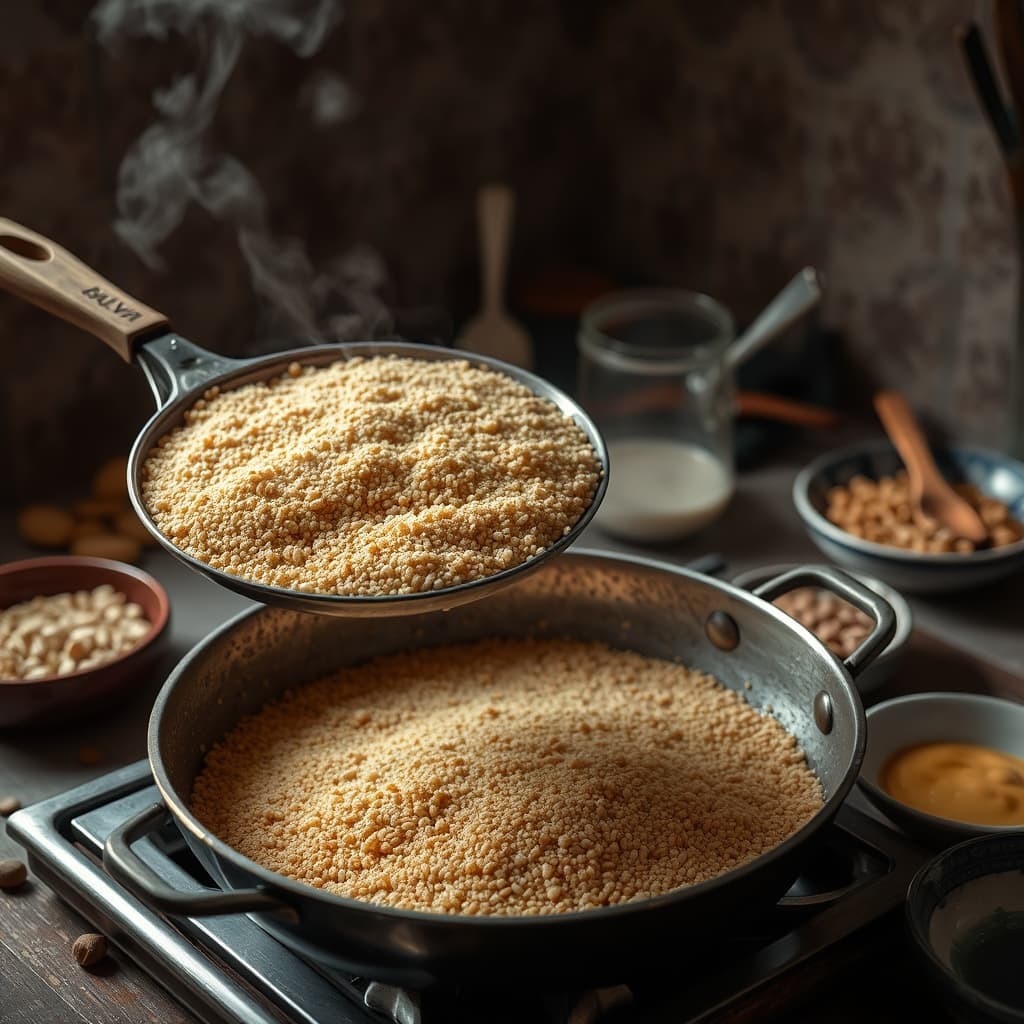
Semolina halva announced itself through aroma before it reached the table. As semolina toasted in fat, its raw grain scent deepened toward warm, nutty notes that moved from the kitchen into the hallway and other rooms. The change was gradual. Someone passing the door could tell that cooking had begun, while the person at the pan watched colour and kept the spoon moving.
Old-style semolina halva is not one fixed recipe. Butter or other fats, milk or water, sugar balance, nuts, pine nuts and serving style vary by household and region. The phrase often refers to a remembered method rather than a universal standard. The useful cultural question is how a family judged roasting, moisture and resting, not which variation can exclude all others.
Toasting Built The Flavour Before Sweetness Arrived
Semolina needed contact with heat and fat without scorching. Uneven stirring could leave pale and dark areas; excessive heat created bitterness before the interior toasted. Colour alone was not enough because pans and ingredients differed. Aroma, sound and the way grains moved under the spoon helped the cook decide when the mixture was ready for liquid.
Adding syrup or milk introduced steam and a rapid change in texture. The cook protected hands, controlled the pour and stirred through thickening. Ratios affected whether the finished halva was soft, crumbly or compact. Written measurements supported consistency, but experienced judgement responded to the semolina's behaviour in that particular pan.
Resting Let The Kitchen Slow Down
After cooking, a covered rest allowed moisture to distribute and grains to settle. The spoon might fluff or turn the halva before serving. Moulded portions, a shared platter or simple spoonfuls each created a different presentation. Ice cream or other accompaniments belong to some versions, not every remembered table.
The dish could accompany family visits, religious or communal occasions, an ordinary craving or a moment of remembrance. Meanings vary and should not be assigned automatically to every preparation. What often remains constant is the labour of standing near heat, stirring patiently and cleaning a pan whose sweet, fatty grains cling to the surface.
Packaged mixes and commercial servings offer convenience, while home preparation continues. Semolina halva belongs in a Digital Nostalgia Archive because its memory is procedural. The aroma that filled the house was evidence of transformation happening over time: pale grain toasted, liquid met heat, the mixture thickened and the covered pan waited. When the sweet reached the table, the whole home had already participated by smelling each stage.
Utensils influenced the result and the memory. A broad, heavy pan spread heat differently from a thin vessel, while a long wooden spoon protected the hand and reached the base. Families often kept a preferred pan for halva because its behaviour was known. Documenting that relationship explains why replacing equipment can alter a familiar result even when the ingredient list remains unchanged. The sound of the spoon against that pan could become as recognisable as the aroma. Together, sound and smell marked the exact stage of roasting.