 Eski Pano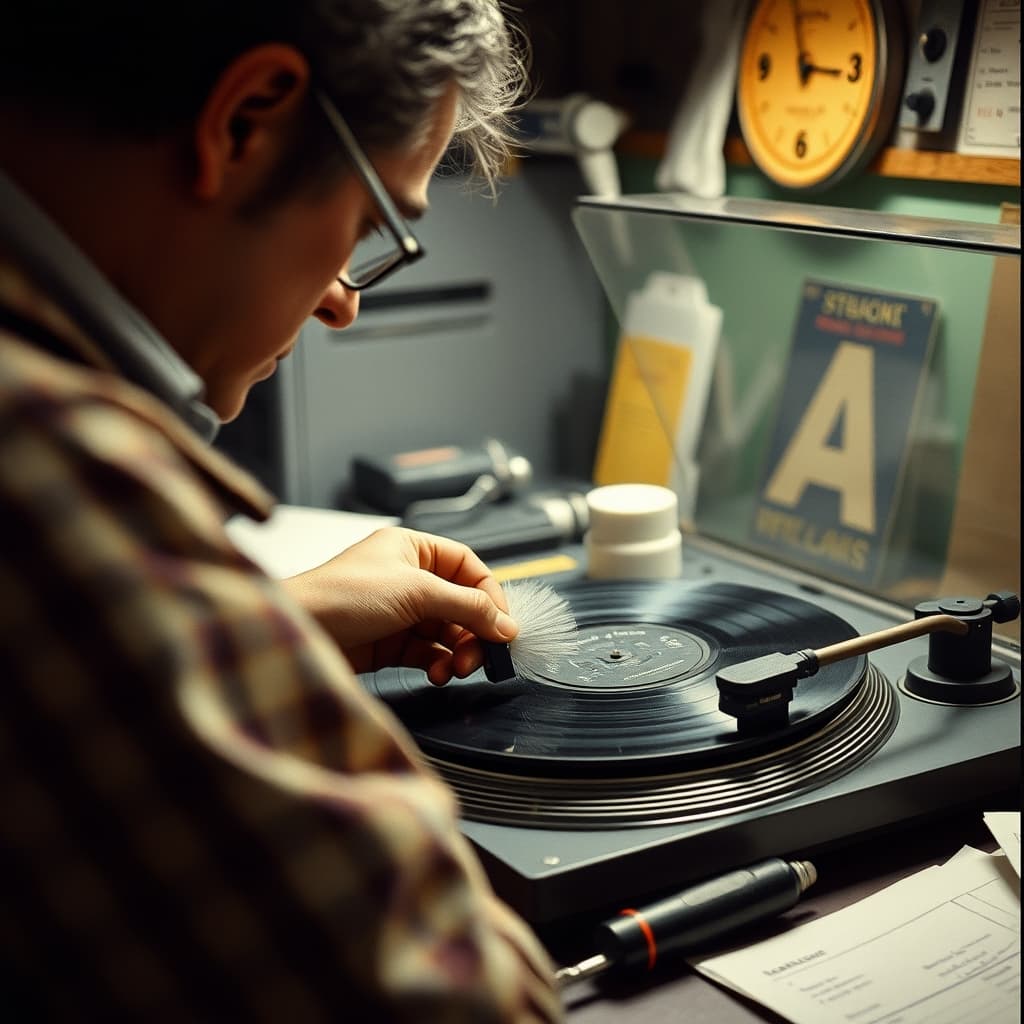
Before the needle touched a record, a careful listener might hold a brush lightly across the rotating surface. A narrow line of dust gathered at the fibres, and the movement became part of listening itself. The tool looked modest beside the turntable, yet it represented a larger repair-shop principle: clean contact, correct adjustment, and gentle handling could protect both the groove and the equipment asked to read it.
Record-cleaning brushes come in different materials and designs, including carbon-fibre, velvet, fibre pads, and specialised antistatic products. They do not all work in the same way. A dry brush can remove loose surface dust and, depending on design and technique, help manage static. It cannot necessarily remove oils, mould, embedded dirt, or residues. Product guidance and record condition should determine the method.
Dust Interrupted a Physical Contact
A stylus traces microscopic modulations in a groove. Loose particles can produce clicks, cling to the stylus, and increase unwanted contact. Brushing before play reduces some contamination, but pressure matters. Pushing debris into the groove or dragging a dirty pad across the surface can make matters worse. The record should be supported, the brush kept clean, and fingers kept away from playing surfaces.
Static electricity attracts airborne dust and can create audible discharge. Dry indoor air, synthetic materials, and handling conditions affect it. Antistatic claims vary, and a brush alone may not solve a persistent problem. Grounding, humidity managed within safe limits, clean sleeves, and suitable equipment can form part of a broader approach. Water or household spray should never be applied casually near powered electronics.
Repairers Looked Beyond the Brush
When a record sounded poor, an experienced technician examined more than visible dust. Stylus wear, tracking force, cartridge alignment, turntable speed, bearing condition, cables, speakers, and the record's own damage all influenced playback. Cleaning could not restore material already worn from the groove. Honest repair distinguished maintenance from miracle claims and explained when replacement parts or professional treatment were necessary.
Wet cleaning uses compatible fluids, controlled application, and thorough removal or rinsing according to the system. Unknown solvents, tap-water minerals, paper towels, and improvised scrubbing can leave residue or scratches. Shellac and other historical disc materials may react differently from vinyl, so material identification comes first. A method safe for one record is not automatically safe for another.
Storage Continued the Maintenance
Clean records returned to clean inner sleeves and were stored upright, away from heat, direct sun, excessive pressure, and unstable humidity. A dusty old sleeve could immediately recontaminate the surface. Outer jackets carried provenance and artwork, so they deserved separate support rather than disposal. Labels should remain dry unless a specialist process explicitly protects them.
The brush itself records use. Bent fibres, a repaired handle, retailer label, or instructions can identify a listening era and market. Yet a used tool may hold abrasive dirt. It should be documented and cleaned according to its material before being used on another record. Sentimental value does not guarantee safe function.
A Digital Nostalgia Archive can connect brushes, turntables, manuals, receipts, sleeves, repair notes, test records, and technicians' oral histories. Audio samples should document equipment and settings rather than promise perfect comparison. The little brush gave music another chance not by reversing time, but by making care visible. Its quiet sweep reminded the listener that recorded sound depended on surfaces, hands, and maintenance before it became a melody in the room.