🇹🇷 Türkçe | Karanfillerin Sessizce Değiştirdiği Şehir Sabahı
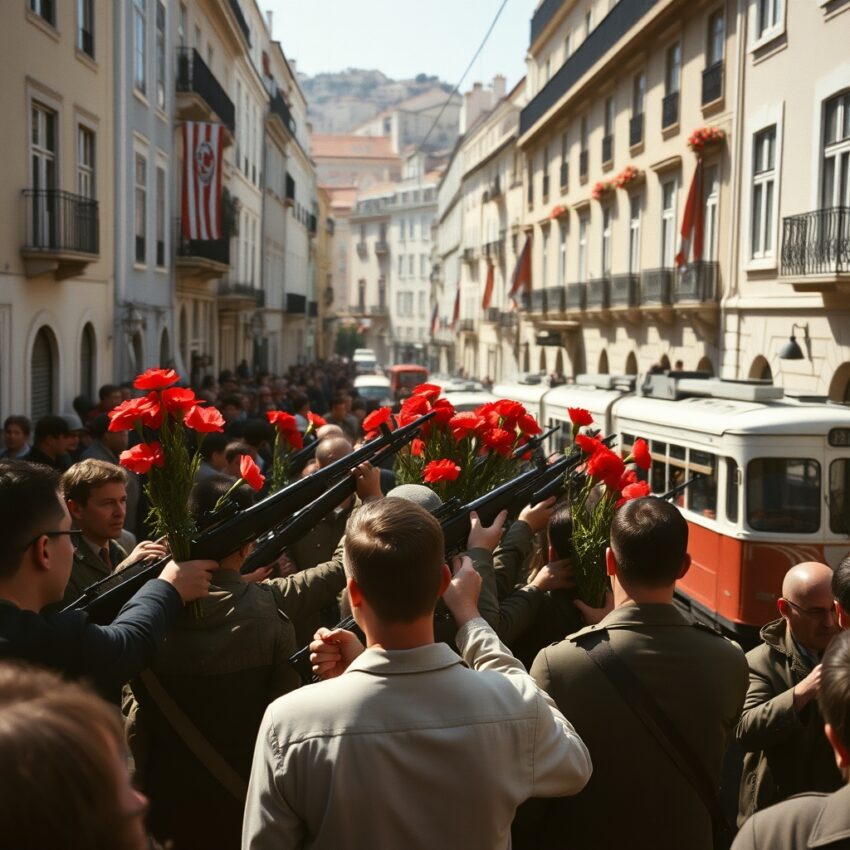
Bir sabahın tarihi değiştirebileceğine inanmak için bazen yalnız bir sokağa bakmak yeterlidir. Portekiz’de 25 Nisan 1974 sabahı da böyleydi. Henüz dükkân kepenkleri tam açılmadan, evlerin mutfaklarında kahve kokusu yükselirken, tramvay duraklarında işe yetişmeye hazırlanan insanlar günün sıradan başlamasını bekliyordu. Fakat o sabah taş kaldırımların üstünde yalnız ayak sesleri değil, uzun zamandır içe atılmış bir nefesin boşalması da vardı. Askerî araçların geçişi, radyolardan yayılan işaret şarkıları ve en önemlisi ellerde beliren kırmızı karanfiller, şehrin alışılmış düzenini sessiz ama geri dönülmez biçimde değiştirdi. Lizbon’un caddeleri ilk bakışta yine aynıydı; aynı balkonlar, aynı köşe kahveleri, aynı gazeteler. Ama insanların yüzündeki dikkat, birbirine daha uzun bakan gözler ve sokağın gittikçe kalabalıklaşan nabzı, o günün başka bir güne benzemeyeceğini anlatıyordu.
Zamanın İzinde düşünüldüğünde Karanfil Devrimi yalnız siyasî bir kırılma değildir; gündelik hayatın tonunu değiştiren kültürel bir uyanıştır. Uzun yıllar süren baskının ardından gelen bu sabah, insanlara yalnız yeni bir rejim ihtimali değil, kamusal alanı yeniden hissetme imkânı da verdi. Normalde aceleyle geçilen meydanlar birer buluşma yerine dönüştü. Gazete bayilerinin önünde manşet bekleyenler, fırından ekmek alıp eve dönmek yerine köşede biraz daha oyalanan kadınlar, çocuklarını kucaklayıp pencere önünden sokağı izleyen anneler, hepsi aynı dönüşümün farklı tanıklarıydı. Özgürlük önce büyük cümlelerle değil, sokakta kalabilme cesaretiyle hissedildi. İnsanlar o gün birbirine yalnız haber vermedi; birbirine cesaret de verdi. Bir çiçeğin namluya yerleşmesi, askerin sert görüntüsünü bir anda başka bir hatıraya çevirdi. Karanfil, şehirde şiddetin değil, ortak sevincin işareti oldu.
Bu tarihsel anın en çarpıcı yanı, devrimin hafızaya yalnız liderler ya da resmî açıklamalarla değil, sıradan insanların ayrıntılarıyla yerleşmesidir. O sabah bir çiçekçinin elinde fazla karanfiller vardı; rivayete göre insanlar o çiçekleri askerlere uzattı ve görüntü bütün dünyaya yayıldı. Ama olayın asıl gücü, çiçeğin gündelik hayata ait oluşundan gelir. Karanfil bir tören nesnesi değil, pencerede duran, pazardan alınan, eve götürülen tanıdık bir çiçektir. Bu yüzden özgürlüğün sokaklara taşması, halkın kendi hayatından çıkan bir simgeyle mümkün oldu. Köşe başı kahvelerde fincan sesleri sürerken konuşmaların tonu değişti. Eski gazetelerin diliyle büyümüş kuşaklar, ilk kez yarının haberini bugünün yüzlerinde aradı. Şehir, yalnız bir yönetim değişikliği değil, kendi sesini duyma deneyimi yaşadı.
Portekiz’in o sabahı bugünden bakınca biraz da gündelik ritüellerin yeniden anlam kazanması olarak görünür. Balkonlar yalnız çamaşır asılan yer olmaktan çıkıp sokağa tanıklık eden seyir noktalarına dönüştü. Radyolar yalnız müzik dinleme aracı değil, tarihin eve girdiği kutular oldu. Meydanlar, metro ağızları, kaldırım taşları, asker postallarının sertliğini yumuşatan karanfil yapraklarıyla birlikte yeni bir görsel hafıza kurdu. Bu hafıza, geçmişin baskı yıllarını tamamen silmeden, onların üstüne başka bir duygu tabakası ekledi: ortak rahatlama. Bir şehrin sabahı ilk kez bu kadar çok kişiye aitmiş gibi hissedildiğinde kültürel dönüşüm başlar. O gün Portekiz’de yaşanan da buydu.
Bugün Karanfil Devrimi anıldığında insanların aklına yalnız bir tarih değil, belirli bir sabah ışığı gelir. Özgürlüğün sokaklara taşması, soyut bir fikir olmaktan çıkıp kaldırımda duran insanların bedenine, sesine ve birbirine yaklaşma biçimine karışmıştır. Karanfillerle açılan o sabah, geçmişe bakarken bize şunu hatırlatır: bazen büyük tarih, en çok evden sokağa atılan ilk adımda görünür. Bir şehir özgürlüğü önce yasalarla değil, meydanlarda birbirine yer açan insanlarla öğrenir. Portekiz’in o günü bu yüzden hâlâ kültürel hafızada tazedir; çünkü o sabah yalnız iktidar değişmemiş, sokakların ruhu da değişmiştir.
🇬🇧 English | The Morning When Carnations Quietly Changed the City
Sometimes, to believe that a morning can change history, it is enough simply to look at a street. In Portugal, the morning of April 25, 1974 was exactly like that. Before shop shutters were fully opened, while the smell of coffee rose from home kitchens and people waited at tram stops to begin an ordinary day, something else was already moving through the stone streets. Along with footsteps there came the release of a breath that had been held in for years. Military vehicles, signal songs carried by the radio, and above all the red carnations appearing in people’s hands quietly but irreversibly altered the familiar order of the city. Lisbon’s avenues still looked, at first glance, the same as before: the same balconies, the same corner cafes, the same newspapers. Yet the attentiveness on people’s faces, the longer glances exchanged between strangers, and the thickening pulse of the streets made it clear that this day would not resemble any other.
Seen in the trace of time, the Carnation Revolution was not only a political break; it was also a cultural awakening that changed the tone of daily life. After long years of repression, that morning gave people not only the possibility of a new regime, but also the chance to feel public space again. Squares that were usually crossed in haste became places of gathering. Those waiting for newspaper headlines, women who bought bread and lingered a little longer on the corner instead of hurrying home, mothers holding their children while watching the street from the window, all became witnesses to the same transformation. Freedom was felt first not in grand speeches, but in the courage to remain in the street. On that day people did not only pass news to one another; they passed courage as well. A flower placed in the barrel of a rifle changed the image of the soldier at once. The carnation became not a sign of violence, but of shared relief.
What makes that historical moment so striking is that it entered memory not mainly through leaders or official declarations, but through the details of ordinary people. That morning a florist had extra carnations, and according to the best-known account people handed them to soldiers, creating an image that spread around the world. Yet the real force of the event comes from the fact that the flower belonged to everyday life. A carnation was not a ceremonial object, but a familiar flower placed on windowsills, bought in the market, and carried home. That is why freedom overflowing into the streets became possible through a symbol that emerged from the people’s own lives. While the clink of coffee cups continued in corner cafes, the tone of conversations changed. Generations raised on the language of controlled newspapers searched for the news of tomorrow in the faces of today. The city experienced not only a change of government, but the experience of hearing its own voice.
From today’s perspective, that Portuguese morning also appears as the moment when daily rituals gained new meaning. Balconies ceased to be only places for laundry and became viewpoints from which to witness history. Radios became not merely devices for music, but boxes through which history entered the home. Squares, metro entrances, paving stones, and the petals that softened the hardness of military boots together formed a new visual memory. That memory did not erase the years of pressure; instead, it laid another emotional layer over them, one of collective release. Cultural transformation begins when a city’s morning feels, for the first time, as though it belongs to everyone. That was what happened in Portugal on that day.
Today, when the Carnation Revolution is remembered, people think not only of a date but of a particular morning light. Freedom overflowing into the streets stopped being an abstract idea and blended into the bodies, voices, and gestures of the people standing there. The morning opened by carnations reminds us of something simple: great history often becomes visible in the very first step taken from the house into the street. A city learns freedom first not through laws, but through people making room for one another in public space. That is why Portugal’s day remains fresh in cultural memory. What changed that morning was not only power, but the spirit of the streets themselves.
🇧🇷 Português (Brasil) | A Manhã em que os Cravos Mudaram a Cidade em Silêncio
Às vezes, para acreditar que uma manhã pode mudar a história, basta olhar para uma rua. Em Portugal, a manhã de 25 de abril de 1974 foi exatamente assim. Antes que as portas das lojas se abrissem por completo, enquanto o cheiro de café subia das cozinhas e as pessoas esperavam o bonde para começar um dia aparentemente comum, algo diferente já se movia pelas pedras da cidade. Junto com os passos vinha o alívio de um fôlego guardado durante anos. Os veículos militares, as canções-sinal que saíam do rádio e, acima de tudo, os cravos vermelhos que surgiam nas mãos das pessoas alteraram de forma silenciosa, porém irreversível, a ordem conhecida das ruas. As avenidas de Lisboa ainda pareciam, num primeiro olhar, as mesmas de sempre: as mesmas sacadas, os mesmos cafés de esquina, os mesmos jornais. Mas a atenção nos rostos, os olhares mais demorados entre desconhecidos e o pulso cada vez mais cheio da rua deixavam claro que aquele dia não seria igual aos outros.
Quando se pensa nesse momento pelo rastro do tempo, a Revolução dos Cravos não aparece apenas como uma ruptura política; ela também foi um despertar cultural que mudou o tom da vida cotidiana. Depois de longos anos de repressão, aquela manhã ofereceu às pessoas não só a possibilidade de um novo regime, mas também a chance de sentir novamente o espaço público. Praças atravessadas às pressas se tornaram lugares de encontro. Quem esperava as manchetes diante das bancas, mulheres que compravam pão e demoravam um pouco mais na esquina antes de voltar para casa, mães com crianças no colo olhando a rua pela janela, todos se tornaram testemunhas da mesma transformação. A liberdade foi sentida primeiro não em grandes discursos, mas na coragem de permanecer na rua. Naquele dia, as pessoas não compartilharam apenas notícias; compartilharam coragem. Uma flor colocada no cano de um fuzil mudou de imediato a imagem do soldado. O cravo deixou de ser sinal de dureza e passou a ser sinal de alívio coletivo.
O que torna esse instante histórico tão marcante é o fato de ele ter entrado na memória não principalmente por líderes ou comunicados oficiais, mas pelos detalhes das pessoas comuns. Naquela manhã, uma florista tinha cravos sobrando e, segundo a lembrança mais conhecida, eles foram oferecidos aos soldados, criando uma imagem que correu o mundo. Mas a verdadeira força do episódio vem do fato de a flor pertencer à vida cotidiana. O cravo não era um objeto cerimonial; era uma flor conhecida, comprada no mercado, colocada na janela, levada para casa. Por isso, o transbordamento da liberdade para as ruas se tornou possível por meio de um símbolo nascido da própria vida do povo. Enquanto o som das xícaras seguia nos cafés de esquina, o tom das conversas mudava. Gerações criadas sob a linguagem dos jornais controlados passaram a procurar a notícia do amanhã nos rostos do presente. A cidade viveu não apenas uma mudança de governo, mas a experiência de ouvir a própria voz.
Vista de hoje, aquela manhã portuguesa também parece o momento em que os rituais cotidianos ganharam outro sentido. As sacadas deixaram de ser apenas lugar de estender roupa e se tornaram pontos de observação da história. Os rádios deixaram de ser somente aparelhos de música e se transformaram em caixas pelas quais a história entrou em casa. Praças, entradas do metrô, pedras da calçada e as pétalas que suavizavam a dureza das botas militares formaram juntos uma nova memória visual. Essa memória não apagou os anos de pressão; apenas colocou sobre eles outra camada afetiva, a do alívio compartilhado. A transformação cultural começa quando a manhã de uma cidade parece pertencer, pela primeira vez, a todos. Foi isso que aconteceu em Portugal naquele dia.
Hoje, quando a Revolução dos Cravos é lembrada, as pessoas pensam não só em uma data, mas numa luz específica da manhã. A liberdade que transbordou para as ruas deixou de ser ideia abstrata e passou a viver nos corpos, nas vozes e na maneira como as pessoas se aproximaram umas das outras. A manhã aberta por cravos nos lembra de algo simples: a grande história muitas vezes se torna visível no primeiro passo dado de casa para a rua. Uma cidade aprende a liberdade antes de tudo não por leis, mas por pessoas que abrem espaço umas para as outras no espaço público. É por isso que aquele dia em Portugal continua vivo na memória cultural. O que mudou naquela manhã não foi apenas o poder, mas o próprio espírito das ruas.