Eski Pano
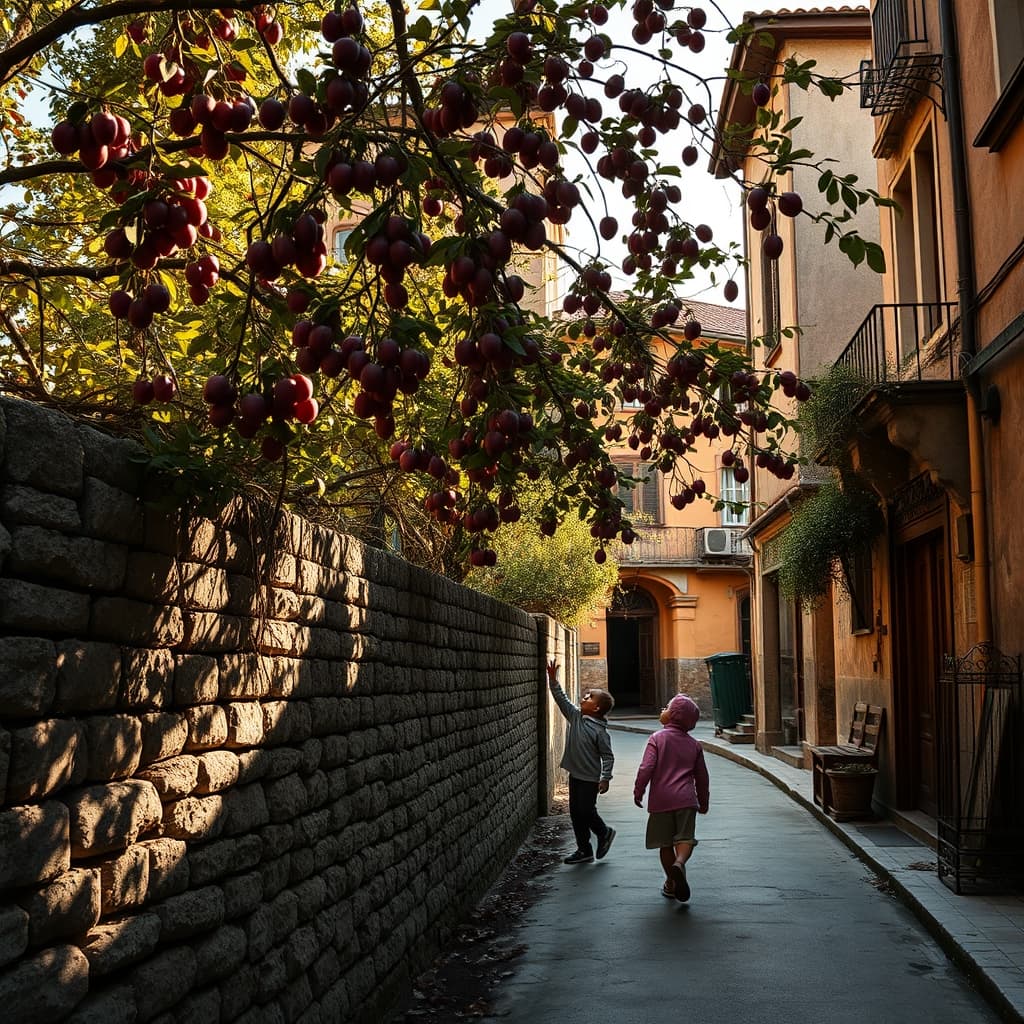
There was a time when garden walls in old neighborhoods marked a boundary without creating an absolute separation. Especially between late spring and early summer, when plum branches leaned over the wall toward the street, that boundary almost disappeared. Children on their way to school or absorbed in evening games would look up and watch the not-yet-ripe green plums shining in the light. The owner of the house would often call out from inside, “reach if you like, but do not break the branch,” and in that way a small yet lasting trust was formed between the two sides of the wall. In the very middle of old urban life, this scene suggested neighborhood more than property. A plum branch hanging over the garden wall was a warm sign of the days when even what was not exactly the street’s could still be shared with the street.
Within neighborhood culture, this scene holds a special place because the old neighborhood was not merely a row of houses standing side by side, but a social field where daily life flowed by touching itself. The names of children playing in the street were known from many doorways; which house held an elderly person, which house sheltered a student preparing for exams, whose garden had borne fruit well that year, all of this counted as common knowledge. When the plum branches leaned over, childhood appetite and neighborhood manners came into play at the same moment. Sometimes someone knocked with a plate and said, “our tree gave a lot this year, we brought some for you.” Sometimes children running for salt became a ritual the whole street recognized. The fruit hanging over the wall created the street’s liveliness not only through sight, but through taste. That is one reason it became the warmest scene of the neighborhood: sharing, shade, and childhood joy gathered in a single frame.
The street texture of old cities also fed that warmth. Narrow roads, low walls, the shade of bay-windowed houses, and the wind softening in the afternoon turned fruit trees into part of public memory. Gardens remained inside, but branches reached outward, just as domestic life occasionally mixed with the street through windows, doorways, and balconies. A plum branch hanging outward made visible the bond between a closed house and the neighborhood around it. A mother might warn children not to eat too many sour plums, a grandfather leaning on his cane might remark that the tree had fruited early that year, and the neighborhood grocer might smile from behind his counter and say, “the plums on this street are back again.” A single tree was therefore announcing not only the season, but relationships as well.
What still warms the heart about this image is that it contains not forced intimacy, but a natural closeness born from daily life. No one tried to manufacture neighborhood warmth; that warmth emerged on its own from living on the same street, knowing one another’s children, and sharing the fruit growing in a garden without excessive caution. For children the plum branch was a small adventure; for adults it was a quiet sign that the neighborhood was still alive. A fruit crossing the wall suggested that neighborliness, too, could cross walls. Among today’s high walls, gated compounds, and closed doors, what feels missing is partly this: a form of relationship encountered by chance, developing on its own, arriving together with the season.
That is why plum branches hanging over garden walls are not only an old image, but a cultural inheritance. They were the warmest scene of old neighborhoods because they represented an unshowy form of sharing. Childhood, street life, season, and neighborliness all met on those branches at once. When we look back at that scene now, what we see is not only fruit, but a way of living: offering rather than hoarding, giving shade rather than only drawing borders, opening with the season instead of remaining closed. Perhaps the true warmth of old urban life lived precisely there.
Why Were Plum Branches Hanging Over Garden Walls the Warmest Scene of Old Neighborhoods in the Very Middle of Old Urban Life?