🇹🇷 Türkçe | Parıltının İçinde Saklanan Ev Ciddiyeti
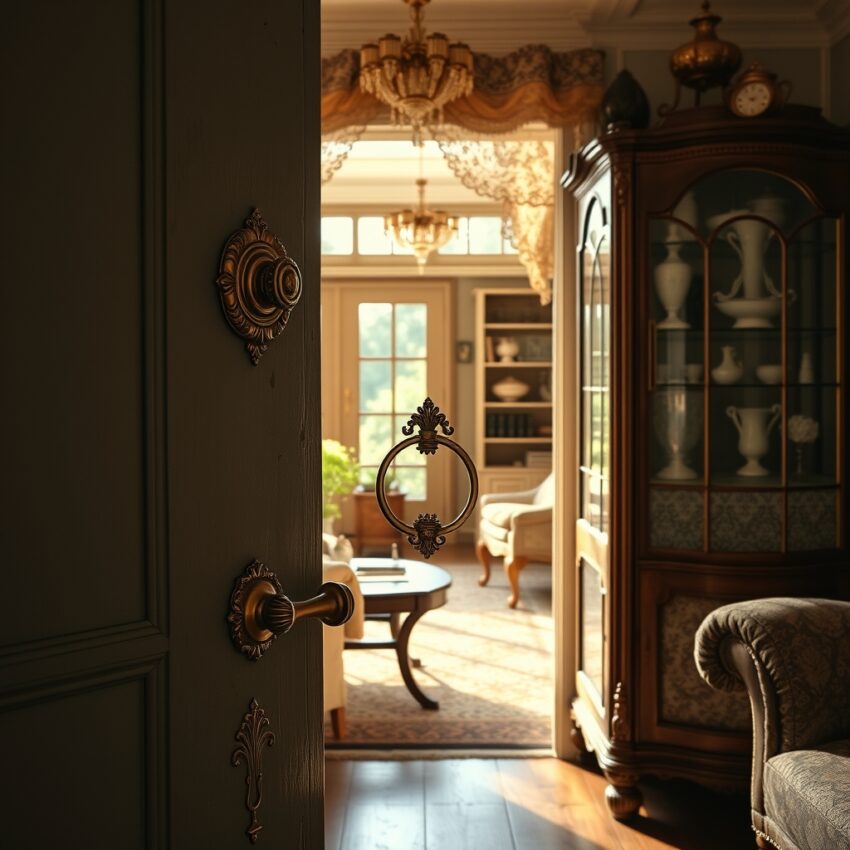
Bir zamanlar bir eve yaklaşırken ilk dikkat çeken şeylerden biri kapıdaki pirinç tokmağın sesi, içeri girildiğinde ise salon vitrininin en görünür köşesindeki düzen olurdu. Bu iki ayrıntı, ev hayatının dışarıdan ve içeriden görünen yüzünü temsil ederdi. Kapı tokmağı, gelenin kendini duyurma biçimini; vitrin köşesi ise ev halkının kendini gösterme biçimini taşırdı. Pirincin hafif sarı parıltısı, cilalanmış yüzeyinde birikmiş el izi, vitrinde dantel örtü üstünde duran cam ya da porselen objelerle birleştiğinde, eski evlerin ciddiyetini ve ölçülü gururunu anlatırdı. Bugün bu nesnelerin yeniden ilgi görmesi tesadüf değildir. Çünkü onlar yalnız süs eşyası değil, bir dönemin zevk anlayışını, ev düzenini ve misafirlik dilini üzerinde taşıyan gündelik sembollerdir.
Obje Hikayeleri bakımından pirinç kapı tokmağı ile salon vitrininin görünür köşesi arasında güçlü bir akrabalık vardır. İkisi de eşiğin nesnesidir. Tokmak, evin dışarıyla temas ettiği anda devreye girer; vitrin ise misafirin içeri girdikten sonra gözünün ilk takıldığı sessiz düzeni kurar. Tokmağın tok sesi, eski apartmanlarda ya da müstakil evlerde zili olmayan ya da olsa bile pek kullanılmayan günlerin hafızasını taşır. Kimin nasıl vurduğundan gelenin kim olduğuna dair tahminler yürütülür, kapı açılmadan önce o sesle bir yüz hatırlanırdı. İçerideyse vitrinin en görünür köşesi, evin en kıymetli ya da en hatıralı parçalarının sergilendiği küçük bir sahneydi. Bayramda çıkarılan bardak takımı, düğünden kalma şekerlik, uzak akrabadan gelmiş bir biblo ya da yalnızca çok sevildiği için öne konmuş bir obje, orada aile hafızasının sessiz temsilcisi olurdu.
Bugün bu nesnelerin yeniden ilgi görmesinin bir nedeni, çağdaş hayatın fazlasıyla görünmezleşen dokusuna karşı somutluk arayışıdır. Pirinç tokmak elde ağırlığı olan, dokunulunca soğukluğunu hissettiren, zamanla kararırken kullanım izini üstünde taşıyan gerçek bir malzemedir. Salon vitrini de aynı biçimde, eşyayı saklamaktan çok anlamlandıran bir çerçeve sunar. Günümüzün hızlı ve kolay değişen dekorasyon anlayışı içinde insanlar artık biraz daha kalıcı, hikâyesi olan, aileden kalmış ya da aile olacak kadar uzun yaşayabilecek nesnelere dönüyor. Pirincin yaşlandıkça güzelleşen tonu ve vitrinin düzenlemeye izin veren sabırlı yapısı, bu özlemi karşılıyor. İnsanlar yalnız estetik değil, süreklilik duygusu arıyor.
Bu ilginin arkasında biraz da çocukluk hatıraları vardır. Pek çok kişi için kapı tokmağı, anneannenin evine girişte duyulan ilk sestir; salon vitrini ise dokunulması yasak ama gözle uzun uzun seyredilmesi serbest bir iç dünya. Vitrinin camı arkasındaki objeler, çocuk için hem yakın hem uzak birer hazine gibidir. Pirinç tokmağın parlaklığı da evin dışındaki sert dünyadan içerdeki korunaklı alana geçişin işaretidir. Bu yüzden bu nesneler bugün tasarım dergilerinde, ikinci el dükkânlarında ya da yeni dekorasyon arayışlarında yeniden görünür olurken yalnız biçimleriyle değil, taşıdıkları duygusal yankıyla da değer kazanıyor.
Sonuçta pirinç kapı tokmağı ile salon vitrininin en görünür köşesi, eski ev hayatının hem temsil hem hatırlama araçlarıdır. Yeniden ilgi görmeleri, modanın geçici hevesinden çok, anlamı olan eşyalara duyulan ihtiyaçla ilgilidir. İnsanlar kapıya dokunulduğunda duyulan sesi, vitrinde bir objeye ayrılan yeri, evin kendini ifade etmek için kullandığı bu sakin dili yeniden özlüyor. Çünkü bazen bir evin karakteri, en büyük mobilyasında değil, tokmakta bıraktığı sesle vitrinde sakladığı küçük ışıltıda anlaşılır.
🇬🇧 English | The Domestic Gravity Hidden Inside a Small Shine
There was a time when one of the first things noticed while approaching a house was the sound of the brass door knocker, and once inside, the arrangement in the most visible corner of the living-room display cabinet. These two details represented the outward and inward face of domestic life. The knocker carried the way a visitor announced arrival; the cabinet corner carried the way the household presented itself. The pale golden gleam of brass, the traces of hands left on its polished surface, and the glass or porcelain objects placed on lace inside the cabinet all spoke of the seriousness and measured pride of older homes. It is no accident that these objects are attracting attention again today. They are not merely decorative pieces, but daily symbols carrying an era’s sense of taste, household order, and language of hospitality.
From the perspective of object stories, the brass door knocker and the most visible corner of the display cabinet are closely related. Both are threshold objects. The knocker comes into play at the moment the house meets the outside world, while the cabinet arranges the quiet order first noticed by a guest after entering. The firm sound of the knocker carries the memory of apartment buildings and houses where a bell did not exist or, even if it did, was seldom used. People could guess who had come from the particular way the metal was struck; before the door opened, the sound itself already suggested a face. Inside, the visible corner of the cabinet functioned as a small stage for the family’s most valued or most remembered things. A tea set brought out on holidays, a sugar bowl saved from a wedding, a figurine sent by a distant relative, or simply an object loved enough to stand in front became a silent representative of family memory there.
One reason these objects attract renewed interest today is the search for solidity against the increasingly immaterial surface of modern life. A brass knocker has weight in the hand, coolness to the touch, and the record of use darkening across time. A display cabinet similarly offers a frame that does more than store objects; it gives them meaning. In a design culture built on speed and easy replacement, people are turning again toward things that last longer, carry a story, or can survive long enough to become part of a family. The tone of brass, which grows more beautiful as it ages, and the patient structure of the cabinet, which invites careful arrangement, answer that longing. What is being sought is not only beauty, but continuity.
Behind this interest also lie childhood memories. For many, the door knocker was the first sound heard when visiting a grandmother’s house, while the living-room cabinet was an interior world that could be observed for a long time but not touched. The objects behind the glass felt like treasures that were somehow near and distant at once. The brightness of the brass knocker marked the passage from the harder outside world into the shelter of the house. That is why these objects gain value again today in design magazines, second-hand shops, and new decoration searches not only through their forms, but also through the emotional echo they carry.
In the end, the brass door knocker and the most visible corner of the living-room display cabinet are instruments of both representation and remembrance in old domestic life. Their return is less a temporary fashion than a response to the need for meaningful objects. People miss the sound made at the door, the place reserved for a beloved object in the cabinet, and the calm language through which a home once expressed itself. Sometimes the character of a house is understood not in its largest furniture, but in the sound kept by its knocker and the small gleam preserved behind its glass.
🇧🇷 Português (Brasil) | A Gravidade da Casa Escondida num Pequeno Brilho
Houve um tempo em que uma das primeiras coisas notadas ao se aproximar de uma casa era o som do batedor de porta de latão e, já no interior, a disposição do canto mais visível da cristaleira da sala. Esses dois detalhes representavam a face externa e interna da vida doméstica. O batedor mostrava a forma como o visitante se anunciava; o canto da cristaleira mostrava como a família se apresentava. O brilho amarelado do latão, as marcas de mãos deixadas na superfície polida e os objetos de vidro ou porcelana colocados sobre rendas dentro da vitrine falavam da seriedade e do orgulho contido das casas antigas. Não é por acaso que esses objetos despertam interesse novamente hoje. Eles não são apenas enfeites, mas símbolos cotidianos que carregam o gosto de uma época, a ordem da casa e a linguagem da hospitalidade.
Do ponto de vista das histórias dos objetos, o batedor de porta de latão e o canto mais visível da cristaleira têm um parentesco forte. Ambos são objetos de limiar. O batedor entra em ação no momento em que a casa toca o mundo de fora; a cristaleira organiza a cena silenciosa que o visitante encontra ao entrar. O som firme do metal guarda a memória dos prédios e casas onde a campainha não existia ou, existindo, quase não era usada. Pelo jeito de bater, muitas vezes se imaginava quem estava chegando; antes mesmo de a porta abrir, o som já sugeria um rosto. Lá dentro, o canto mais visível da cristaleira funcionava como um pequeno palco para as peças mais queridas ou mais carregadas de lembrança. Um jogo de chá usado em festa, um açucareiro do casamento, um bibelô trazido de longe ou apenas um objeto amado o bastante para ficar na frente tornavam-se representantes silenciosos da memória da família.
Uma razão para o novo interesse por esses objetos hoje está na busca por concretude diante da superfície cada vez mais imaterial da vida contemporânea. O batedor de latão tem peso na mão, frieza ao toque e marcas de uso que escurecem com o tempo. A cristaleira, da mesma forma, oferece uma moldura que não apenas guarda, mas atribui sentido às coisas. Numa cultura de decoração feita de rapidez e substituição fácil, as pessoas voltam a procurar objetos mais duradouros, com história, herdados da família ou capazes de viver o bastante para se tornarem familiares. O tom do latão, que fica mais bonito com a idade, e a estrutura paciente da cristaleira, que permite arranjo cuidadoso, respondem a esse desejo. O que se procura não é só beleza, mas continuidade.
Há também lembranças de infância por trás desse retorno. Para muita gente, o batedor de porta é o primeiro som ouvido ao chegar à casa da avó, enquanto a cristaleira da sala era um mundo interior que podia ser contemplado longamente, mas não tocado. Os objetos por trás do vidro pareciam tesouros ao mesmo tempo próximos e distantes. O brilho do latão marcava a passagem do lado de fora mais duro para o abrigo da casa. Por isso, quando voltam a aparecer em revistas de design, lojas de segunda mão e novas buscas de decoração, esses objetos ganham valor não apenas pela forma, mas pela ressonância afetiva que carregam.
No fim, o batedor de porta de latão e o canto mais visível da cristaleira da sala são instrumentos de representação e lembrança na antiga vida doméstica. O novo interesse por eles tem menos a ver com moda passageira e mais com a necessidade de objetos carregados de sentido. As pessoas sentem falta do som produzido ao tocar a porta, do lugar reservado a um objeto querido na cristaleira e dessa linguagem calma com que uma casa se expressava. Às vezes, o caráter de uma casa se entende não pelo maior móvel, mas pelo som guardado em seu batedor e pelo pequeno brilho preservado atrás do vidro.