🇹🇷 Türkçe | Tamir Tezgâhında Uzayan Analog Ömrün Hikâyesi
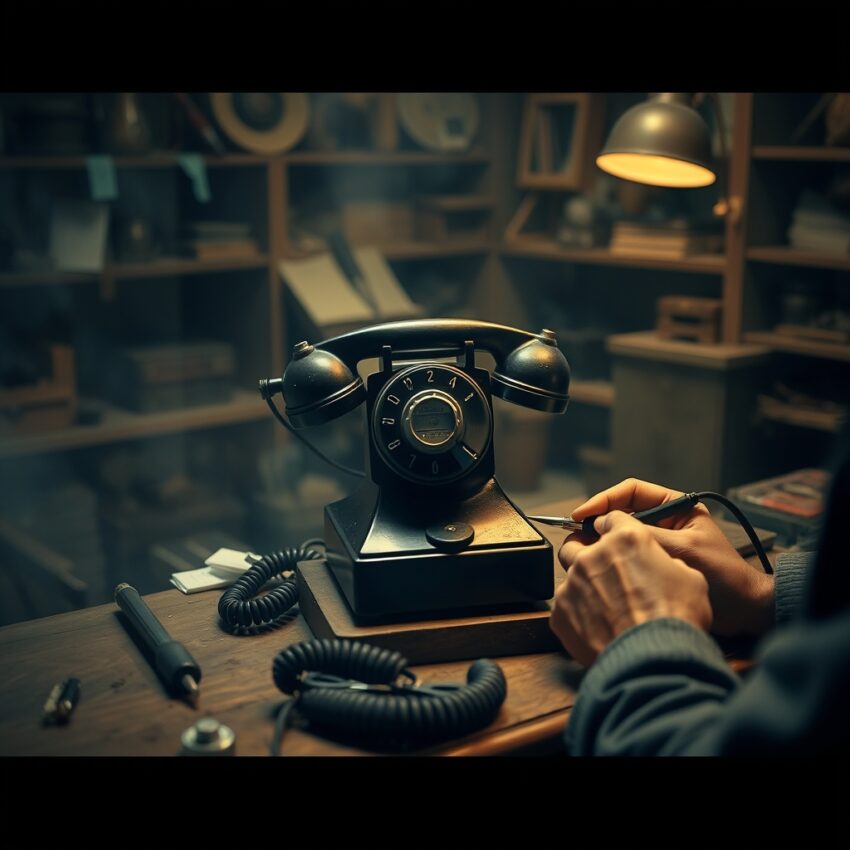
Bir zamanlar mahalle elektronikçisinin ya da telefon tamircisinin dükkânına yaklaşmak, yalnız arızalı bir eşyanın akıbetini öğrenmek değil, analog çağın sabrına tanıklık etmek demekti. Camı buğulanmış dükkân penceresinin arkasında, duvara asılı kabloların, küçük tornavidaların, lehim kokusunun ve köşede sessizce bekleyen çevirmeli telefonların arasında başka bir zaman akardı. Anteni çevirdikçe netleşen görüntü nasıl ev içindeki umudu diri tutuyorsa, tamir tezgâhında parçalarına ayrılan bir telefon da eşyanın hemen vazgeçilmeyecek bir şey olduğunu anlatırdı. O dükkânlarda nesneler bozuldukları anda ölü sayılmaz, biraz uğraş, biraz dikkat ve biraz ustalıkla yeniden hayata dönebilecek şeyler olarak görülürdü. İşte çevirmeli telefonun tamircilerin elinde ikinci bir ömür bulması, bu kültürün en belirgin işaretlerinden biridir.
Teknoloji Mirası açısından çevirmeli telefon yalnız bir iletişim aracı değildir; sesin eve nasıl girdiğini, beklemenin nasıl doğal sayıldığını ve mekanik düzeneklerle kurulan güveni temsil eder. Ahizenin ağırlığı, numara çevirirken yayılan o düzenli tıkırtı, kablonun hafif dolaşması, arama tamamlanana kadar duyulan kısa sessizlik, hepsi cihazı gündelik hayatın somut bir parçası hâline getirirdi. Bu yüzden bozulduğunda hemen yenisini almak yerine ustaya götürmek neredeyse doğal bir refleks olurdu. Çünkü telefonun kendisiyle birlikte ona bağlı alışkanlıklar da kıymetliydi. Evin antre komodininin üstünde duran bir telefon, yalnız konuşmayı değil, beklemeyi, haber almayı, özel anların sesle mühürlenmesini de taşıyordu.
Cam buğusunun ardından sokağın hafızasına sinen bu tamir kültürü, biraz da o yılların ekonomik ve duygusal gerçekliğinden doğuyordu. Bir eşya kolayca çöpe atılmazdı; çünkü her aletin içinde para kadar emek, zaman kadar alışkanlık vardı. Tamircinin dükkânı bu yüzden arıza giderilen bir yerden çok, eşyanın kaderinin uzatıldığı bir ara durak gibiydi. Çevirmeli telefonun içi açılır, yayları kontrol edilir, kabloları yenilenir, bazen dış gövdesi silinip parlatılırdı. Usta, yalnız makineyi düzeltmez; cihazın eve döndüğünde yeniden güven vermesini de sağlardı. Dışarıda buğulu camın önünde bekleyen müşteri için o tezgâh, biraz teknik bilgi, biraz maharet ve biraz da teselli demekti.
Anten çevirmekle çevirmeli telefon arasında görünmeyen bir akrabalık vardır. Biri görüntüyü, öteki sesi netleştirir; ama ikisi de insanı sabırla ilişki kurmaya zorlar. Televizyonda görüntü karıncalandığında birinin kalkıp antenle oynaması ne kadar sıradansa, telefonda hırıltı olduğunda onu tamirciye götürmek de o kadar olağandı. Analog çağın umudu tam da buradaydı: cihazların düzelip yeniden hizmet verebileceğine dair inanç. Bu inanç, teknolojiyi tüketilecek değil, sürdürülecek bir şey olarak görürdü. O yüzden tamircilerin dükkânları, yalnız lehim ve vida değil, gündelik hayata dair bir dayanıklılık fikri de taşırdı.
Bugün çevirmeli telefonun tamircinin elinde ikinci bir ömür buluşunu hatırlatan şey biraz da kaybolan o dikkat kültürüdür. Cihazın mekanik sesine kulak vermek, arızasını anlamaya çalışmak, usta elinden çıktıktan sonra onu daha özenle kullanmak eski şehir hayatının sessiz eğitimlerinden biriydi. Cam buğusunun ardından görünen o küçük dükkânlar, sokak hafızasında bu yüzden hâlâ canlıdır. Onlar bize bir zamanlar teknolojinin yalnız yenilik değil, bakım ve sadakat meselesi de olduğunu hatırlatır. Çevirmeli telefonun ikinci ömrü, aslında bir dönemin eşyaya gösterdiği vefanın adıdır.
🇬🇧 English | The Story of an Extended Analog Life on the Repair Bench
There was a time when approaching the neighborhood electronics shop or telephone repairman meant more than checking on the fate of a broken object; it meant witnessing the patience of the analog age. Behind a fogged window, among cables hanging from the wall, small screwdrivers, the smell of solder, and rotary telephones quietly waiting in the corner, another sense of time unfolded. Just as hope sharpened when the antenna was turned to clear a television image, a telephone taken apart on the repair bench told people that an object was not dead the moment it failed. With enough attention, effort, and craft, it could return to life. The rotary telephone’s second life in the hands of repairmen is one of the clearest signs of that culture.
From the perspective of technological heritage, the rotary telephone was more than a communication tool. It represented how sound entered the home, how waiting was accepted as natural, and how trust was built through mechanical systems. The weight of the receiver, the measured clicking of the dial, the slight twisting of the cord, and the short silence before a call connected all made the device feel materially rooted in everyday life. For that reason, when it broke, taking it to a craftsman instead of replacing it felt almost instinctive. The value lay not only in the phone itself, but in the habits attached to it. A telephone resting on the hall table held not just conversation, but waiting, news, anticipation, and the sealing of intimate moments through voice.
This repair culture, settling into the memory of the street behind fogged glass, came partly from the economic and emotional realities of its time. Objects were not easily thrown away, because each device contained not only money, but labor, time, and habit. The repair shop therefore functioned as more than a place where faults were fixed; it was a station where the life of objects was extended. The rotary phone would be opened, its springs checked, its wires renewed, sometimes its shell cleaned and polished. The repairman did more than restore a mechanism; he made sure the object would again inspire confidence when it returned home. For the customer waiting outside the misted window, that workbench meant a mixture of technical knowledge, hand skill, and consolation.
There is an invisible kinship between turning an antenna and repairing a rotary telephone. One clarifies an image, the other restores a voice, but both ask human beings to enter into a patient relationship with technology. Just as it was ordinary for someone to stand up and adjust the antenna when the television picture filled with snow, it was equally natural to carry a noisy telephone to the repairman. The hope of the analog age was rooted precisely here: in the belief that devices could be set right and serve again. That belief treated technology not as something to consume, but as something to sustain. For that reason the repair shops carried not only solder and screws, but also an ethic of durability woven into everyday life.
What still makes the rotary telephone’s second life so memorable today is the culture of attention that surrounded it. Listening carefully to the mechanics of a device, trying to understand the nature of its fault, then using it more thoughtfully after it had passed through a craftsman’s hands was one of the quiet educations of older urban life. Those small shops glimpsed through fogged glass remain vivid in street memory for that reason. They remind us that technology was once a matter not only of novelty, but of maintenance and loyalty. The rotary telephone’s second life is, in truth, another name for an era’s fidelity to its objects.
🇧🇷 Português (Brasil) | A História da Vida Analógica Prolongada sobre a Bancada de Conserto
Houve um tempo em que se aproximar da loja de eletrônica do bairro ou do consertador de telefones significava mais do que saber o destino de um aparelho quebrado; significava testemunhar a paciência da era analógica. Por trás do vidro embaçado da vitrine, entre fios pendurados na parede, pequenas chaves de fenda, cheiro de solda e telefones de disco esperando em silêncio no canto, corria outro tipo de tempo. Assim como a esperança ficava mais nítida quando a antena era girada para limpar a imagem da televisão, um telefone desmontado sobre a bancada mostrava que um objeto não morria no instante em que falhava. Com atenção, trabalho e habilidade, ele podia voltar à vida. O fato de o telefone de disco encontrar uma segunda vida nas mãos dos consertadores é um dos sinais mais claros dessa cultura.
Do ponto de vista do legado tecnológico, o telefone de disco era mais do que um instrumento de comunicação. Ele representava a forma como a voz entrava na casa, como a espera era considerada natural e como a confiança se apoiava em mecanismos visíveis. O peso do fone, o clique ritmado do disco ao voltar, a leve torção do fio e o curto silêncio antes da ligação completar faziam do aparelho uma presença concreta na rotina. Por isso, quando quebrava, levá-lo ao consertador em vez de trocá-lo parecia quase instintivo. O valor estava não só no telefone, mas nos hábitos ligados a ele. Um aparelho sobre a mesa do corredor guardava não apenas conversas, mas também espera, notícias, expectativa e a marca dos momentos importantes vividos pela voz.
Essa cultura do conserto, que se depositava na memória da rua por trás do vidro embaçado, vinha também das realidades econômicas e afetivas daquele tempo. As coisas não eram jogadas fora com facilidade, porque cada aparelho continha não apenas dinheiro, mas trabalho, tempo e costume. A oficina, por isso, era mais do que um lugar de reparo; era uma parada onde a vida dos objetos era estendida. O telefone de disco era aberto, suas molas eram verificadas, os fios eram trocados e às vezes a carcaça era limpa e polida. O consertador não restaurava apenas um mecanismo; devolvia ao objeto a confiança necessária para voltar para casa. Para quem esperava do lado de fora, diante do vidro enevoado, aquela bancada significava técnica, destreza e também consolo.
Existe um parentesco invisível entre girar uma antena e consertar um telefone de disco. Uma ação devolve nitidez à imagem, a outra restitui clareza à voz, mas ambas obrigam a pessoa a manter uma relação paciente com a tecnologia. Assim como era comum alguém levantar para mexer na antena quando a televisão ficava cheia de ruído, também era natural levar o telefone chiando ao consertador. A esperança da era analógica estava justamente aí: na crença de que os aparelhos podiam ser acertados e servir de novo. Essa crença via a tecnologia não como algo descartável, mas como algo a ser sustentado. Por isso, as oficinas guardavam não apenas solda e parafusos, mas também uma ideia cotidiana de durabilidade.
O que ainda torna memorável a segunda vida do telefone de disco é a cultura de atenção que o cercava. Ouvir com cuidado o som mecânico do aparelho, tentar compreender o defeito e depois usá-lo com mais zelo ao sair das mãos do consertador era uma das educações silenciosas da antiga vida urbana. Essas pequenas lojas vistas por trás do vidro embaçado continuam vivas na memória da rua por isso mesmo. Elas lembram que a tecnologia já foi não apenas novidade, mas também manutenção e fidelidade. A segunda vida do telefone de disco é, na verdade, outro nome para a lealdade de uma época aos seus objetos.