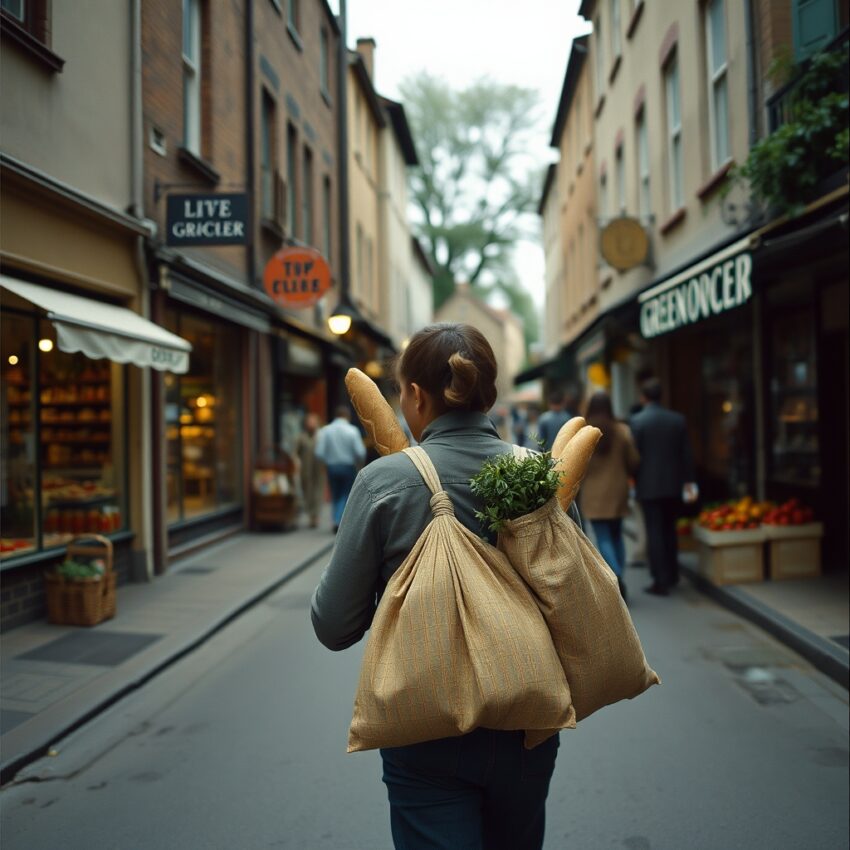
🇹🇷 Türkçe | Pazar Dönüşü Filelerin Taşıdığı Mahalle Yakınlığı
Bir zamanlar pazar dönüşü, yalnız evin haftalık ihtiyacını taşıyan bir yürüyüş değildi; mahallenin ritmini, insan ilişkilerini ve güven duygusunu da eve getiren bir yolculuktu. Kolları biraz aşağı çeken filelerin içinden maydanozun yeşili, portakalın parlaklığı, ekmeğin sıcak kabuğu ve kâğıda sarılmış beyaz peynir görünürdü. Sokaktan eve dönülürken bakkala uğranır, eksik kalan bir şey sorulur, manavla ayaküstü iki cümle edilir, kasabın vitrini önünde ertesi günün yemeği düşünülürdü. Pazar çantası ya da file, sadece taşıma aracı değil, mahalle ekonomisinin ve komşuluk dilinin gündelik eşlikçisiydi. Dolu filelerle eve dönen biri, aslında o semtin insanlarıyla kurduğu düzenli ilişkiyi de omzunda taşırdı. O yüzden pazar dönüşü görüntüsü, eski mahalle hayatının en tanıdık ve en sıcak sahnelerinden biri olarak hafızada kaldı.
Mahalle Kültürü içinde bu günlerin önemi, alışverişin sadece satın alma işlemi olmamasında yatar. Mahalle esnafı müşterisini çoğu zaman adıyla tanır, hangi evde kaç çocuk olduğunu, kimlerin zeytini daha az tuzlu sevdiğini, kimin ay sonunu beklediğini bilirdi. Filelerin dolması, bir yandan eve bereket duygusu getirirken, öte yandan bu tanışıklık ağını görünür hale getirirdi. Pazardan dönen biri manavın tavsiye ettiği domatesi, bakkalın ayırdığı çayı, fırıncının sıcak simidini aynı günün içine yerleştirirdi. Bu ilişkiler yazılı kurallarla değil, tekrar eden karşılaşmalarla ve küçük hatırlama biçimleriyle güçlenirdi. Filede taşınan her ürün, aslında bir selamın, bir güvenin ya da ertesi güne bırakılmış kısa bir hesabın parçasıydı. Böylece alışveriş, ekonomik olduğu kadar duygusal bir dolaşım da yaratırdı.
Bu kültürün en canlı tarafı, pazar dönüşünün sokakta bıraktığı görünürlüktü. Merdiven başında filelerin yere bırakılıp anahtar aranması, apartman girişinde komşunun “ne aldın bugün?” diye sorması, çocukların fileden gizlice mandalina seçmeye çalışması, o anı küçük bir sosyal törene dönüştürürdü. Esnafla bağ da tam bu tekrar eden sahnelerde güçlenirdi. Her hafta aynı tezgâhtan meyve almak, aynı fırından ekmek çıkarmak, aynı aktarın kavanoz kokusunu duymak, semtin insanlarını birbirine yabancı olmaktan çıkarırdı. Mahalle ekonomisi büyük zincirlerin hızına değil, bu tanışıklığın yavaş ama sağlam akışına dayanırdı. Pazar dönüşü dolan fileler, bu yüzden sadece yiyecek dolu değildi; içinde güven, alışkanlık ve karşılıklı hatırlanma hissi de bulunurdu. Bir mahallenin gerçek sıcaklığı çoğu zaman bu küçük taşıma sahnelerinde saklıydı.
Bugün filelerin yerini çoğu zaman poşetler, hızlı teslimatlar ve kimsenin kimseyi tanımadığı alışveriş biçimleri aldı. Ama pazar dönüşü dolan fileleri düşündüğümüzde özlediğimiz şey yalnız eski alışveriş araçları değildir. Asıl özlenen, bir semtte yaşamanın görünür ve hissedilir bağlarıdır. Mahalle esnafıyla kurulan ilişki, yalnız ürün kalitesi ya da fiyat üzerinden değil, karşılaşma sürekliliği ve karşılıklı güven üzerinden güçlenirdi. Fileyi eve taşıyan el, aslında semtin hafızasını da taşırdı. Bu yüzden eski pazar dönüşleri, basit bir alışveriş alışkanlığından daha büyük bir anlam taşır: onlar, gündelik hayatın içindeki topluluk hissinin nasıl kurulduğunu anlatır. Dolu filelerin ağırlığında biraz da mahalleye ait olmanın rahatlığı vardı.
🇬🇧 English | The Neighborhood Closeness Carried Home by Filled Market Bags
There was a time when the walk back from the market carried more than a week’s household needs. It also brought home the rhythm of the neighborhood, human ties, and a feeling of trust. From the string bags that pulled slightly at one’s arms, the green of parsley, the brightness of oranges, the warm crust of bread, and white cheese wrapped in paper could all be seen. On the way home, there would be a stop at the grocer for whatever remained missing, a quick exchange with the greengrocer, and a pause before the butcher’s window to imagine the next day’s meal. The market bag was not just a practical container. It was a daily companion to the economy of the neighborhood and the language of familiarity. A person returning home with filled bags was also carrying the steady network of relationships built with the people of that district. That is why the image of returning from the market remains one of the warmest and most familiar scenes in neighborhood memory.
Within neighborhood culture, the importance of those days lies in the fact that shopping was never only a transaction. Shopkeepers often knew customers by name, knew how many children lived in which apartment, who preferred less-salty olives, and who needed to wait until the end of the month. As the bags filled, they brought not only abundance into the house, but also made this web of recognition visible. The person returning from the market carried tomatoes recommended by the greengrocer, tea set aside by the grocer, and warm simit fresh from the baker, all within the same day’s rhythm. Such ties were not built through formal rules, but through repeated encounters and small acts of remembering. Every item in the bag was also part of a greeting, a trust, or a short account left for another day. In this way, shopping created a circulation that was emotional as much as economic.
One of the liveliest parts of this culture was how visible the market return became in the street. A bag set down on the stairs while keys were searched for, a neighbor asking at the entrance, “What did you get today?”, children trying to steal a tangerine from the bag, all turned the moment into a small social ritual. The bond with shopkeepers grew precisely in these recurring scenes. Buying fruit from the same stall each week, picking up bread from the same bakery, smelling the jars of the same herbalist, all made the people of the neighborhood less like strangers to one another. The local economy did not depend on the speed of large chains, but on this slow and reliable flow of acquaintance. Filled market bags therefore carried more than food; they also held trust, habit, and the feeling of being remembered. The real warmth of a neighborhood often lived in these modest acts of carrying.
Today, string bags have largely been replaced by plastic bags, quick delivery services, and forms of shopping in which nobody knows anyone else. Yet what we miss when we think of those filled market bags is not only an old object. What is truly missed are the visible and tangible ties of living within a district. The relationship with neighborhood shopkeepers was strengthened not only by quality or price, but by continuity of encounter and mutual trust. The hand carrying the bag home was carrying the memory of the neighborhood as well. That is why the old returns from the market mean more than a simple habit of buying food; they show how a sense of community was built inside daily life. In the weight of those filled bags there was also the quiet comfort of belonging somewhere.
🇧🇷 Português (Brasil) | A Proximidade do Bairro que Voltava para Casa nas Sacolas Cheias
Houve um tempo em que voltar da feira não significava apenas trazer a compra da semana para casa. Significava também levar de volta o ritmo do bairro, os vínculos humanos e uma sensação de confiança. Das sacolas de rede que puxavam levemente os braços apareciam o verde da salsa, o brilho da laranja, a casca quente do pão e o queijo branco embrulhado em papel. No caminho para casa, parava-se no armazém para buscar o que faltou, trocavam-se duas palavras com o verdureiro e pensava-se no almoço do dia seguinte diante da vitrine do açougue. A sacola não era somente um objeto de transporte. Era companheira cotidiana da economia do bairro e da linguagem da vizinhança. Quem voltava com as sacolas cheias levava também consigo a rede de relações construídas com as pessoas da região. Por isso, a cena do retorno da feira ficou guardada como uma das imagens mais calorosas da memória de bairro.
Dentro da cultura de bairro, a importância desses dias está no fato de que comprar nunca era apenas uma transação. Os comerciantes conheciam os fregueses pelo nome, sabiam em qual casa havia mais crianças, quem preferia azeitonas menos salgadas e quem precisava esperar o fim do mês. À medida que as sacolas se enchiam, entrava em casa não apenas fartura, mas também essa rede de reconhecimento. Quem voltava da feira trazia o tomate recomendado pelo verdureiro, o chá guardado pelo dono do armazém, o simit ainda quente da padaria, tudo encaixado no ritmo do mesmo dia. Esses laços não nasciam de regras formais, mas de encontros repetidos e pequenas formas de lembrança. Cada item na sacola fazia parte também de um cumprimento, de uma confiança ou de uma conta curta deixada para outro dia. Assim, a compra criava uma circulação afetiva tanto quanto econômica.
Uma das faces mais vivas dessa cultura era a visibilidade do retorno da feira na rua. A sacola colocada no chão enquanto se procurava a chave, o vizinho perguntando na entrada “o que você trouxe hoje?”, as crianças tentando pegar escondido uma tangerina, tudo transformava o momento num pequeno ritual social. O vínculo com os comerciantes crescia justamente nessas cenas repetidas. Comprar fruta na mesma banca toda semana, buscar pão na mesma padaria, sentir o cheiro dos potes do mesmo armazém de ervas fazia com que os moradores deixassem de ser estranhos uns para os outros. A economia local não dependia da rapidez das grandes redes, mas desse fluxo lento e sólido de familiaridade. Por isso, as sacolas cheias carregavam mais do que comida; levavam também confiança, hábito e a sensação de ser lembrado. Muitas vezes o verdadeiro calor de um bairro morava nesses gestos simples.
Hoje, as sacolas de rede deram lugar a sacos plásticos, entregas rápidas e formas de compra em que quase ninguém conhece ninguém. Mas o que sentimos falta ao lembrar dessas sacolas cheias não é apenas um objeto antigo. O que faz falta de verdade são os laços visíveis e sensíveis de viver num mesmo bairro. A relação com os comerciantes se fortalecia não só pelo preço ou pela qualidade, mas pela continuidade dos encontros e pela confiança mútua. A mão que levava a sacola para casa carregava também a memória do lugar. Por isso, os velhos retornos da feira significam mais do que um hábito simples de abastecimento; eles mostram como o sentimento de comunidade era construído no cotidiano. No peso das sacolas cheias havia também o conforto silencioso de pertencer.