🇹🇷 Türkçe | Bakır Sahanın Evden Eve Taşınan Zevk Hafızası
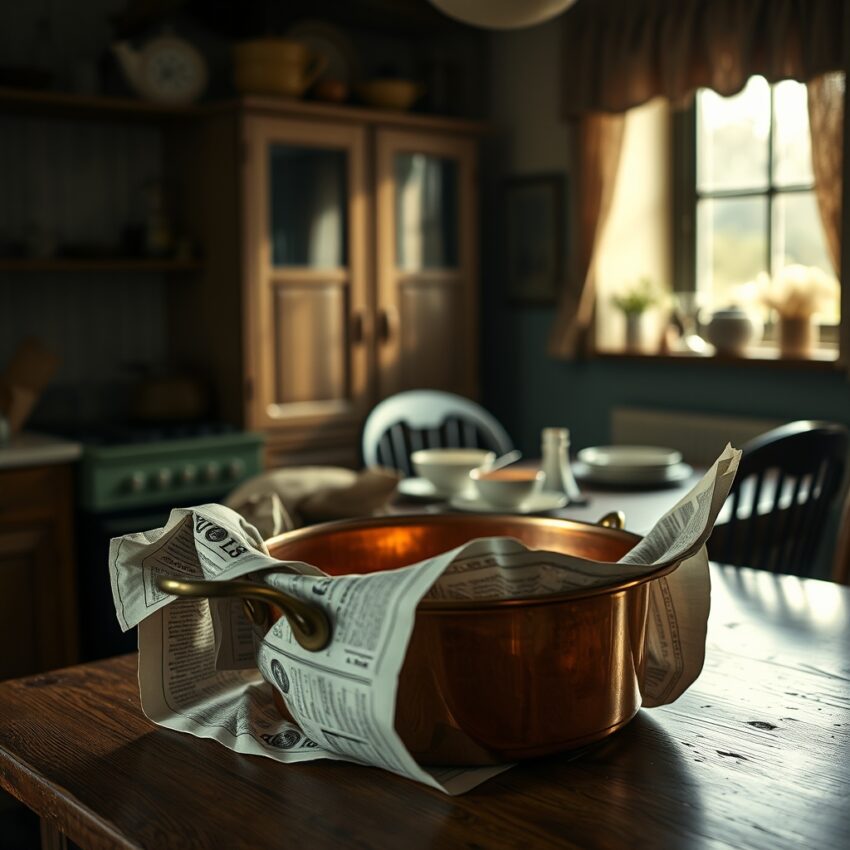
Bir evin mutfağında bazı eşyalar yalnızca kullanıldığı için değil, her taşınmada özenle sarılıp yeniden yerleştirildiği için kıymet kazanırdı. Bakır sahan da bu eşyaların başında gelirdi. Parlaklığı zamanla koyulaşsa, kulpu hafifçe gevşese, tabanı sayısız yemekle iz tutsa bile, sofrayla kurduğu bağ zayıflamazdı. Kimi zaman vitrinin üst rafında, kimi zaman mutfak dolabının en güvenli köşesinde saklanır; bayramlarda, misafir sofralarında ya da aileyi bir araya getiren özel akşamlarda yeniden ortaya çıkarılırdı. Bir taşınma günü geldiğinde, tabaklardan ve bardaklardan ayrı sarılan, gazeteye dikkatle paketlenen bu sahan, evin düzeni kadar ev sahibinin zevkini de yanında taşıyan bir eşya sayılırdı. Çünkü bakır yalnız bir malzeme değil, bir dönemin parlaklık anlayışını, mutfak estetiğini ve özen duygusunu temsil ediyordu.
Obje Hikayeleri içinde bakır sahanın yeri, tam da bu kullanım ile estetik arasındaki dengede belirginleşir. Cumhuriyet döneminin orta sınıf evlerinde ya da daha eski aile düzenlerinde bakır mutfak eşyaları, hem işlevsel hem gösterişli kabul edilirdi. Sahanın sofraya gelişi yalnız yemek sunmak için değil, o yemeğin değerini görsel olarak yükseltmek içindi. Bakırın cilalandığında verdiği sıcak parıltı, emaye ya da alüminyumun daha sade görünümünden ayrılır; eve ince bir ihtimam duygusu katardı. Bu yüzden taşınmalar boyunca korunması, onun yalnız pahalı olmasından değil, evin zevk terbiyesini temsil etmesinden kaynaklanıyordu. Bir evden ötekine giden sahan, duvar rengi, perde kumaşı ya da masa örtüsü değişse bile, ailenin estetik çizgisini devam ettiren sessiz bir tanık olurdu. Üstelik çoğu zaman anneden kıza, teyzeden yeğene geçen bir hatıraya da dönüşürdü.
Bakır sahanın taşıdığı hafızada gündelik yaşamın sayısız ayrıntısı birikir. İçinde sunulan pilavın buharı, üzerine dizilen dolmalar, ocaktan sofraya gelişte duyulan metal sesi, bulaşık sonrası kurulanırken alınan o temiz bakır kokusu, hepsi ev içi hayatın duyusal parçalarıdır. Taşınma sandıkları hazırlanırken mutfak eşyalarının arasında ona özel bir yer ayrılması, ailelerin eşya seçimini yalnız kullanım üzerinden yapmadığını gösterirdi. Estetik, dayanıklılık ve hatıra aynı gövdede birleşirdi. Yeni eve geçildiğinde yerleştirilen ilk eşyalardan biri bazen yine o sahan olurdu; çünkü tanıdık bir objenin yeni mutfakta görünmesi, eve yerleşme duygusunu hızlandırırdı. Eski evin ışığı onda sürer, yeni evin düzeni onun etrafında biraz daha tanıdık hale gelirdi. Bu nedenle bakır sahan, göçen ev hayatının küçük ama güçlü sabitlerinden biriydi.
Bugün bakır eşyalar çoğu zaman dekoratif bir nostalji nesnesi gibi görülse de, onların asıl hikâyesi gündelik kullanımla kurdukları yakın ilişkidedir. Bakır sahanın bir dönemin zevk anlayışını yansıtması, yalnız parlak ya da güzel bulunmasından değil; işlevi, gösterişi ve aile hafızasını aynı anda taşımasından gelir. Her taşınmada eve eşlik eden bu hatıra, geçmişte güzel olanın yalnız yeni ve pahalı olandan ibaret olmadığını, bakım gören ve kuşaktan kuşağa aktarılan şeylerin de zarafet sayıldığını hatırlatır. Bir mutfak objesi olarak başlayıp aile hikâyesine dönüşen bakır sahan, ev kültürünün ne kadar dokunsal ve duygusal bir dünya olduğunu gösterir. Belki de bu yüzden, bugün bile bir bakır sahan görüldüğünde insan yalnız eski mutfakları değil, evden eve taşınan o titiz zevki de hatırlar.
🇬🇧 English | The Memory of Taste Carried from Home to Home by the Copper Pan
In a kitchen, some objects gained value not only because they were used, but because they were carefully wrapped and placed again in every move. The copper pan stood at the head of those objects. Even as its shine darkened with time, its handle loosened slightly, and its base bore the marks of countless meals, the bond it held with the table never weakened. Sometimes it rested on the highest shelf of a cabinet, sometimes in the safest corner of the kitchen, and then reappeared on holidays, when guests arrived, or on evenings that gathered the family together. When moving day came, it was wrapped separately from plates and glasses, carefully folded into newspaper, treated as an object that carried not only the arrangement of a home, but also the taste of its owners. Copper was more than a material. It represented an era’s sense of brightness, kitchen elegance, and domestic care.
Within the stories of objects, the place of the copper pan becomes clear precisely in this balance between function and beauty. In middle-class Republican homes, and in older household traditions as well, copper kitchenware was seen as both useful and distinguished. Bringing such a pan to the table did more than serve food; it elevated the meal visually and emotionally. The warm glow of polished copper differed from the plainer look of enamel or aluminum, adding a subtle feeling of refinement to the home. This is why it was protected through moves, not only because it cost something, but because it represented the household’s cultivated taste. A pan traveling from one apartment to another remained a quiet witness to the family’s aesthetic line, even if curtain fabrics, wall colors, or tablecloths changed. Very often it also became an inherited memory, passing from mother to daughter or from aunt to niece.
The memory carried by the copper pan gathers countless details of daily life. The steam rising from pilaf served inside it, stuffed vegetables arranged in its round form, the metallic sound it made while moving from stove to table, the clean copper scent that appeared when it was dried after washing, all belong to the sensory world of home life. The fact that a special place was reserved for it when moving crates were prepared shows that families did not choose objects only for utility. Aesthetic value, durability, and memory came together in the same body. In a new house, the pan might be one of the first objects to be placed, because seeing a familiar piece in an unfamiliar kitchen helped the feeling of settlement arrive sooner. The light of the old home seemed to continue in it, and the order of the new one became more recognizable around it. For that reason, the copper pan was one of the small yet powerful constants of a life that kept moving.
Today, copper objects are often treated as decorative nostalgia, yet their true story lies in the closeness they once had with daily use. What allowed the copper pan to reflect the taste of an era was not only that it was considered beautiful or polished, but that it carried function, display, and family memory all at once. This object that accompanied a home through every move reminds us that what counted as beautiful in the past was not limited to what was new or expensive; things cared for and handed down across generations were also seen as graceful. Beginning as a kitchen tool and becoming part of a family story, the copper pan reveals how tactile and emotional the world of home culture once was. That may be why, even now, the sight of a copper pan recalls not only old kitchens, but also the careful taste that traveled from one home to another.
🇧🇷 Português (Brasil) | A Memória de Gosto que a Frigideira de Cobre Levava de Casa em Casa
Numa cozinha, alguns objetos ganhavam valor não apenas por serem usados, mas porque eram embrulhados com cuidado e recolocados a cada mudança. A frigideira de cobre estava entre eles. Mesmo quando o brilho ficava mais escuro com o tempo, a alça afrouxava um pouco e a base guardava marcas de muitas refeições, a ligação com a mesa permanecia intacta. Às vezes ela ficava na prateleira mais alta, às vezes no canto mais seguro do armário, e reaparecia em feriados, em jantares com visita ou nas noites em que a família se reunia inteira. Quando chegava o dia da mudança, era embrulhada separadamente de pratos e copos, protegida com jornal, como um objeto que carregava não apenas a organização da casa, mas também o gosto de quem vivia nela. O cobre era mais do que um material. Representava o brilho, a estética da cozinha e o cuidado doméstico de uma época.
Dentro das histórias dos objetos, o lugar da frigideira de cobre aparece exatamente nesse equilíbrio entre função e beleza. Nas casas de classe média do período republicano, e também em arranjos domésticos mais antigos, utensílios de cobre eram vistos ao mesmo tempo como práticos e elegantes. Levar a frigideira à mesa não servia apenas para apresentar a comida; também valorizava visualmente a refeição. O brilho quente do cobre polido se distinguia do aspecto mais simples do esmalte ou do alumínio, acrescentando um sentimento de capricho à casa. Por isso ela era preservada nas mudanças, não apenas porque tinha valor material, mas porque representava o gosto cultivado da família. Ao passar de uma casa para outra, a peça permanecia como testemunha silenciosa da linha estética do lar, mesmo quando mudavam a cor da parede, a cortina ou a toalha da mesa. Muitas vezes ainda se transformava em lembrança herdada, passada de mãe para filha ou de tia para sobrinha.
Na memória que essa frigideira carrega, acumulam-se muitos detalhes da vida cotidiana. O vapor do arroz servido dentro dela, os legumes recheados dispostos na sua forma redonda, o som metálico no caminho do fogão até a mesa, o cheiro limpo do cobre quando era enxugada, tudo pertence ao universo sensorial da casa. O fato de receber um lugar especial entre as caixas da mudança mostra que as famílias não escolhiam seus objetos apenas pela utilidade. Estética, durabilidade e lembrança se reuniam no mesmo corpo. Na casa nova, às vezes ela era uma das primeiras peças a ser colocada, porque ver um objeto conhecido numa cozinha desconhecida ajudava o sentimento de pertencimento a chegar mais rápido. A luz da casa antiga parecia continuar nela, e a ordem da casa nova ficava mais familiar ao seu redor. Por isso, a frigideira de cobre era uma das pequenas constâncias de uma vida doméstica em deslocamento.
Hoje, objetos de cobre muitas vezes são vistos apenas como decoração nostálgica, mas sua verdadeira história está na intimidade que tiveram com o uso diário. O que fez a frigideira de cobre refletir o gosto de uma época não foi somente sua beleza ou seu brilho, e sim a capacidade de carregar função, exibição e memória familiar ao mesmo tempo. A lembrança que acompanhava a casa em cada mudança nos recorda que, no passado, o belo não era apenas o que era novo e caro; também havia elegância no que era cuidado e transmitido entre gerações. Começando como utensílio de cozinha e tornando-se parte da história de uma família, a frigideira de cobre mostra como a cultura da casa era um mundo profundamente tátil e afetivo. Talvez por isso, ainda hoje, ao ver uma peça dessas, a pessoa se lembre não só das cozinhas antigas, mas também do gosto cuidadoso que viajava de casa em casa.