Eski Pano
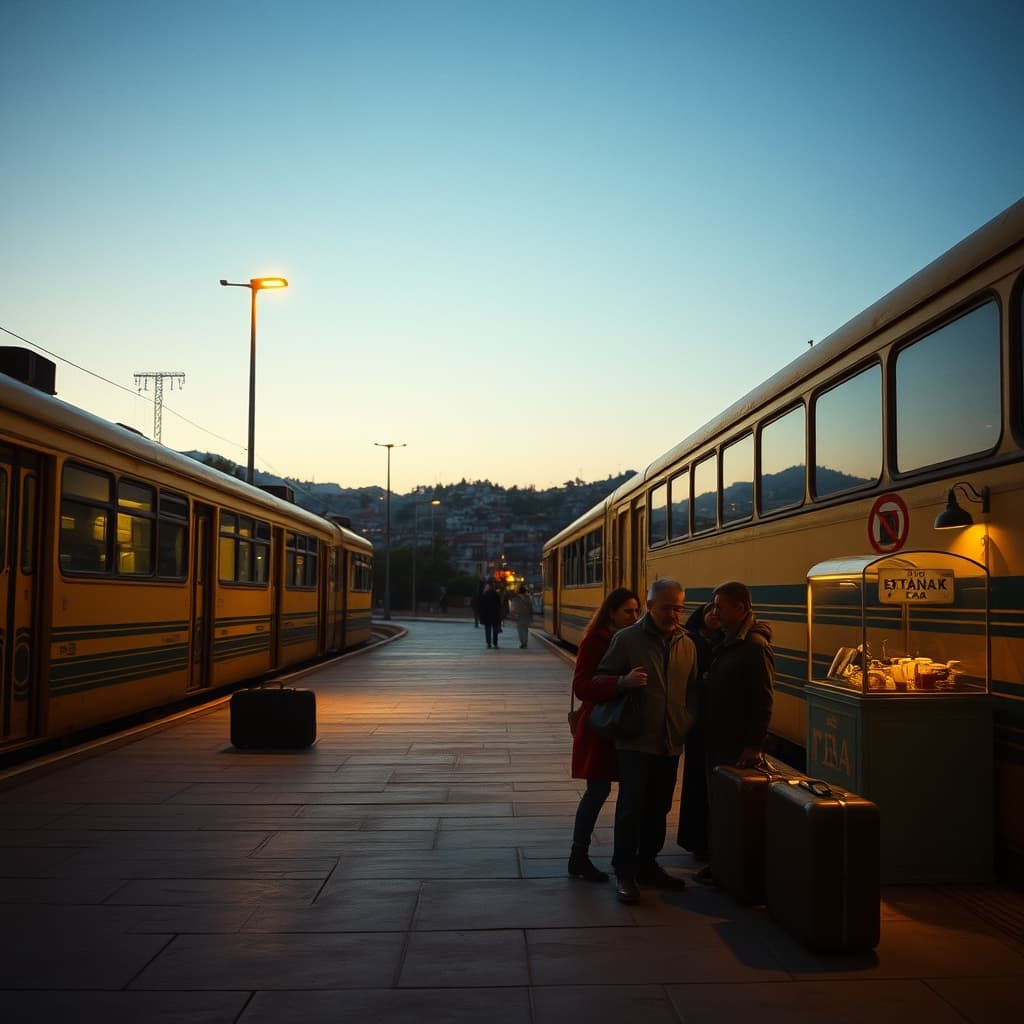
There was a time when city bus terminals carried less the feeling of travel than the scent of waiting. As the late afternoon cool settled in, the smell of diesel mixing with misted glass, mothers holding market bags, fathers with jackets over one shoulder, and suitcases standing silently in a corner built the whole scene of departure and return at first glance. The yellow lights falling over the platforms, city names trembling on the windshields of buses, and the cracked voice rising from the loudspeaker were enough to make the spirit of an era visible within minutes. Outside the terminal, on an evening softened by early summer fatigue, the linden scent drifting from nearby gardens touched that hard stone ground and made everything seem more tender. Perhaps the first reason those years look brighter when we turn back toward them is exactly this: they could hold hardness and affection, separation and hope, in the same air.
Seen along the trail of time, bus terminals were never just transport hubs. They were among the liveliest stages of the social transformation stretching from small towns to cities and from cities back to home provinces. Old newspapers wrote about holiday crowds, extra departures, the rise in summer passengers, and competition among long-distance bus companies, but another story flowed between those lines. Young people leaving for work in the big city, students traveling for their first university registration, families packing for seasonal labor, and migrants counting down the days to return home during annual leave all left different weights in the memory of the same terminal. Every ticket held not only a seat number, but also the silence of a house left behind. That is why the expression on the faces saying goodbye on the platform often lasted longer than the trip itself.
The details of daily life made this memory even deeper. Tea glasses lined up in quick succession at the refreshment counter, stacked boxes and blankets in the left-luggage corner, assistants shouting city names, children pleading for window seats, and pastries handed over at the last minute were among the terminal’s small rituals. In those years, a journey was never only the concern of the person leaving. The whole family gathered around it. An aunt tucked a handkerchief into a pocket, a neighbor said, “send word when you arrive,” and a younger sibling looked one last time at the bus plate number. In that way, the terminal became not just a building, but the emotional archive of the city. Stories of homesickness multiplied there because even when the word was not the same on every tongue, a similar absence was carried in every heart.
The way those gardens turn into the scent of linden in memory is no coincidence. In old urban life, the seasons were invisible narrators accompanying the feeling of separation. On late spring and early summer evenings, while heading toward the terminal, the linden fragrance drifting from apartment gardens, school walls, or the fronts of detached houses formed a strange yet unforgettable union with diesel and warm asphalt. What shines in memory years later is precisely that contrast. A hard farewell absorbed the smell of home, the middle of a crowded terminal suddenly held the feeling of a neighborhood evening, and the idea of distance ceased to be abstract and became a weather felt on the skin. Since people remember the past not only through what they saw, but through what they smelled, those gardens appear brighter now than they perhaps ever did then.
Perhaps the real reason those years seem brighter today is that even separation was lived collectively. Journeys are faster now, terminals are more functional, and farewells are shorter. In old terminals, however, waiting was a social condition. People understood a little of one another’s unease. Suitcases were carried, directions were given, children were distracted, tea was shared, and return dates were guessed aloud. When the bus finally pulled away, the faces waving from the platform held not only sadness, but also resilience. That is why the terminal years glow more brightly in retrospect: because even in those stern hours a linden scent wandered through the air and tied people back to home, and the story of longing for home carried not only separation, but also the hope of return.
In Those Old Hours That Revealed the Spirit of the Era, the Years When Bus Terminals Multiplied Stories of Longing for Home: Why Do the Gardens Turning into the Scent of Linden Seem Brighter in Retrospect?