 Eski Pano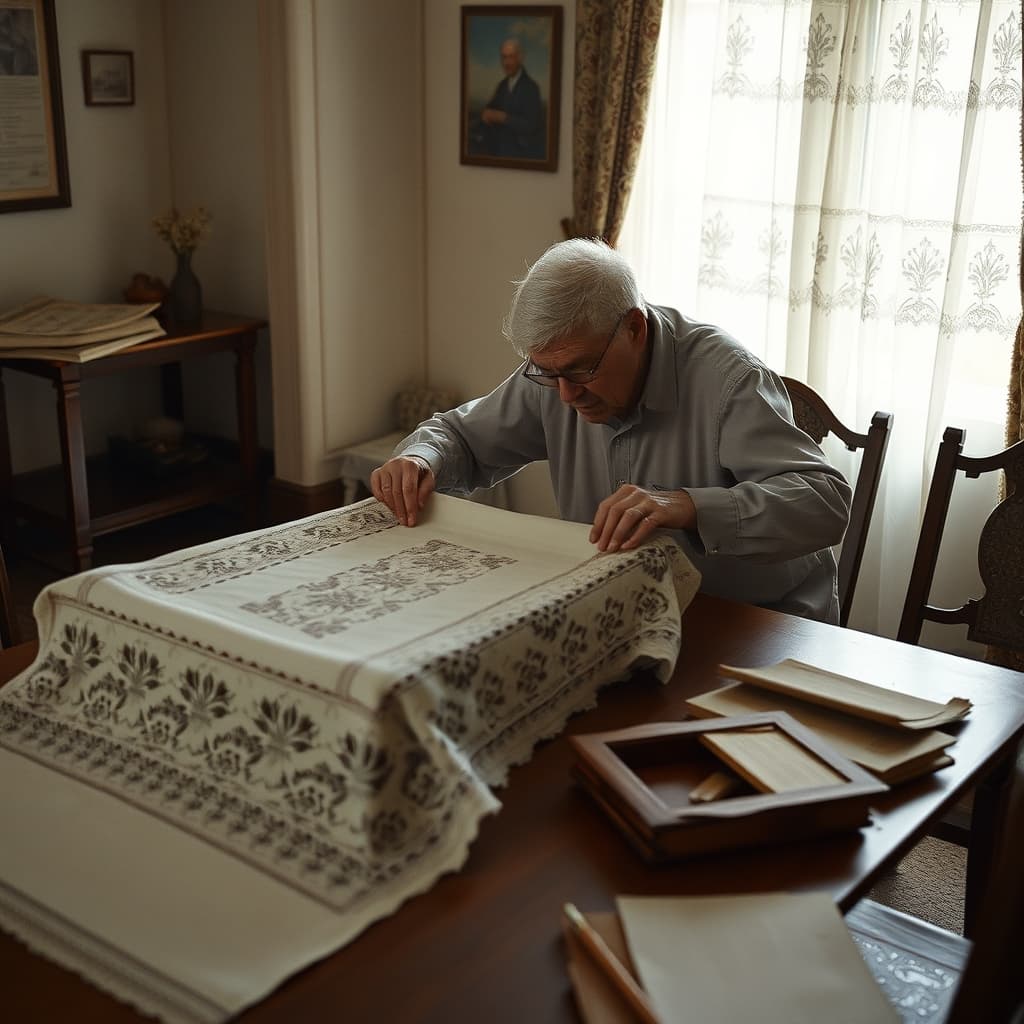
An openwork tablecloth can record daily use in details smaller than its pattern. A softened centre shows repeated contact with dishes; a faded edge may have faced a window; one reinforced corner marks where hands pulled it into place. The cloth attracts attention again not only because its openings look delicate, but because wear allows the household table to be read as a working surface.
Openwork is a broad description, not one technique. Threads may be withdrawn from woven cloth and the remaining structure bundled with stitches; openings may be cut and secured; crochet, lace inserts, embroidery, or machine-made effects may imitate related appearances. Fibre, weave, stitch, construction, maker, date, and regional terminology need examination before assigning a craft name.
The Pattern Was Engineered from Absence
A maker counted threads, marked borders, removed selected yarns, stabilised edges, and grouped what remained into bars or geometric units. Tension had to hold an opening without distorting the ground cloth. Corners, joins, and long straight lines revealed planning as much as decorative taste. Samples, unfinished work, needles, thread cards, and spoken counting methods can explain the process.
The labour often occupied hours between cooking, childcare, farming, paid employment, and visiting. Skill was taught by demonstration, correction, borrowed patterns, schoolwork, magazines, or observation of an older relative. Describing the result as natural feminine patience can erase training, eye strain, hand pain, material cost, and the possibility that a woman made such work for sale under financial pressure.
Use Left a Map across the Cloth
Tea, oil, fruit, candle wax, iron scorching, laundering, starch, sunlight, and abrasion changed fibres differently. Repairs may be almost invisible or deliberately strong. A replaced hem, contrasting darn, shortened edge, or patched burn does not automatically reduce historical value; it identifies a decision to keep the cloth in service. Oral history can connect a repair to a person or meal.
Repeated laundering could remove evidence while making the cloth presentable. Chlorine bleach weakens many fibres, optical brighteners alter appearance, starch attracts pests, and high heat can set stains or damage synthetics. Unknown dyes, mixed fibres, metal threads, and aged finishes complicate cleaning. A historic textile should not be washed simply because it looks yellow; a conservator should assess it first.
Renewed Interest Needs Honest Attribution
Contemporary makers may study openwork for slow craft, repair culture, interior design, family history, or sustainable reuse. Revival can support teaching and paid craftsmanship, but copying an inherited pattern without credit or selling a regional technique as generic trend removes context. Names of makers, teachers, communities, and sources should accompany reproductions whenever evidence permits.
A new tablecloth inspired by an older one should be labelled as interpretation, with changed fibre, scale, colour, or technique noted. Digital patterns can widen access while raising questions about ownership and commercial reuse. Consultation matters when motifs or textiles have ceremonial, religious, dowry, or family significance. Public display should avoid assuming every domestic object is freely available for replication.
Documentation includes the full front and reverse, scale and colour reference, weave, openings, hems, repairs, stains, labels, and any associated box or drawer arrangement. Storage uses clean hands, suitable support, controlled light, stable dry conditions, pest monitoring, and padded folds or flat support where appropriate. Pins, adhesive tape, fragrance, and heavy objects should not be used.
A Digital Nostalgia Archive can connect the tablecloth with pattern books, school notebooks, needles, thread purchases, dining photographs, recipes, washing equipment, repairs, and interviews with makers and users. Its revival is most meaningful when beauty is not separated from evidence. The cloth carries design, labour, meals, damage, care, adaptation, and attribution in the same field of threads.