 Eski Pano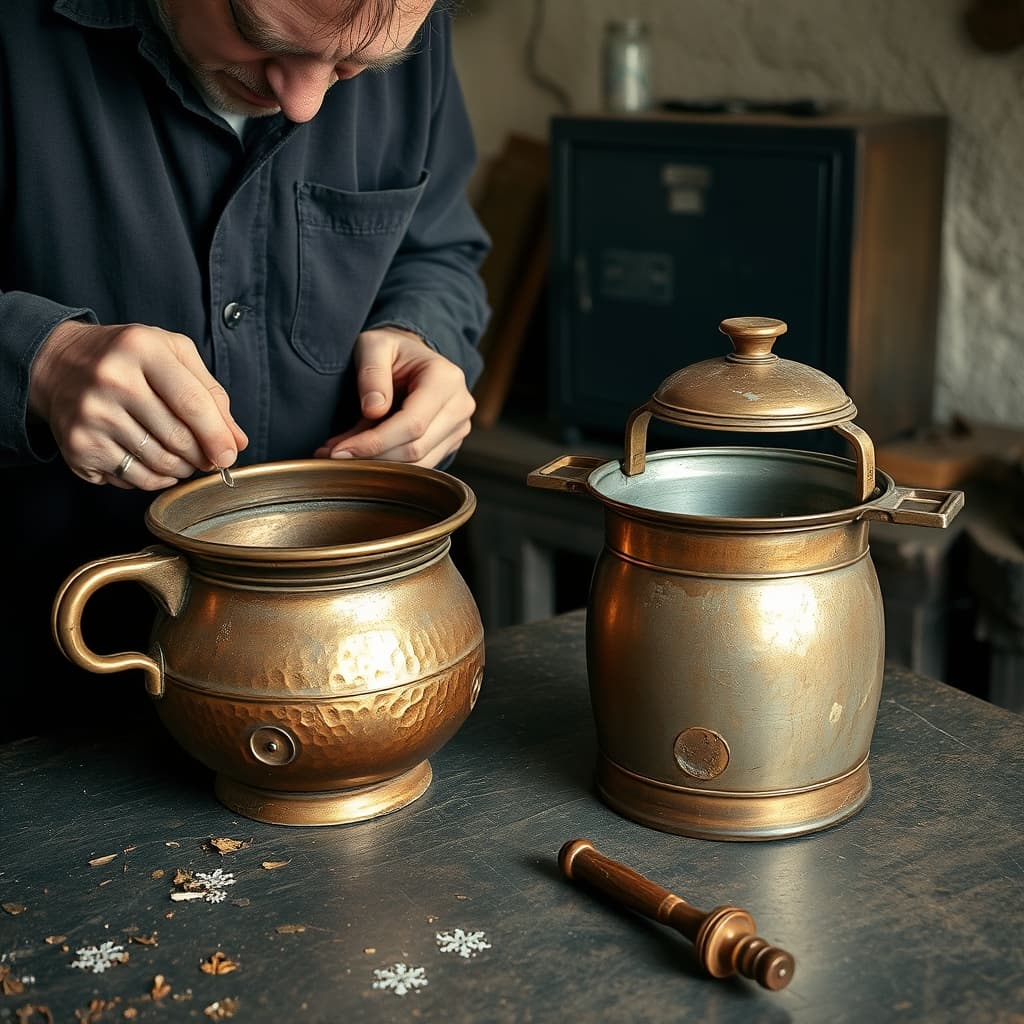
An old copper cezve can carry the taste of an era through hammer marks, a darkened handle, and repairs made over years. Those traces do not automatically make it safe for brewing. Copper is reactive, old linings wear, solder and repairs vary, and decorative objects may never have been made for food. The first decision is whether the cezve should be used, professionally restored, or preserved only for display.
Cezves differ in copper thickness, raising or spinning method, seam construction, base, rim, spout, handle material, rivets, solder, lining, size, and period. Some modern-looking examples are plated alloys, while souvenir pieces may use decorative coatings. Maker marks, workshop history, family testimony, repair records, photographs, and material analysis help identify the object.
The Interior Matters More than Exterior Shine
Traditional copper cookware is often lined with tin or another food-contact surface. The lining should be continuous enough for its intended use and free from exposed reactive areas, flaking, deep pitting, uncertain patches, or incompatible solder. Appearance alone cannot identify every metal. A qualified tinner or conservator should assess valuable or uncertain pieces.
Green or blue corrosion, powder, active staining, cracks, leaks, and residues need attention. Verdigris is not a charming seasoning. Do not taste, brew, or scrub it into food. Household acids may brighten copper while also removing surface evidence, attacking seams, or mobilising residues. Abrasive polishing can thin metal and erase hammer marks or inscriptions.
Handle and Seam Failures Cause Burns
A loose rivet, cracked wooden handle, heated metal grip, weakened solder, distorted base, or hidden leak can fail while the pot contains boiling liquid. Inspect under controlled conditions without relying on a full hot brew as the first test. Repair must use materials and methods suitable for food contact and heat, with the intervention documented.
Small cezves heat quickly. Flame should stay under the base and away from the handle. An unstable grate, oversized burner, unattended foam, and lifting by a questionable handle create scald and fire risk. Modern induction or electric surfaces may not suit every base. Nostalgic technique should be adapted to the actual appliance and object condition.
Coffee Preparation Still Needs Current Hygiene
Use potable water, clean utensils, accurately stored coffee, and a clean serving area. Milk, flavourings, or shared spoons introduce additional allergens and perishability. The narrow neck and seams need cleaning without scratching the lining. The pot should dry fully before storage, and harsh chemicals must be rinsed according to product and professional guidance.
A historic cezve used only for display needs stable support, controlled humidity, limited handling, and a label explaining why it is not used. Filling it with coffee beans, flowers, water, or polish for appearance can stain or corrode it. A modern replica can demonstrate brewing while the original preserves its material evidence.
Collectors should distinguish age, workshop, repair, family ownership, and market claims. Hammered does not necessarily mean handmade by one master, and old-looking patina can be manufactured. Ethical cataloguing records uncertainty and gives named craftspeople credit where evidence supports it, without turning every repair into proof of antiquity.
A Digital Nostalgia Archive can connect the cezve with measurements, material assessment, lining condition, maker marks, repair history, handle tests, family use, cleaning decisions, and display status. Its invisible everyday trace becomes meaningful when beauty is kept beside food safety. Preserving the taste of an era sometimes means choosing not to brew in the original and letting a safe contemporary vessel carry the recipe instead.