🇹🇷 Türkçe | Camı Açınca İçeri Giren Bayram
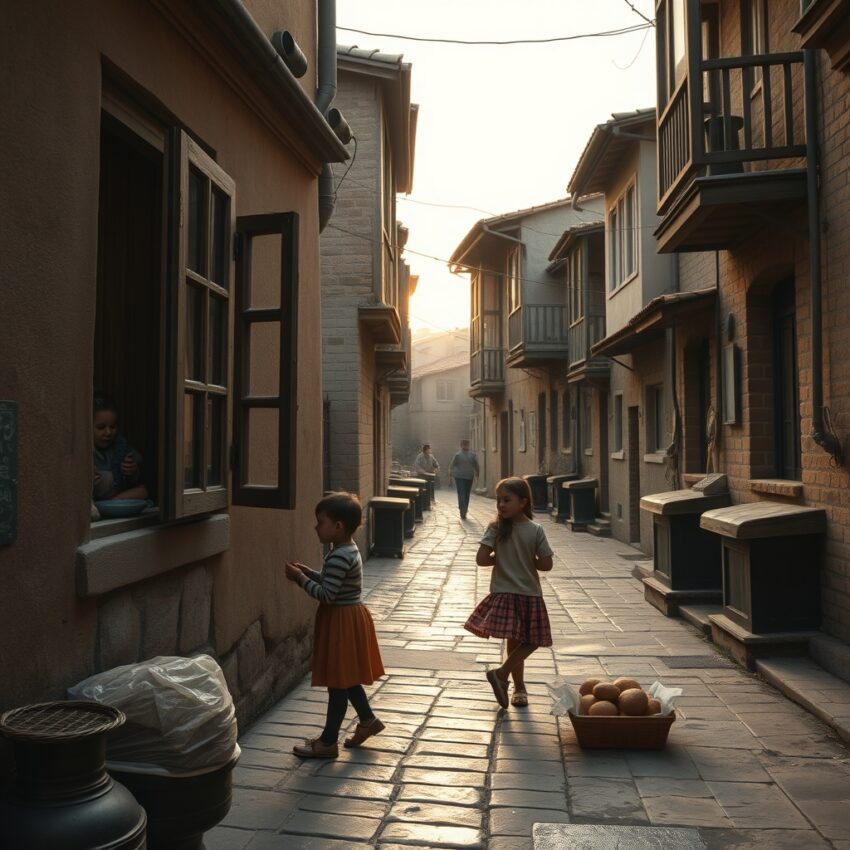
Bir zamanlar bayram sabahı, saatten önce uyanılan bir vakitti. Daha güneş taş duvarların üstüne tam düşmeden, sokakların sessizliğinde ince bir kıpırtı başlar; evlerin içindeki telaş, perdelerin arasından sızan ilk ışıkla birlikte mahalleye yayılırdı. Çocuklar yeni giysilerinin sertliğini omuzlarında hissederek yataktan kalkar, anneler mutfakta erken saatten beri kaynayan çayın, kızaran hamurun, bakır tepsilere dizilmiş tatlıların başında dolaşır, babalar tıraş sonrası kolonya kokusuyla sofaya çıkardı. Sonra biri mutlaka pencereye ya da cama yönelirdi. Bayram sabahının geldiği yalnız takvimden değil, dışarıdan gelen seslerden anlaşılırdı çünkü. Uzakta bir kapı çarpması, sokaktan geçen ilk ayakkabı sesi, fırından dönen birinin elindeki sıcak ekmek, cam açılınca evin içine birden giren serinlik ve şehir kokusu; hafızada yer eden şey biraz da bu ansızın gelen canlılıktı.
Zamanın İzinde bakıldığında eski şehir hayatında bayram sabahları yalnız dinî ya da resmî bir günün başlangıcı değildi; şehrin ortak ritmini aynı anda duymanın en güçlü yollarından biriydi. Gazeteler o gün daha geç ve daha seyrek okunur, asıl haber sokaktan alınırdı. Kim daha erken kalkmış, hangi evden kahkaha yükselmiş, hangi apartmanın merdivenleri çocuk sesleriyle dolmuş, bunlar gündelik şehir bilgisinin parçasıydı. Mahalledeki bakkal kepengi yarım açar, fırın önünde kısa ama neşeli bir sıra oluşur, berber dükkânı bayramdan bir gece önceki yorgunluğunu henüz üzerinden atamamış olurdu. Eski şehirlerde sabah sessizliği her zaman vardı ama bayram sabahı o sessizlik başka türlü bozulurdu: aceleyle değil, birlikte uyanmanın terbiyesiyle. İnsanlar birbirinin gününü bölmeden, yine de birbirine değerek hareket ederdi. Şehir sanki yüksek sesle değil, derin bir iç çekişle uyanırdı.
Bu sabahların hafızada hâlâ canlı kalmasının nedeni biraz da ev ile sokak arasındaki o geçirgen eşiğin gücüdür. Cam açmak yalnız havalandırmak değildi; mahalleyle bağ kurmanın en doğal hareketiydi. İçeride ütülenmiş gömleklerin, sabunlu suyun ve bayram şekeri kâselerinin kokusu varken, dışarıda ıslatılmış kaldırımların, erken süpürülmüş apartman önlerinin, yeni parlatılmış ayakkabıların kokusu dolaşırdı. Kadınlar birbirine pencereden seslenir, “hazır mısınız?” diye sorar; çocuklar daha misafir gelmeden sokağın ne kadar neşeli olacağını tahmin etmeye çalışırdı. Yaşlılar sandalyesini cama biraz daha yaklaştırır, camdan bakarak hem mahallenin nabzını tutar hem de kendi gençliklerinin bayramlarını sessizce hatırlardı. Bu yüzden o sabahlar yalnız görülen değil, koklanan, duyulan ve evin içine alınan bir hatıra biçiminde kaldı.
Bayram sabahının şehirde erken hissedilmesi, toplumsal düzenin de bir göstergesiydi. İnsanlar temizliğe, hazırlığa, zamanında yola çıkmaya önem verir; çocuklara bayram ziyaretinin yalnız şeker toplamak olmadığını, büyüklere görünmenin ve mahallenin parçası olmanın da bir adabı bulunduğunu öğretirdi. Cami dönüşleri, apartman içi selamlaşmalar, kapı önüne bırakılan tabaklar, bir an önce soğumadan ikram edilsin diye taşınan börekler, şehir hayatının gündelik görgüsünü bayram sabahında daha görünür kılardı. Bugün birçok yerde apartman kapıları daha kapalı, sesler daha içe dönük, sabahlar daha bireysel yaşanıyor olabilir. Ama hafızanın camı açıldığında içeri hâlâ o eski şehir sabahı dolar: kolonyanın ferahlığı, fırından gelen ekmek kokusu, çocukların ayakkabı gıcırtısı, uzak bir selam ve erkenden uyanmış bir şehrin yumuşak uğultusu.
Belki de bu yüzden bayram sabahları yıllar geçse de solmaz. Çünkü onlar yalnız hatırlanan bir tören değil, şehrin bir zamanlar nasıl birlikte nefes aldığını gösteren kültürel bir mirastır. Cam açtıran o canlılık, insanın kendi geçmişine değil yalnız, bir mahallenin, bir sokağın, bir şehrin ortak hafızasına da açılan penceredir. Eski şehir hayatının bayram sabahları, bizi geçmişe çağırırken aslında bugüne de ince bir soru bırakır: Bir şehri şehir yapan şey, birlikte uyanma biçimi değilse nedir?
🇬🇧 English | The Holiday That Entered with the Open Window
There was a time when holiday mornings were hours people woke into before the clock demanded it. Before the sun had fully settled on stone walls, a delicate stirring would begin in the silence of the streets, and the bustle inside homes would spill into the neighborhood with the first light slipping through the curtains. Children rose feeling the crisp firmness of new clothes on their shoulders, mothers moved between boiling tea, frying dough, and trays of sweets lined up on copper platters, and fathers stepped into the hallway carrying the scent of aftershave and cologne. Then someone would always move toward the window. You did not understand that the holiday morning had truly arrived from the calendar alone, but from the sounds outside. A distant door closing, the first footsteps on the street, someone returning from the bakery with warm bread, the coolness and city smell rushing inside when the window opened, all of that sudden liveliness is what remained in memory.
Seen through the trail of time, holiday mornings in old urban life were not merely the beginning of a religious or official day. They were one of the strongest ways of hearing the city’s shared rhythm all at once. Newspapers were read later and more lightly on those mornings; the real news came from the street. Who had risen earliest, from which home laughter drifted, which apartment staircase filled with children’s voices, these were part of the city’s daily knowledge. The neighborhood grocer would lift his shutter halfway, a short but cheerful line formed at the bakery, and the barber shop still wore the fatigue of the previous night’s preparations. Old cities always knew morning silence, but on a holiday that silence broke differently: not with haste, but with the manners of waking together. People moved without interrupting one another’s day, yet still touching one another’s lives. The city seemed to wake not loudly, but with a deep and collective breath.
Part of why those mornings remain so vivid lies in the strength of the threshold between house and street. Opening the window was not merely a way to air out a room. It was the most natural gesture of linking oneself to the neighborhood. Inside were the smells of ironed shirts, soapy water, and bowls of holiday candy; outside drifted the scent of damp pavements, freshly swept building fronts, and newly polished shoes. Women called to one another from windows to ask, “Are you ready?” Children tried to guess how cheerful the street would become even before the first guests arrived. Elderly people pulled their chairs a little closer to the glass, watching the pulse of the neighborhood while quietly recalling the holidays of their own youth. That is why those mornings remained not only as something seen, but as a memory heard, smelled, and invited into the home.
The fact that the city felt awake so early on holiday mornings also reflected a social order. People cared about cleanliness, preparation, and leaving home on time; children were taught that a holiday visit was not only about collecting sweets but about appearing before elders and learning that belonging to a neighborhood carried its own etiquette. The return from prayer, greetings in apartment corridors, plates left at one another’s doors, pastries carried quickly so they could be served warm, all made the daily civility of city life more visible on that morning. Today, in many places, building doors are more closed, sounds more inward, and mornings more individual. Yet when memory opens its window, that old city morning still fills the room: the freshness of cologne, the smell of bread from the bakery, the squeak of children’s shoes, a greeting from afar, and the soft murmur of a city that has risen early together.
That may be why holiday mornings do not fade even after many years. They are not only a remembered ritual, but a cultural inheritance showing how a city once breathed in unison. The liveliness that made people open the window is a window not only onto personal memory, but onto the shared memory of a street, a neighborhood, a city. The holiday mornings of old urban life call us back to the past while leaving a quiet question for the present: if what makes a city a city is not the way it wakes together, then what is?
🇧🇷 Português (Brasil) | A Festa que Entrava Quando a Janela se Abria
Houve um tempo em que as manhãs de festa começavam antes do relógio mandar. Antes de o sol se deitar por completo sobre os muros de pedra, um movimento delicado surgia no silêncio das ruas, e a agitação dentro das casas se espalhava pelo bairro junto com a primeira luz passando pelas cortinas. As crianças levantavam sentindo nos ombros a rigidez da roupa nova, as mães circulavam entre o chá fervendo, as massas dourando e os doces alinhados em bandejas de cobre, e os pais apareciam no corredor com o cheiro de colônia depois do barbear. Em seguida, alguém sempre se aproximava da janela. Porque não era apenas pelo calendário que se entendia que a manhã de festa tinha chegado, mas pelos sons vindos de fora. O barulho distante de uma porta, os primeiros passos na rua, alguém voltando da padaria com pão ainda quente, o frescor e o cheiro da cidade entrando de repente quando a janela era aberta; essa vivacidade súbita é o que permaneceu na memória.
No rastro do tempo, as manhãs de festa na antiga vida urbana não eram apenas o começo de um dia religioso ou oficial. Eram uma das formas mais fortes de sentir, de uma só vez, o ritmo compartilhado da cidade. Os jornais eram lidos mais tarde e com menos atenção; a notícia principal vinha da rua. Quem tinha acordado primeiro, de qual casa vinha risada, qual escadaria de prédio se enchia de vozes infantis, tudo isso fazia parte do saber cotidiano da cidade. O mercadinho do bairro erguia a porta só até a metade, uma fila curta e alegre se formava diante da padaria, e a barbearia ainda carregava o cansaço da véspera. As cidades antigas sempre conheceram o silêncio da manhã, mas numa festa esse silêncio se desfazia de outro modo: não pela pressa, e sim pela educação de despertar junto. As pessoas se moviam sem invadir o dia umas das outras, mas ainda assim se tocando pela rotina comum. A cidade parecia acordar não em voz alta, mas com um suspiro coletivo e profundo.
Parte da razão de essas manhãs permanecerem tão vivas está na força desse limite entre a casa e a rua. Abrir a janela não significava apenas deixar o ar entrar. Era o gesto mais natural de se ligar ao bairro. Dentro de casa havia o cheiro de camisas passadas, água com sabão e tigelas de doces de festa; lá fora circulavam o perfume das calçadas molhadas, das entradas dos prédios recém-varridas e dos sapatos acabados de engraxar. As mulheres chamavam umas às outras da janela e perguntavam: “já estão prontos?”. As crianças tentavam adivinhar como a rua ficaria alegre antes mesmo de os visitantes chegarem. Os mais velhos puxavam a cadeira para mais perto do vidro e, olhando o bairro, lembravam em silêncio as festas da própria juventude. Por isso essas manhãs ficaram não apenas como algo visto, mas como uma lembrança sentida no cheiro, no som e no ar que entrava em casa.
O fato de a cidade parecer desperta tão cedo também mostrava uma ordem social. As pessoas davam valor à limpeza, ao preparo e à hora certa de sair; as crianças aprendiam que a visita festiva não servia apenas para ganhar doces, mas para se apresentar diante dos mais velhos e entender que pertencer ao bairro tinha sua própria etiqueta. A volta da oração, os cumprimentos nas escadas do prédio, os pratos deixados na porta dos vizinhos, os salgados levados depressa para serem servidos ainda quentes, tudo isso tornava mais visível a delicadeza cotidiana da vida urbana. Hoje, em muitos lugares, as portas dos prédios estão mais fechadas, os sons mais recolhidos e as manhãs mais individuais. Ainda assim, quando a memória abre a janela, aquela antiga manhã de cidade volta a encher o ambiente: o frescor da colônia, o cheiro de pão vindo da padaria, o rangido dos sapatos das crianças, um cumprimento vindo de longe e o murmúrio suave de uma cidade que amanheceu cedo em conjunto.
Talvez por isso as manhãs de festa não se apaguem com os anos. Elas não são apenas um ritual lembrado, mas uma herança cultural que mostra como uma cidade já respirou em uníssono. A vivacidade que fazia abrir a janela é uma abertura não só para a memória individual, mas para a lembrança coletiva de uma rua, de um bairro, de uma cidade. As manhãs de festa da antiga vida urbana nos chamam de volta ao passado e deixam, ao mesmo tempo, uma pergunta delicada para o presente: se o que faz uma cidade ser cidade não é o modo como ela desperta junto, então o que é?