Eski Pano
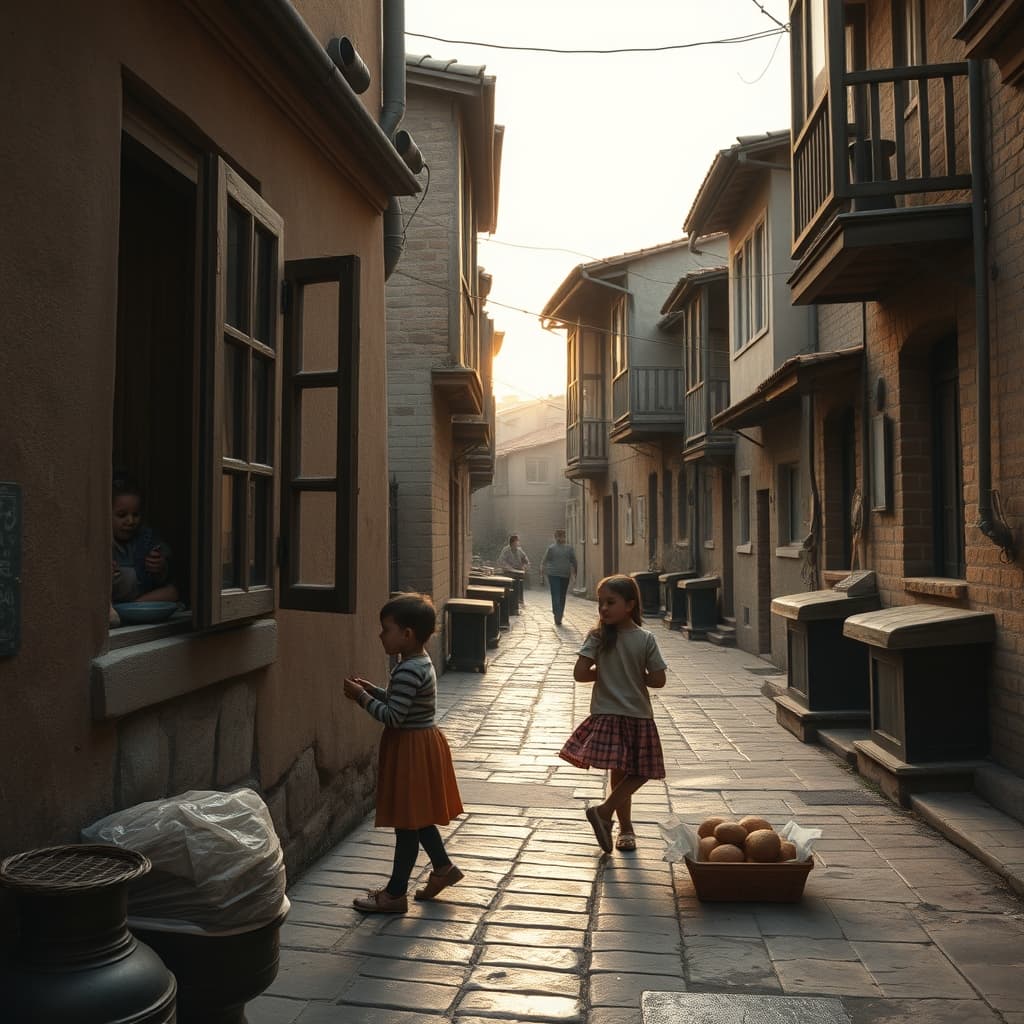
There was a time when holiday mornings were hours people woke into before the clock demanded it. Before the sun had fully settled on stone walls, a delicate stirring would begin in the silence of the streets, and the bustle inside homes would spill into the neighborhood with the first light slipping through the curtains. Children rose feeling the crisp firmness of new clothes on their shoulders, mothers moved between boiling tea, frying dough, and trays of sweets lined up on copper platters, and fathers stepped into the hallway carrying the scent of aftershave and cologne. Then someone would always move toward the window. You did not understand that the holiday morning had truly arrived from the calendar alone, but from the sounds outside. A distant door closing, the first footsteps on the street, someone returning from the bakery with warm bread, the coolness and city smell rushing inside when the window opened, all of that sudden liveliness is what remained in memory.
Seen through the trail of time, holiday mornings in old urban life were not merely the beginning of a religious or official day. They were one of the strongest ways of hearing the city’s shared rhythm all at once. Newspapers were read later and more lightly on those mornings; the real news came from the street. Who had risen earliest, from which home laughter drifted, which apartment staircase filled with children’s voices, these were part of the city’s daily knowledge. The neighborhood grocer would lift his shutter halfway, a short but cheerful line formed at the bakery, and the barber shop still wore the fatigue of the previous night’s preparations. Old cities always knew morning silence, but on a holiday that silence broke differently: not with haste, but with the manners of waking together. People moved without interrupting one another’s day, yet still touching one another’s lives. The city seemed to wake not loudly, but with a deep and collective breath.
Part of why those mornings remain so vivid lies in the strength of the threshold between house and street. Opening the window was not merely a way to air out a room. It was the most natural gesture of linking oneself to the neighborhood. Inside were the smells of ironed shirts, soapy water, and bowls of holiday candy; outside drifted the scent of damp pavements, freshly swept building fronts, and newly polished shoes. Women called to one another from windows to ask, “Are you ready?” Children tried to guess how cheerful the street would become even before the first guests arrived. Elderly people pulled their chairs a little closer to the glass, watching the pulse of the neighborhood while quietly recalling the holidays of their own youth. That is why those mornings remained not only as something seen, but as a memory heard, smelled, and invited into the home.
The fact that the city felt awake so early on holiday mornings also reflected a social order. People cared about cleanliness, preparation, and leaving home on time; children were taught that a holiday visit was not only about collecting sweets but about appearing before elders and learning that belonging to a neighborhood carried its own etiquette. The return from prayer, greetings in apartment corridors, plates left at one another’s doors, pastries carried quickly so they could be served warm, all made the daily civility of city life more visible on that morning. Today, in many places, building doors are more closed, sounds more inward, and mornings more individual. Yet when memory opens its window, that old city morning still fills the room: the freshness of cologne, the smell of bread from the bakery, the squeak of children’s shoes, a greeting from afar, and the soft murmur of a city that has risen early together.
That may be why holiday mornings do not fade even after many years. They are not only a remembered ritual, but a cultural inheritance showing how a city once breathed in unison. The liveliness that made people open the window is a window not only onto personal memory, but onto the shared memory of a street, a neighborhood, a city. The holiday mornings of old urban life call us back to the past while leaving a quiet question for the present: if what makes a city a city is not the way it wakes together, then what is?
The Years When Holiday Mornings Woke the City Early in Old Urban Life: Why Are Those Window-Opening Mornings Still So Vivid in Memory?