Eski Pano
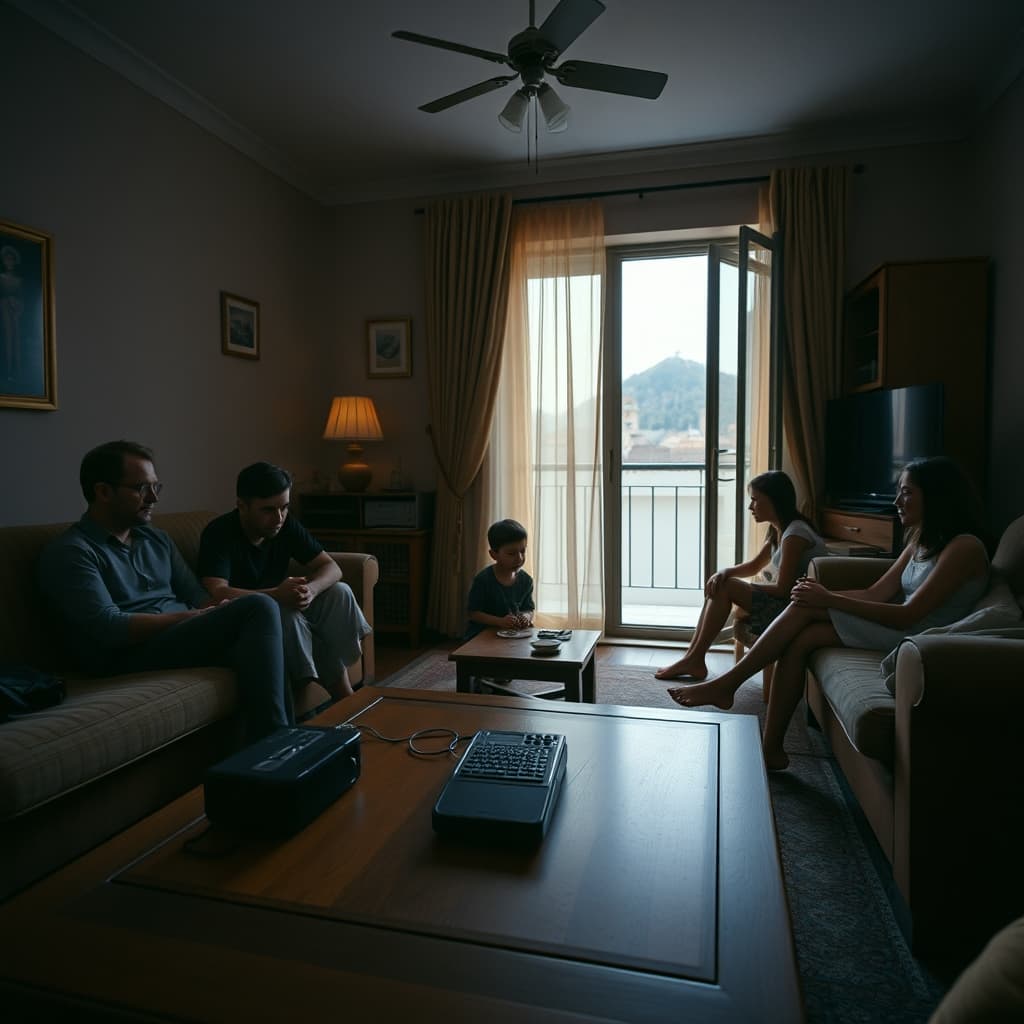
There was a time when the living room, once evening arrived, was not only a place for guests or television, but a small center for waiting on news. Silence was lived more carefully, as though the telephone might ring at any moment, and people’s eyes drifted now and then toward the pager resting on the coffee table. Children watched the faint seriousness on adults’ faces with curiosity. This small device of the analog age carried a thrill entirely different from today’s endless stream of notifications. The pager’s sound came rarely, but when it did, the air inside the house changed at once. Who was calling, what was needed, which pay phone or office line had to be called back, these were questions the whole family weighed in those few seconds. For that reason, the pager may have looked like a personal tool, yet in many homes it produced a collective emotion. Sitting in the middle of the living room, it drew the entire family into a quiet waiting.
From the standpoint of technological heritage, the pager is one of the most striking communication objects of a transitional era. It belonged neither fully to the world of fixed lines nor to the individualism of the mobile present. It shortened the distance between the city and the person, yet never erased delay completely. It held an important place in the lives of doctors, technical service workers, field staff, and people constantly in motion through the city. But its real cultural effect came from the fact that it kept not only its owner alert, but everyone around that person as well. When a father, older brother, or family friend carried a pager, everyone in the living room shared that small screen a little. When the beep sounded, the television volume was lowered, someone handed over a notebook, someone checked the wall clock, someone opened the balcony door to see whether the reception might somehow feel clearer there. Communication turned into part of the family’s daily choreography.
Windy balconies hold a special place in this memory because one of the most common scenes after the pager sounded was stepping outside onto the balcony. You left the warm air of the living room, moved toward the iron railing, looked out at the streetlights, and tried to remember which kiosk had a telephone, which neighbor could be asked a favor, where the nearest pay phone stood. The balcony became both a place for thinking and for deciding. On summer evenings the curtains shifted lightly, the smell of tea drifted from inside, the sound of a passing minibus came from afar, and with the small device in hand while trying to decipher a few digits, the link between city and home felt more tangible. That may be why the memory of the pager belongs not only to technology, but also to space. The device lived at balcony doors, on coffee tables, beside wall telephones, and within the household’s quiet whispers.
Today, when people hear the word pager, many think only of an outdated device. Yet what truly remains in memory is a period in which news was not cheap. Each signal carried weight, each return call its own small urgency, each wait its echo inside the family. No one was reachable all day long, but the moment of being reached had greater shape, greater seriousness, greater care. The quiet excitement of families gathered in the living room emerged from exactly this. A child read importance on adult faces; a mother handed over the paper she kept ready for a callback; a father leaned toward the screen while carrying both work and household on his shoulders. Technology functioned less like a machine in that instant and more like a new pulse added to family life.
The pager may have left everyday use today, yet the analog excitement it represents has not vanished completely. Some old balconies, some coffee tables, some evening silences still remind people of that waiting. What remains unforgettable is not only the device itself, but the moment when news arrived to the house as something shared. A family hearing the same beep in silence had, in that instant, lived the communication culture of an era together. That is the memory that does not fade on windy balconies: the years when technology entered family life not with noise, but with a fine and measured excitement.
The Quiet Excitement of Families Gathered in the Living Room and the Pager Device: It Tells of the Unforgotten Thrill of the Analog Age Like a Family Memory That Never Fades on Windy Balconies