Eski Pano
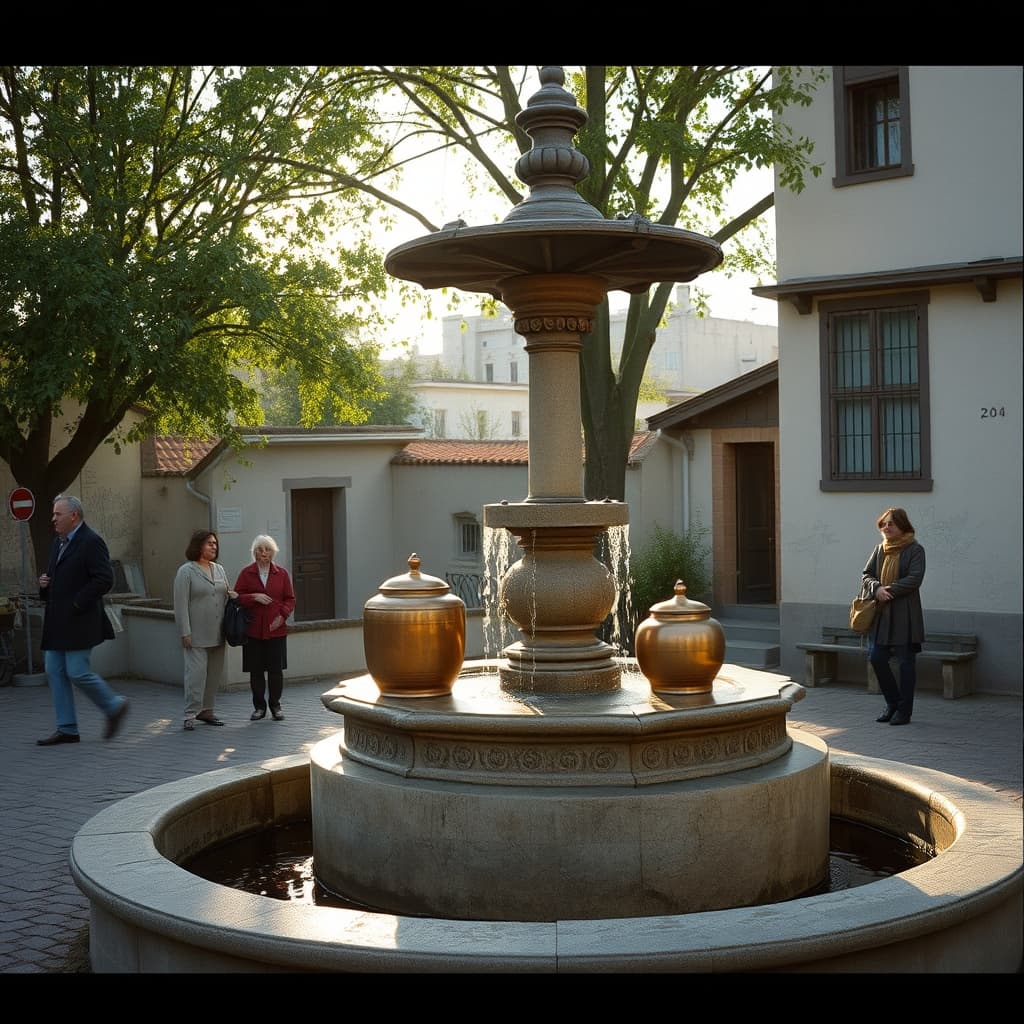
There was a time when certain hours beat like the shared heart of the neighborhood, and the center of that rhythm was often the fountain. When the afternoon sun began to pull away from the walls and the shadows lengthened, tin buckets, enamel dippers, and light-voiced conversations all met at the same point. The cool sound of water never stopped in the stone basins, and those waiting their turn did more than fill containers; they also carried the day’s news, the hurry inside homes, the games of children, and the small preparations for evening. The scent of linden drifting from gardens reached the fountain and left a soft feeling of late afternoon in the air. For that reason, the neighborhood fountain was not only part of infrastructure, but the very hour of gathering placed at the center of memory.
Seen through the lens of time, neighborhood fountains were among the most visible institutions of everyday urban life. Especially in periods when water did not reach every home with equal comfort, the fountain was both necessity and social ground. Old newspapers spoke of dry summers, newly opened public fountains, and the maintenance of charitable water lines, yet what they were really describing was the pulse of the city. A fountain was not only a technical point that managed flow; it was a stop where people saw one another repeatedly throughout the day, where familiarity deepened, and where the neighborhood built its own timetable. Who had come early, who brought a copper pitcher, who arrived with a child beside them, all of this formed a small yet durable social memory.
What makes this scene still linger like an ache is the slowness of the closeness that gathered there. Going to the fountain and returning from it was never a hurried task. Greetings were exchanged on the way, turns were waited for, and sometimes laughter rose when the water overflowed. Children wet their shoes at the edge of the basin, mothers called out not to linger too long, and elders stayed in the shade a little more to listen to the coolness. It was at exactly these hours that gardens seemed to turn into the scent of linden, because as evening approached, floral fragrance and the freshness of water joined in one memory. People returned home not only with full containers, but with the emotional weather of the neighborhood carried alongside them.
In neighborhood culture, the fountain was also a place of manners and measured sociability. People respected the queue, older residents were often served first, and everyone was reminded not to waste water. These rules were not formal, yet they were widely known and lived like the etiquette of the quarter itself. Even a child sitting on the stone edge and tracing the spilled water with a finger learned there how to belong to a shared life. Today water comes silently from taps in apartment kitchens; it brings undeniable comfort, but it also removes the common rhythm once built around fountain hours. That is why what is missed is not only the fountain as an object, but the slow way of relating that formed around reaching water.
Perhaps what turned the gardens into the scent of linden was not only the trees themselves, but the feeling those hours left in the human heart. Reaching the fountain eased the weight of the day, announced the approach of evening, and allowed the neighborhood to see itself once again. Water shining on the rim of a copper bowl, linden shade, children’s voices from the street, and coolness striking old stone gathered into the same frame. That is why the hours when neighborhood fountains became meeting points are still remembered not merely as a past habit, but as a more audible, fragrant, and unhurried form of living together.
The Hours When Neighborhood Fountains Turned into Meeting Points as a Scene Never Falling from the Neighborhood Calendar: Why Are the Gardens Turning into the Scent of Linden Still Remembered as an Ache Today