Eski Pano
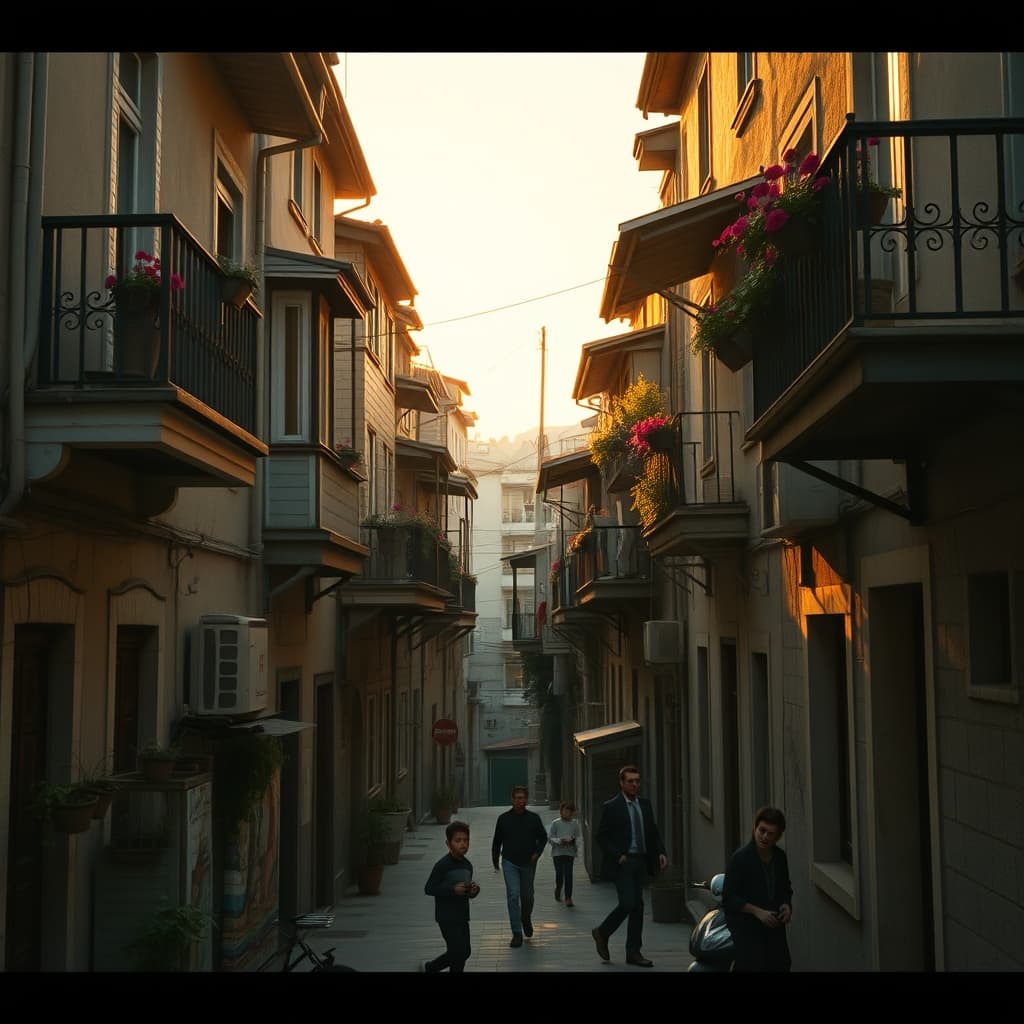
There was a time when summer evenings or the cool hours of spring turned balconies into something more than the outer face of a home. Tea would be brewing on one side, laundry being gathered on another, geraniums watered on another, and before long the first sentences of the day would travel between facing or neighboring balconies. “Is dinner ready?” “Has the child come home?” “How were the prices at the market today?” Questions that seemed ordinary quickly opened into long conversations. The street below stood as their quiet witness, while voices leaning against balcony rails passed through the empty air between buildings and reached from one home to another. In this way the hours flowed, almost unnoticed, inside the friendship built between neighboring balconies. The street itself stopped being merely a place to pass through and began to feel like the courtyard of a shared home.
From the perspective of neighborhood culture, the strength of this image comes from the gentle bridge it formed between private life and public space. A balcony is neither completely inside nor completely outside. In old neighborhood life, it was exactly this in-between quality that allowed some of the liveliest forms of neighborliness to exist. People reached one another without knocking on doors, asked after each other without raising their voices, borrowed salt if needed, kept an eye on the children, and shared news of illness or joy first from there. Children playing in the street grew used to hearing their names called from above, and an invisible network of communication spread across the fronts of the buildings. The hours passing between neighboring balconies made the neighborhood not only a settlement pattern, but a way of living woven from mutual attention.
What remains unforgettable about this friendship is that it fed not on grand events, but on small continuities. One neighbor calling to another while watering basil before sunset, a recipe passing from one balcony to the next, laundry being gathered together when rain began, a child waving up from the street after school, all of these were ordinary yet warm moments of daily life. They did not lose their value because they happened every day; on the contrary, they formed the emotional texture of the neighborhood. Balcony conversations also eased the loneliness inside the home. The voice of an elderly person might be heard there for the first time all day, a young bride might learn the character of her new street through those exchanges, and children learned the language of neighborliness from the rhythm of adults talking across the air. In this way the street ceased to be only concrete and numbered doors; it became a shared home enlarged by voices.
The street became a common house partly because balconies had the power to slow time. Even while work continued inside, one did not feel completely closed off. Life outside was not far away; it waited just beyond the railing. The cry of the simit seller, the coolness of late afternoon, laughter from the building opposite, or the sound of a pot lid softened the boundary between street and home. That is why neighborliness lived not only in visits, but also in accompanying one another without physically entering the same room. Balcony friendship was something spoken, but also something expected. If someone failed to appear at the usual hour, it was noticed; if a curtain remained drawn, people wondered whether something had happened. The feeling of a shared home was born exactly from that mutual noticing.
Today balconies may be quieter, streets more hurried, and neighborly life more distant. Yet the warmth that spreads through a person when friendships built across neighboring balconies are remembered shows that the old feeling of a shared home has not vanished so easily. What people shared there was not only speech, but also time, weather, domestic labor, and the ordinary weight of life. That was what truly made a neighborhood a neighborhood. The hours spent between balconies turned the street into a place where people were not only close to one another, but deeply familiar. That is why, when old streets are remembered, the first thing often heard is the sound of voices rising from balconies.
How Did the Hours Spent in Friendships Built Across Neighboring Balconies Turn the Street into a Shared Home