Eski Pano
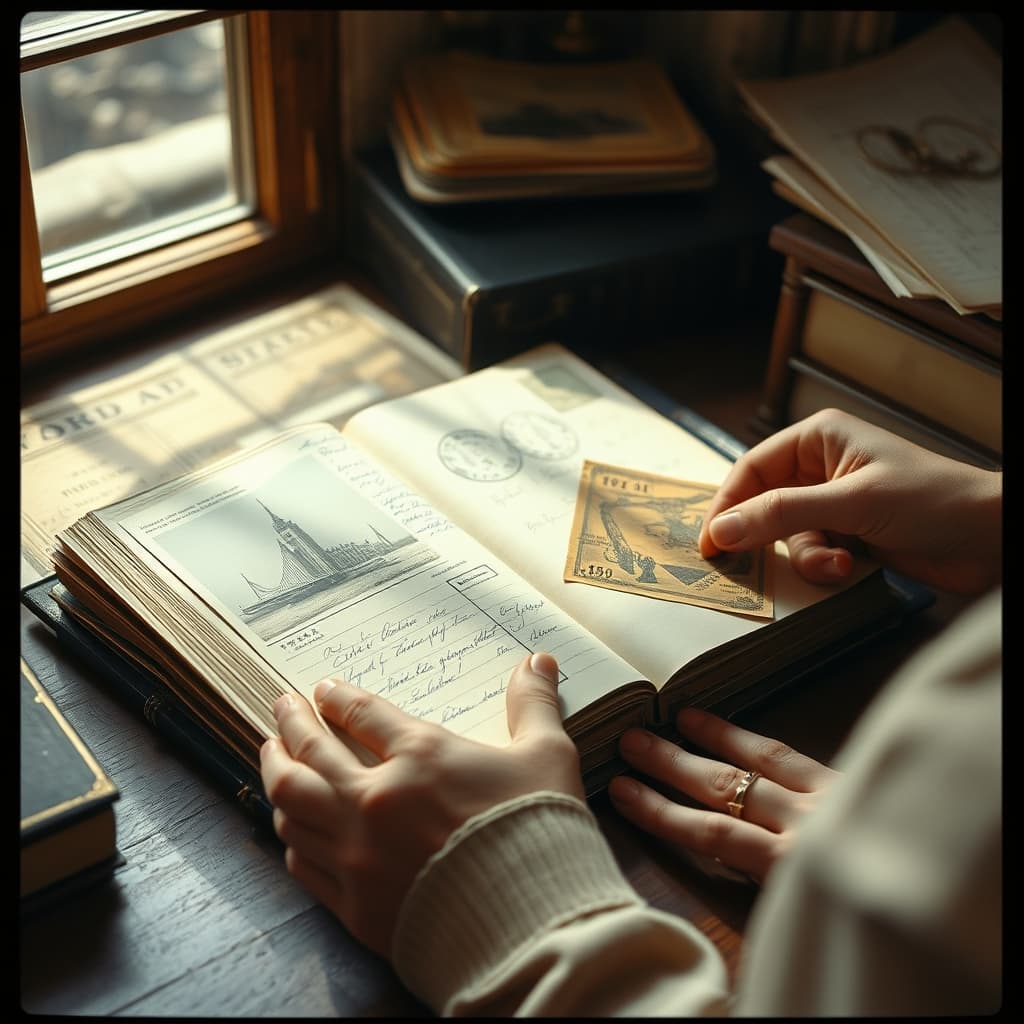
There was a time when postcard albums were kept in the safest corners of drawers, on the highest shelves of display cabinets, or beneath lace covers. When their pages were turned, one felt not only landscapes, but the surface touched by the hand of the past. Slightly yellowed paper, rounded corners, stamp marks, and short notes written on the back showed that a city or a journey could be told through more than an image alone. The postcard album stood like a quiet archive within the home; each opening brought back the atmosphere of a distant station, a seaside town, or a street long changed. Perhaps the renewed interest in these objects today comes precisely from that tactile sense of memory.
Seen through the lens of object stories, the postcard album is not merely a collectible, but a graceful object where design and personal history meet. The fabric on the cover, the slots holding the cards in place, the gold-pressed frames, and handwritten dates all connect each album to the life of its owner. The past traced by collectors begins exactly here: not only in the image printed on the card, but in how the card was preserved, whose hands it passed through, and for what reason it was sent. A postcard may have been printed simply to introduce a city, yet over time it becomes a wider cultural document through its postmark, ink tone, and form of address. Old station buildings, ferry piers, garden mansions, or holiday shores thus become witnesses not only to architecture, but to a culture of circulation.
One reason postcard albums draw interest again today is the longing for selected objects within the abundance of digital images. Millions of views can now be reached on a screen in seconds, yet the time gathered on the surface of a postcard carries a depth that rapid scrolling cannot offer. Collectors therefore do not gather only what is “old”; they also preserve ways of paying attention that are disappearing. Looking at a card’s printing technique, color use, typography, and mailing date becomes a way of approaching the past with patience. These objects slow down the act of seeing. When one looks at the same image a little longer, the tramline in the background, the writing on a shop window, or a figure left in shadow also begins to appear. In that sense, the postcard album stands like a quiet resistance to the hurried visual habits of the present.
From the perspective of everyday life, another layer of this renewed interest is linked to family memory. In many homes, postcard albums were among the objects passed from elders to the younger generation. Sentences such as “Your grandfather sent this from Beirut,” or “This card was bought at the Izmir fair,” show that the album is not only an object, but also a beginning for stories. The way collectors approach these albums today is often more than a dry cataloging curiosity; they try to understand the mode of life, the travel possibilities, the language of address, and the aesthetic taste behind each card. For that reason, collecting postcards is not only accumulating, but reading the routes through which the past once moved. The sea seen on a card may now be a filled shoreline; the small square may have become a crowded intersection. The value of the object lies precisely in carrying both the lost landscape and the changed rhythm of life together.
If postcard albums and the past pursued by collectors are attracting interest again today, the reason is more than the surface charm of nostalgia. This renewed attention speaks of a desire to return to the material traces of recorded time, to slow looking, and to objects that carry stories. The postcard album reminds us that seeing is not only consuming images; it is also holding, turning, reading, and imagining. Perhaps that is exactly what is missing in the scattered speed of modern life. While moving through old cards, a person does not only look at the past; one also realizes which forms of attention the present has lost. That is why postcards are drawing interest again: because they call the past back not as a decorative display, but as a human story that can still be held in the hand.
The Past Traced by Postcard Albums and Collectors: Why Is It Drawing Interest Again Today