🇹🇷 Türkçe | Kar Altında Kalan Sokakların Verdiği Güven
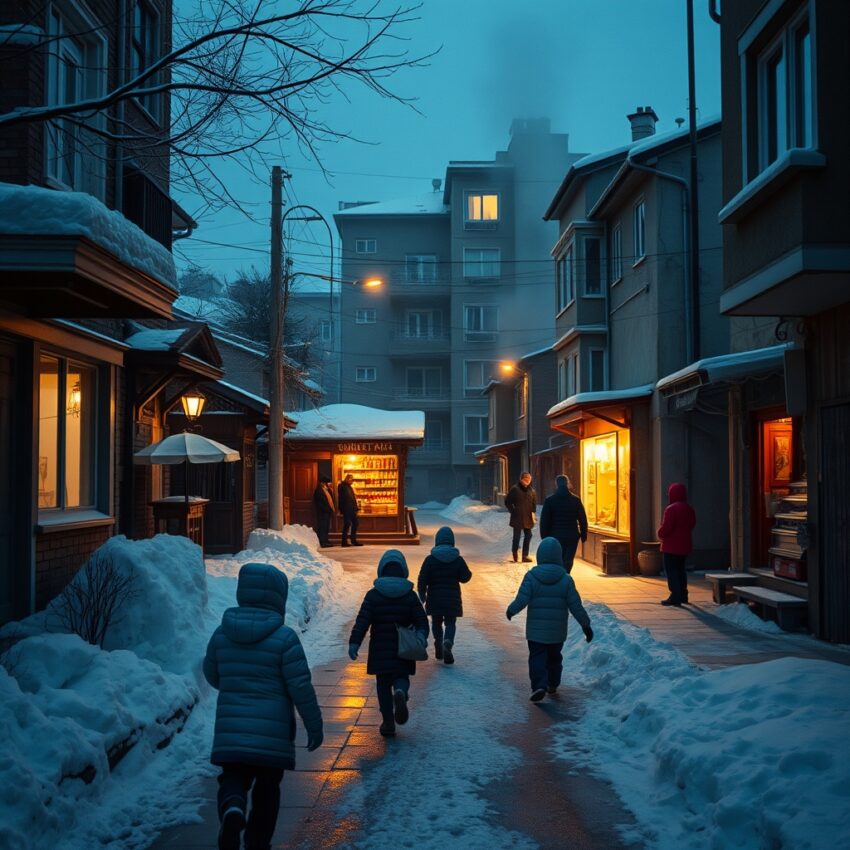
Bir zamanlar kar yağınca sokaklar bugünkü gibi hemen ıssızlaşmazdı. Tam tersine, şehrin üstüne yavaşça inen beyazlık mahalleyi başka bir yakınlık duygusuyla birbirine bağlardı. Pencerelerin buğulandığı, soba dumanının çatılar arasında ağır ağır dolaştığı, akşamın erkenden çöktüğü saatlerde bile sokaklarda hayat sürerdi. Çocuklar kartopu için aşağı iner, bakkalın önü kaygan zemine rağmen açık kalır, apartman kapılarında konuşan komşular soğuğa rağmen hemen dağılmazdı. Karın sesi azaltan örtüsü, sokağı tehlikeli değil daha korunaklı hissettirirdi. Çünkü herkes birbirini tanır, kim hangi evde oturur bilinirdi; geç vakitte eve dönen bir çocuğun ayak izleri bile göz ucuyla takip edilir, birinin atkısı eksikse öteki onu kapıdan geri çağırırdı.
Mahalle Kültürü açısından kar yağınca boşalmayan sokaklar, eski komşuluk düzeninin görünür olduğu en güçlü sahnelerden biridir. Güven duygusu yalnız fiziksel emniyetle ilgili değildi; sokağın tanıdık yüzlerle çevrili olması, çocukların birden fazla göz tarafından gözetilmesi ve yetişkinlerin birbirinin çocuğuna da dikkat etmesi bu duyguyu beslerdi. Kış akşamlarında mahalle fırınından gelen sıcak ekmek kokusu, kapı önüne bırakılan odunlar, ellerinde pazar filesiyle eve dönen büyükler ve karı küreyen apartman görevlileri günlük hayatın sürekliliğini hatırlatırdı. Doğa sertleşse bile toplumsal hayat çekilmez, tersine biraz daha sıkı örülürdü. Sokak, evin dışında kalmış boş bir alan değil, ortak sorumluluğun devam ettiği bir uzantıydı.
Kar altında geçen saatlerin bir neslin güven duygusunu beslemesinin önemli bir nedeni, kamusal alanın çocuklar için tamamen yasaklanmamış olmasıydı. Çocuklar akşamüstü okuldan döndükten sonra kısa süreliğine dışarı çıkar, kızak niyetine karton parçaları kullanır, apartman girişinde eriyen karları çizmeleriyle dağıtırdı. Büyükler pencere aralığından bakar, ara sıra isimle seslenir, ama sokağı bütünüyle tehdit saymazdı. Sokakta geçirilen zaman, çocuğa kendi başına hareket etme hissi verirken aynı zamanda görünür bir ağ tarafından korunuyordu. Karla kapanan yollar, yavaşlayan trafik ve azalan gürültü, mahalleyi adeta daha okunur hâle getirirdi. Kimsenin acele etmediği, her adımın daha dikkatli atıldığı bu ortamda, güven duygusu soyut bir kavram olmaktan çıkıp bedensel bir tecrübeye dönüşürdü.
Bu hafızanın parlak kalmasında kışın ev içi sıcaklığı ile sokak serinliği arasında kurulan denge de etkilidir. Dışarıdan eve giren çocukların elleri çözülürken anneler sıcak çorba koyar, sobanın yanında kuruyan çoraplar buhar çıkarır, bir yandan da “kimler vardı aşağıda?” diye sorulurdu. Bu soru yalnız meraktan değil, mahalle dokusunun sürekliliğini bilme ihtiyacından gelirdi. Sokakta geçirilen saatler evde anlatılır, kimin düştüğü, kimin en büyük kartopunu yaptığı, hangi komşunun kapı önünü temizlediği akşam sohbetinin parçası olurdu. Böylece dışarıdaki deneyim içeride onaylanır, ev ile sokak arasında keskin değil, geçirgen bir ilişki kurulurdu. Güven duygusu da tam bu geçişkenlikten doğardı; sokak tanıdıktı, çünkü eve aitti, ev de rahattı, çünkü sokak gözetiliyordu.
Bugün kar yağdığında sokakların aynı biçimde dolu kalmaması, o eski güven hissini daha da görünür kılıyor. Bir neslin hafızasında kar, yalnız soğuk ya da zorluk değil; komşuluğun, görünür dayanışmanın ve dışarıda olmanın doğal kabul edildiği bir düzenin işaretidir. Kar yağınca boşalmayan sokaklarda geçirilen saatler, çocuklara dünyanın bütünüyle tehlikeli olmadığını, tanıdık insanların arasında hareket etmenin mümkün ve güzel olduğunu öğretmişti. Belki de bu yüzden geçmişe bakıldığında beyaz sokaklar bu kadar sıcak hatırlanıyor. Çünkü o günlerde kar, yalnız kışı değil, aynı zamanda birbirini kollayan bir mahallenin güvenini de örtüsü altına alıyordu.
🇬🇧 English | The Sense of Safety Given by Streets Left Full Under Snow
There was a time when streets did not empty as soon as it snowed. On the contrary, the whiteness slowly settling over the city tied the neighborhood to itself with a different sense of closeness. Even in the hours when windows were misted, stove smoke drifted between rooftops, and evening arrived early, life continued in the streets. Children went downstairs for snowball fights, the grocer kept his doorway open despite the slippery pavement, and neighbors talking at apartment entrances did not scatter immediately because of the cold. The blanket of snow that softened every sound made the street feel not more dangerous, but more sheltered. Everyone knew everyone else; people knew which family lived in which building, the footsteps of a child coming home late were noticed, and if someone had forgotten a scarf another person would call them back from the doorway.
From the perspective of neighborhood culture, streets that did not empty in snowfall are among the clearest scenes in which old forms of neighborliness can be seen. The sense of security was not related only to physical safety. It was nourished by streets surrounded by familiar faces, by children being watched by more than one pair of eyes, and by adults feeling responsible not only for their own children but for the children of others as well. On winter evenings, the smell of warm bread from the neighborhood bakery, stacks of wood left at the doorway, adults returning home with market bags in hand, and building caretakers shoveling snow all reminded people of the continuity of daily life. Even when the weather became harsher, social life did not withdraw; instead, it tightened its weave. The street was not an empty zone outside the house, but an extension of a shared responsibility.
One important reason the hours spent under snow nourished a generation’s sense of security was that public space was not entirely forbidden to children. After returning from school, children still went outside for a while, used pieces of cardboard as makeshift sleds, and scattered melting snow with their boots in apartment entrances. Adults watched from half-open windows, occasionally calling out by name, yet they did not treat the street itself as a total threat. Time spent outside gave children a sense of moving on their own while also being protected by a visible social web. Roads narrowed by snow, slowed traffic, and reduced noise made the neighborhood easier to read. In an environment where no one hurried and every step was taken more carefully, the feeling of safety ceased to be an abstract notion and became a bodily experience.
Part of why this memory remains so bright lies in the balance between the warmth inside the home and the chill of the street. When children came in from outside and the feeling returned to their fingers, mothers served hot soup, socks drying by the stove gave off steam, and someone would ask, “who was downstairs?” That question came not only from curiosity, but from a need to know that the neighborhood fabric remained intact. Hours spent in the street were retold inside the house: who slipped, who made the largest snowball, which neighbor cleared the path in front of the building. In that way the experience outside was confirmed indoors, and the relationship between house and street remained not rigid but permeable. The sense of security was born precisely from that permeability. The street was familiar because it belonged to the home, and the home felt relaxed because the street was being watched.
Today, when snowfall no longer leaves streets full in the same way, that older feeling of security becomes even more visible in memory. For one generation, snow signified not only cold or inconvenience, but a social order in which neighborliness, visible solidarity, and the naturalness of being outdoors were still alive. The hours spent on streets that did not empty when it snowed taught children that the world was not entirely dangerous, and that moving freely among familiar people was both possible and beautiful. Perhaps that is why white streets look so warm in hindsight. In those days snow covered not only winter, but also the protective confidence of a neighborhood that watched over itself.
🇧🇷 Português (Brasil) | A Segurança que as Ruas Cheias de Neve Ofereciam
Houve um tempo em que as ruas não se esvaziavam assim que começava a nevar. Pelo contrário, a brancura que descia devagar sobre a cidade unia o bairro a si mesmo por meio de uma sensação diferente de proximidade. Mesmo nas horas em que as janelas embaçavam, a fumaça do fogão passava entre os telhados e a noite chegava mais cedo, a vida continuava na rua. As crianças desciam para brincar com bolas de neve, a mercearia permanecia aberta apesar do chão escorregadio, e os vizinhos conversando nas entradas dos prédios não se dispersavam tão rapidamente por causa do frio. A camada de neve, que abafava os sons, fazia a rua parecer não mais perigosa, mas mais protegida. Todos conheciam todos; sabia-se quem morava em qual casa, os passos de uma criança voltando mais tarde eram percebidos, e se alguém estivesse sem cachecol outra pessoa o chamava de volta da porta.
Do ponto de vista da cultura de bairro, as ruas que não se esvaziavam quando nevava são uma das cenas mais claras da antiga vizinhança. A sensação de segurança não dizia respeito apenas à proteção física. Ela se alimentava de ruas cercadas por rostos conhecidos, de crianças observadas por mais de um olhar e de adultos atentos também aos filhos dos outros. Nas noites de inverno, o cheiro de pão quente vindo da padaria do bairro, a lenha deixada nas portas, os adultos voltando para casa com sacolas de compras e os zeladores limpando a neve lembravam a todos a continuidade da vida cotidiana. Mesmo quando o clima se tornava mais duro, a vida social não recuava; ao contrário, apertava ainda mais seus laços. A rua não era um espaço vazio do lado de fora da casa, mas a continuação de uma responsabilidade comum.
Uma razão importante para as horas passadas sob a neve alimentarem o sentimento de segurança de uma geração é que o espaço público não era totalmente proibido às crianças. Depois da escola, elas ainda saíam por algum tempo, usavam pedaços de papelão como trenó improvisado e espalhavam com as botas a neve derretida nas entradas dos prédios. Os adultos observavam por entre as janelas, chamavam de vez em quando pelo nome, mas não tratavam a rua como uma ameaça absoluta. O tempo passado do lado de fora dava às crianças a sensação de autonomia, ao mesmo tempo em que elas permaneciam protegidas por uma rede social visível. As ruas cobertas de neve, o trânsito mais lento e o barulho reduzido tornavam o bairro mais legível. Num ambiente em que ninguém tinha tanta pressa e cada passo era dado com mais atenção, a segurança deixava de ser uma ideia abstrata e se tornava uma experiência do corpo.
Parte do motivo de essa memória continuar tão viva está no equilíbrio entre o calor da casa e o frescor da rua. Quando as crianças entravam e os dedos começavam a descongelar, as mães serviam sopa quente, as meias secando perto do fogão soltavam vapor, e alguém perguntava: “quem estava lá embaixo?” Essa pergunta não vinha só da curiosidade, mas da necessidade de saber que o tecido do bairro continuava inteiro. As horas passadas na rua eram recontadas dentro de casa: quem escorregou, quem fez a maior bola de neve, qual vizinho limpou a calçada. Assim, a experiência de fora era confirmada no interior, e a relação entre casa e rua se mantinha permeável, não rígida. O sentimento de segurança nascia exatamente dessa passagem contínua. A rua era familiar porque pertencia à casa, e a casa era tranquila porque a rua era observada.
Hoje, quando a neve já não mantém as ruas cheias do mesmo modo, essa antiga sensação de segurança aparece ainda com mais nitidez na memória. Para uma geração, a neve significava não apenas frio ou dificuldade, mas uma ordem social em que a vizinhança, a solidariedade visível e a naturalidade de estar na rua ainda existiam. As horas vividas em ruas que não se esvaziavam quando nevava ensinaram às crianças que o mundo não era inteiramente perigoso e que circular entre pessoas conhecidas era algo possível e bonito. Talvez seja por isso que as ruas brancas pareçam tão acolhedoras quando lembradas. Naqueles dias, a neve cobria não só o inverno, mas também a confiança protetora de um bairro que cuidava de si mesmo.