 Eski Pano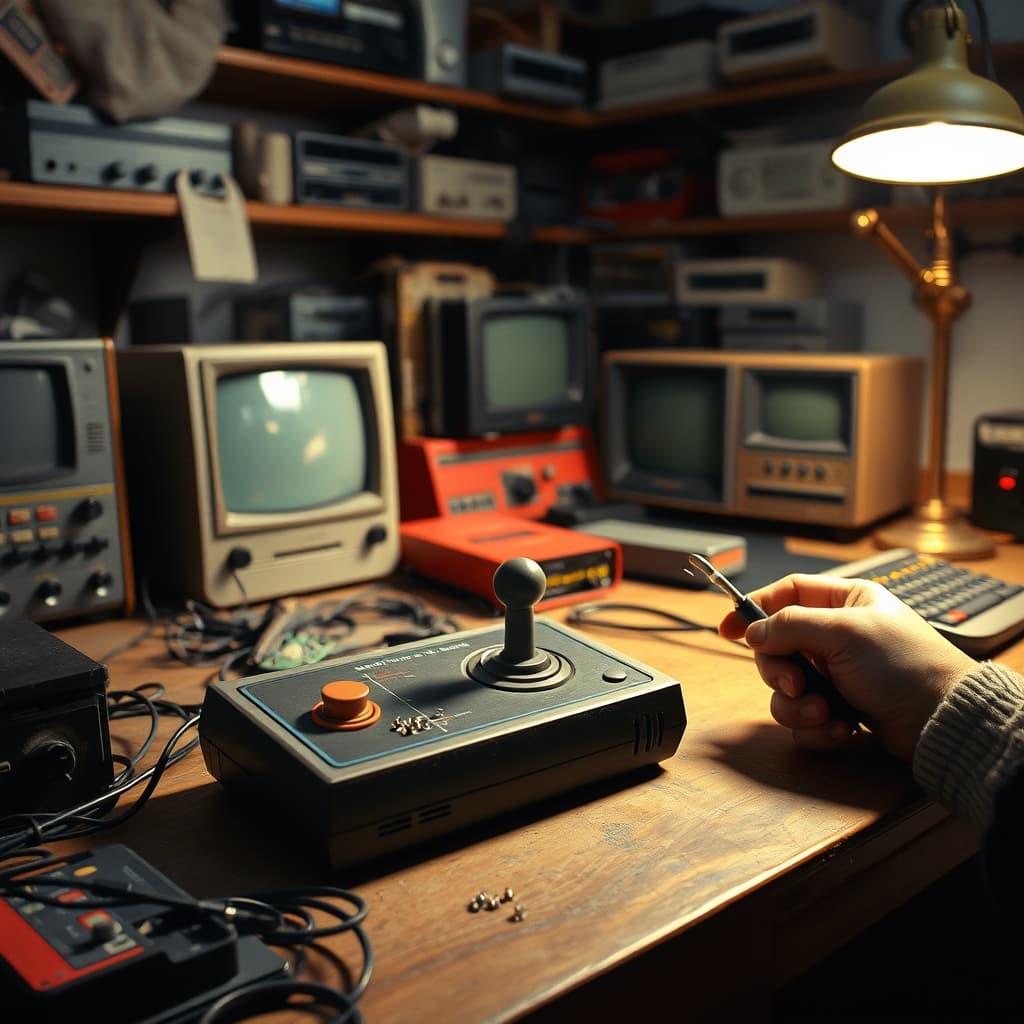
The joystick was a small object, but it carried a large promise. It connected children to glowing screens, noisy games, and the feeling that movement could be controlled with a hand. When it broke, the disappointment was immediate. Yet in old repair shops, broken rarely meant finished.
A Toy With Mechanical Patience
Buttons loosened, cables bent, plastic cracked, and the familiar click sometimes disappeared. These faults made the joystick feel almost alive. It had habits, weaknesses, and a temperament. A repairer could open it, clean the contacts, resolder a wire, and return the object to play.
Repair as a Form of Hope
In the analog age, repair carried hope because devices revealed their insides. A problem could be seen, touched, and sometimes solved with a small tool. The workbench became a border between loss and return. Children waited outside or beside the counter, imagining the first game after repair.
Why It Found a Second Life
The joystick found a second life because it belonged to shared excitement. It was passed between siblings, cousins, and neighbors. Repair saved more than plastic; it saved the game afternoon, the living room noise, and the slow city time in which objects were still worth bringing back.