Eski Pano
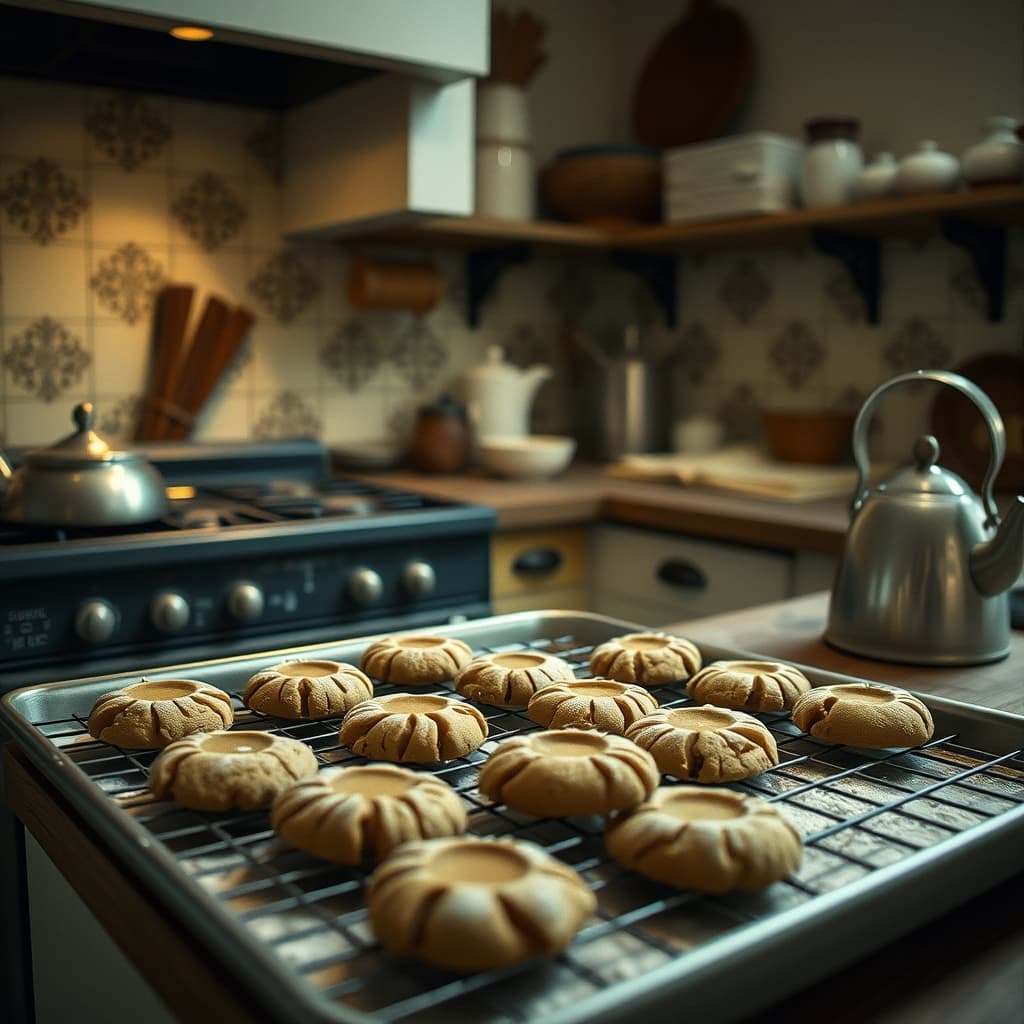
There was a time when one did not need to consult thick recipe notebooks to understand a home kitchen. A tray of cookies coming out of the oven could tell almost everything on its own. The familiar taste called grandmother’s cookies began revealing the character of the house as soon as flour was scattered across the counter. The scent of vanilla blending into butter or margarine, the light dust of sifted flour, the crack of an egg, the experience that measured sugar by the hand rather than by strict tools, all belonged to the same kitchen knowledge. While the dough was rolled, water for tea would boil at the side, and as the cookies baked, the smell spreading into every room made it clear that the kitchen was not only a place where food was made, but where a family’s language was formed. That is why grandmother’s cookies were not merely a simple snack. They were a daily and affectionate summary of old kitchen culture.
From the perspective of taste memory, these cookies are one of the clearest examples of how the character of a home kitchen reveals itself. They speak not through display, but through the habits of the hand. The shapes may not come out exactly the same on every tray, the edges may brown a little more than planned, one cookie may be thicker and another more crisp, yet these very differences carry the spirit of home baking. They are prepared not according to the logic of standardized products, but according to knowledge of who in the family likes what. One grandchild prefers less sugar, another wants powdered sugar on top, and for someone else a little orange zest is added to the dough. The recipe becomes less a fixed rule and more a living tradition shaped by the family’s map of taste. The character of the home kitchen is understood there: alongside measurement, there is intuition; alongside the recipe, there is memory.
One major reason these cookies keep old kitchen culture alive lies in the way they are prepared and shared. While the dough is kneaded, children are given small pieces to handle; arranging the tray becomes a task done together; and while everyone waits for the baking, conversation lengthens in the kitchen. The cookies are often made not only for the household itself, but also to take to a neighbor, to offer when guests arrive, to fill a tin before a holiday, or to place beside a schoolbag after a child returns home. The recipe therefore lives by circulating rather than by remaining still. Kept fresh for days in a metal tin, the cookies also carry the house’s understanding of hospitality, storage, and generosity. Even their crumbs reveal something about the way a home functions.
Grandmother’s cookies also make visible the value of slow labor. Letting the dough rest, taking out the molds, waiting for the first browning scent beside the oven, all show that time in the kitchen once depended not on haste, but on rhythm. This rhythm differs from the speed of industrial kitchens. It is measured, repeated, and learned by hand. Old kitchen culture survives here not only in ingredients, but in the use of time. The family stories told while the cookies are made, the sentences beginning with “in our day,” the practical adjustments made despite missing ingredients, all matter as much as the recipe itself. Culture survives not only in flavor, but also in the relationships formed while that flavor is made.
That is also why grandmother’s cookies continue to attract interest today. People remember them not merely as a taste, but as a warmth that defined the house itself. The character of a home kitchen lies not in doing everything perfectly, but in having a scent that welcomes, a jar always ready to share, and a language learned by hand. Grandmother’s cookies keep old kitchen culture alive for exactly that reason. Every bite carries a little patience, a little labor, and a little of the tenderness that circulates wordlessly within a family. The smell rising from the oven works almost like the unwritten constitution of the home: here things are still awaited, prepared, and shared.
Grandmother’s Cookies: How Do They Tell the Character of the Home Kitchen and Keep Old Kitchen Culture Alive?