 Eski Pano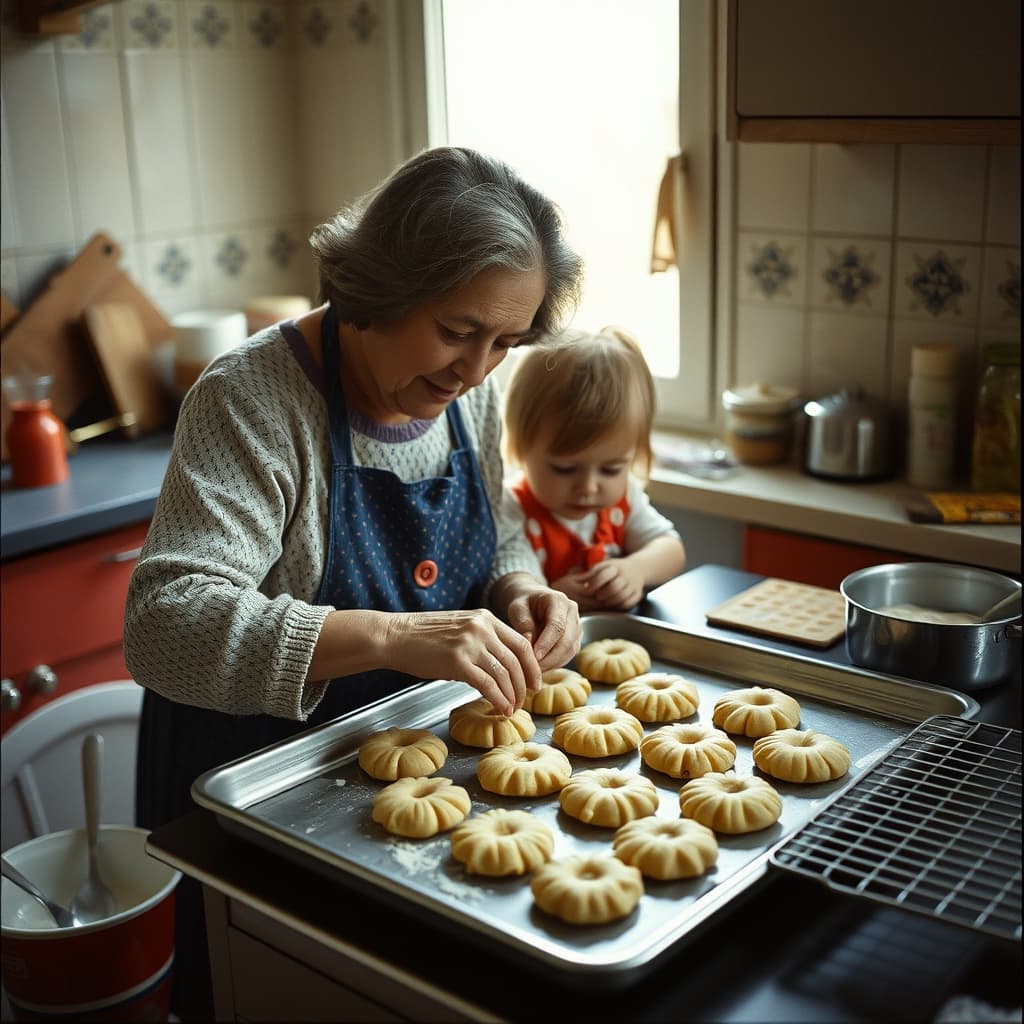
“Grandmother's biscuits” rarely describes one universal bake. The phrase points to a particular kitchen, pair of hands and pattern of hospitality. One family remembers a crumbly savoury biscuit, another a sweet round scented with citrus or vanilla. The recipe's character lies in repeated local decisions rather than an official list of ingredients.
Older cooks often combined written knowledge with touch. A tea glass, spoon or familiar bowl served as a measure. Flour was added until dough reached the expected feel, but that judgement responded to egg size, fat temperature, humidity and flour absorption. Translating “as much as it takes” into a reliable archive requires observation and testing.
The Pantry Shaped the Recipe
Butter, margarine or oil produced different texture and flavour. Yoghurt, milk, eggs, sugar, cheese, seeds and spices varied with household supply. Substitution was not careless; an experienced cook adjusted liquid, flour and baking time. A copied recipe without those corrections may not recreate the remembered result.
Food safety remains part of tradition. Eggs and dairy need proper storage. Rancid fat, mouldy nuts or damaged ingredients should be discarded. Raw dough containing egg or untreated flour should not be tasted casually. Clean hands and surfaces matter even in a familiar kitchen.
Shaping Organised the Baking Tray
Pieces needed similar size to bake evenly. Fork marks, twists, rings or hand-rolled rounds created a family visual signature. Spacing controlled airflow and spreading. A child helping with shapes learned the recipe through touch, although hot trays and ovens required firm adult supervision.
Egg wash, seeds or sugar could finish the surface. These small choices signalled whether the biscuit belonged with tea, breakfast or a festive plate. The tray also reflected equipment: thin metal browned bottoms quickly, dark surfaces absorbed more heat and an uneven oven required rotation.
The Oven Required Judgement Beyond the Clock
Historic ovens often offered unreliable temperature markings. Cooks watched colour, aroma and the underside of a test piece. Opening too frequently lost heat; leaving a tray after the edges coloured could dry the centre. Cooling on an open surface allowed steam to escape before storage.
Biscuits placed in a tin while warm softened or developed condensation. Clean, dry containers and separation from strongly scented foods protected quality. Dairy or moist fillings shorten safe storage. A recipe intended to last should state realistic conditions rather than relying on memory alone.
Ingredient notes should also record brands only when they matter. Flour strength, fat composition and leavening can change over time even under familiar packaging. Describing texture and behaviour makes the family recipe more resilient than depending on a product that may later disappear or be reformulated.
A Digital Nostalgia Archive can record ingredients by weight alongside household measures, photograph dough texture, note tray and oven type, and identify who taught whom. Several family versions can coexist without choosing one as authentic. Grandmother's biscuits preserve kitchen culture when the archive captures adaptation, not just sentiment. Their familiar taste came from a cook reading pantry, dough and oven in sequence, then setting a plate where visitors and children understood that there was enough to share.