 Eski Pano
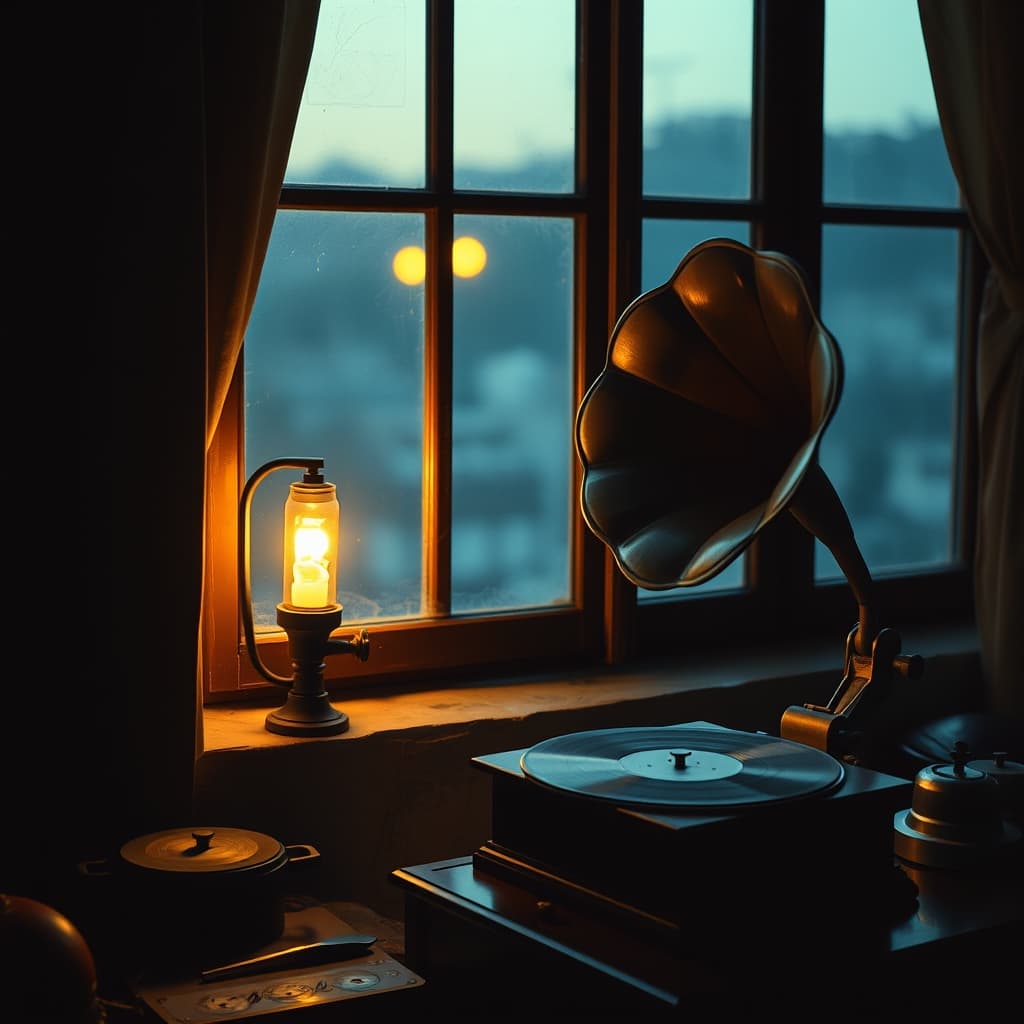
Some objects do more than produce sound. They also change the shape of waiting. In long evenings spent by the window, the gramophone was exactly that kind of companion. The day slowly withdrew, the sheer curtain moved lightly, the sounds of footsteps outside grew fewer, and inside the house a sense of preparation took form. The gramophone, whose lid was opened with care and whose needle was placed with attention, gave seriousness to the room even before it began to play. When the record started to turn, it felt as though a distant memory hidden on the back of a postcard were gradually becoming visible. The sound did not arrive in perfect condition. Small crackles carried both the dust of the period and the wear of time. Yet for that very reason, the sound of the gramophone felt more human, closer, and more worthy of being protected.
From the perspective of technological heritage, one of the most remarkable things about the gramophone is that it did not belong to a single life span. When it broke, it was not simply discarded. It was restored with respect in the hands of a repairman. In older cities, those small workshops, resembling electrical repair shops but working in a quieter register, represented the patience of the analog age. On shelves stood belts, needles, springs, and tiny screws in little boxes, and the craftsman's hand moved with the knowledge that he was repairing not only a machine, but a memory. The gramophone had not merely brought music into the home. It may have played at weddings, been wound up on holiday mornings, or made a solitary evening easier to bear. Repairmen therefore restored emotional continuity alongside mechanical parts. What we call a second life was hidden partly in their skill, and partly in the owner's refusal to give up on the object.
The hours spent beside a gramophone meant more than using a piece of technology. They meant participating in a ritual. Removing the record from its sleeve, checking with the eye whether dust remained on the surface, lowering the arm without hurry, and allowing conversation in the room to soften as the sound began, all of these were cultural gestures formed around the machine. Children often watched this ritual with something like enchantment. They tried to understand where the sound was truly hidden, and how the turning record could so suddenly alter the atmosphere of the room. For adults, the gramophone was an object that separated listening from the noise of daily life. Unlike the radio, which flowed in from elsewhere, this was a sound chosen and deliberately begun. For that reason, the kind of attention gathered around the gramophone was more concentrated, more ceremonial, and more personal.
Its second life in the hands of repairmen also had to do with the fact that the gramophone was not only a device, but an aesthetic presence. Brass details, wooden boxes, wide horns, or lid-covered bodies made it an object to be displayed rather than hidden away. That is why it was never easy simply to say, "let us buy another one," when it failed. A replacement would not carry the same appearance, the same sound, or the same story. In many homes the gramophone stood in a corner that was shown to guests, beside which one sat a little more carefully, and near which children were told to be especially gentle. To make it work again meant restoring not only function, but dignity within the home. The relationship built around it during evenings waiting by the window shows that technology was once perceived not as something cold, but as something alive enough to deserve care.
When we ask today why the gramophone still appears romantic, as though hidden on the back of an old postcard, the answer lies partly in that fragile continuity. A device that was not thrown away despite its crackling sound, but taken to a craftsman, brought back home, and listened to again, does not fit the logic of disposable speed. That is why it remains more deeply in memory. The gramophone reminds us that technology once meant not only novelty, but also a life extended through labor and loyalty. For those who waited for evening beside the window, its sound was not merely music. It was the echo of attachment to objects, trust in repair, and a world people did not want to lose.
The Hours Spent Beside the Gramophone: Why Did It Find a Second Life in the Hands of Repairmen, as If Hidden on the Back of a Postcard During Evenings Waiting by the Window?