Eski Pano
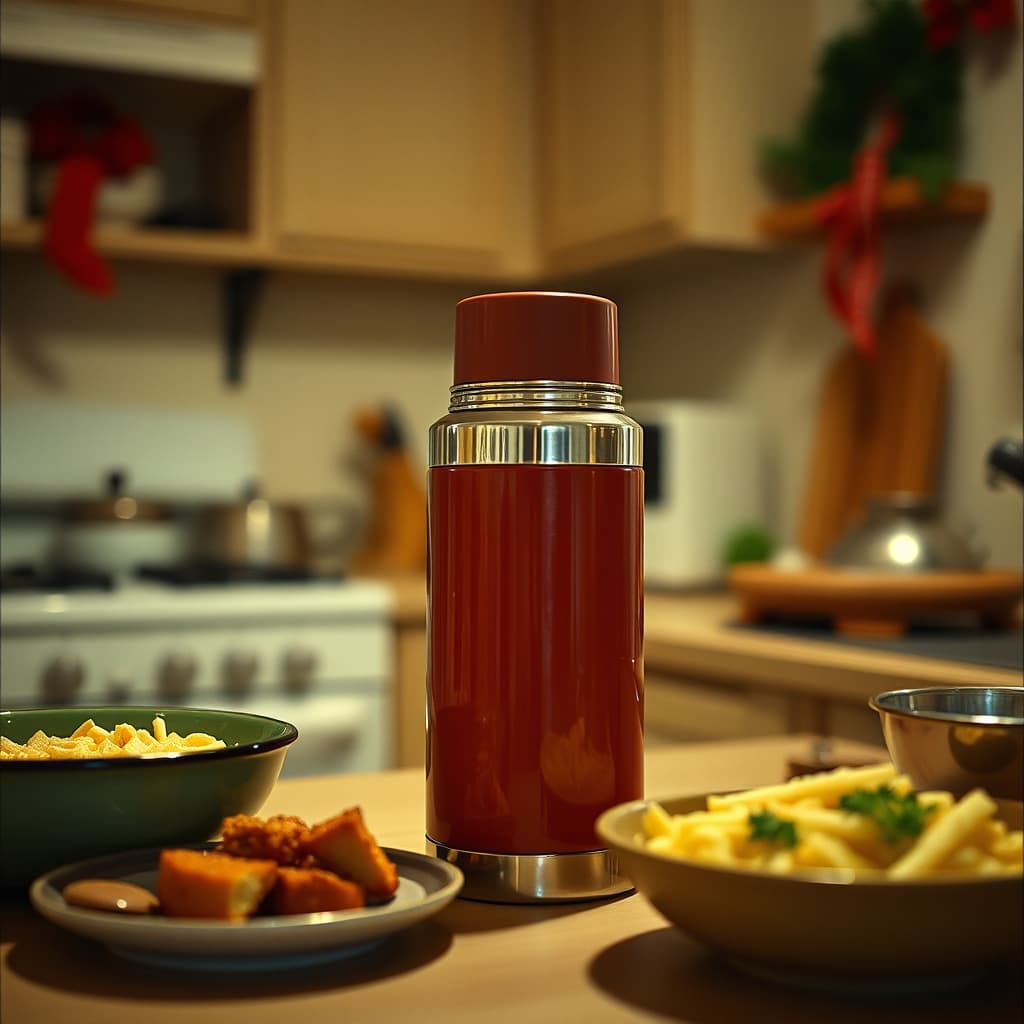
There was a time when food thermoses rested in the quietest corners of kitchen cupboards and then, when needed, moved silently to the center of domestic life. Their outer surface might have grown slightly dull, their lid softened by years of use, yet when holiday cleaning arrived, that familiar face was polished again and its older brightness returned beneath the cloth. This was not only a matter of caring for an object. It expressed which belongings were considered worth preserving and which household habits were treated with seriousness. The food thermos held not only heat, but effort, prepared meals, and a form of care intended to arrive somewhere on time.
Seen through the lens of object stories, the food thermos is one of the plainest examples of the bond between design and ritual. With its layered interior, tightly closing lid, metal or hard plastic body, and promise of keeping food warm for hours, it brought a quiet convenience into modern domestic life. Yet what made it lasting was less its technical function than the moments in which it entered the scene. It appeared when soup was sent to someone ill, when lunch was carried to a father at work, when provisions were prepared for a journey, or when an early picnic meal was packed before sunrise. Each time it was used, domestic labor became transportable. In that way, the object preserved not only warmth, but the rhythm of the household itself.
Its face shining again during holiday cleaning made its emotional place even clearer. While cabinet glass was wiped, copper was polished, and carpets were aired out, the careful cleaning of the food thermos showed that it was not an ordinary container. Holiday preparation did not cover only what was visible; it also embraced the objects that had a share in the memory of the home. As the thermos regained its shine, it seemed to brighten old soups once carried across the street, stuffed vegetables sent to a neighbor, and rice prepared at dawn. Some objects are loved not only because they are useful, but because their role inside the family is deeply understood. The food thermos was exactly such an object: unshowy, yet indispensable.
Its role in shaping domestic ritual is also tied to the sense of time. Food placed in a thermos is not meant to be eaten at once, but must remain warm until later; in other words, the household plans its time a little ahead. That planning builds a careful bridge between what is cooked in the kitchen and the life unfolding outside. In many homes, the sentence “Let’s put it in the thermos” was not merely practical. It marked the beginning of the meal’s journey toward a person. The labor of the kitchen did not stay within the walls, but traveled toward a workplace, a road, a sickroom, or a long holiday visit. The thermos was the quiet device that organized that passage.
Food thermoses still exist today, but what made their older meaning special were the rituals surrounding them. Their renewed shine during holiday cleaning, their immediate usefulness in times of need, and the fact that they carried care as much as food turned them into a lasting object story. That is why, when old domestic life is remembered, the food thermos appears not simply as a practical vessel. It survives as the modest but gleaming face of family order, mutual help, and the invisible labor of the home gathered around a meal meant to stay warm.
The Food Thermos and Its Face Shining Again in Holiday Cleaning: How It Shaped the Rituals of Domestic Life