 Eski Pano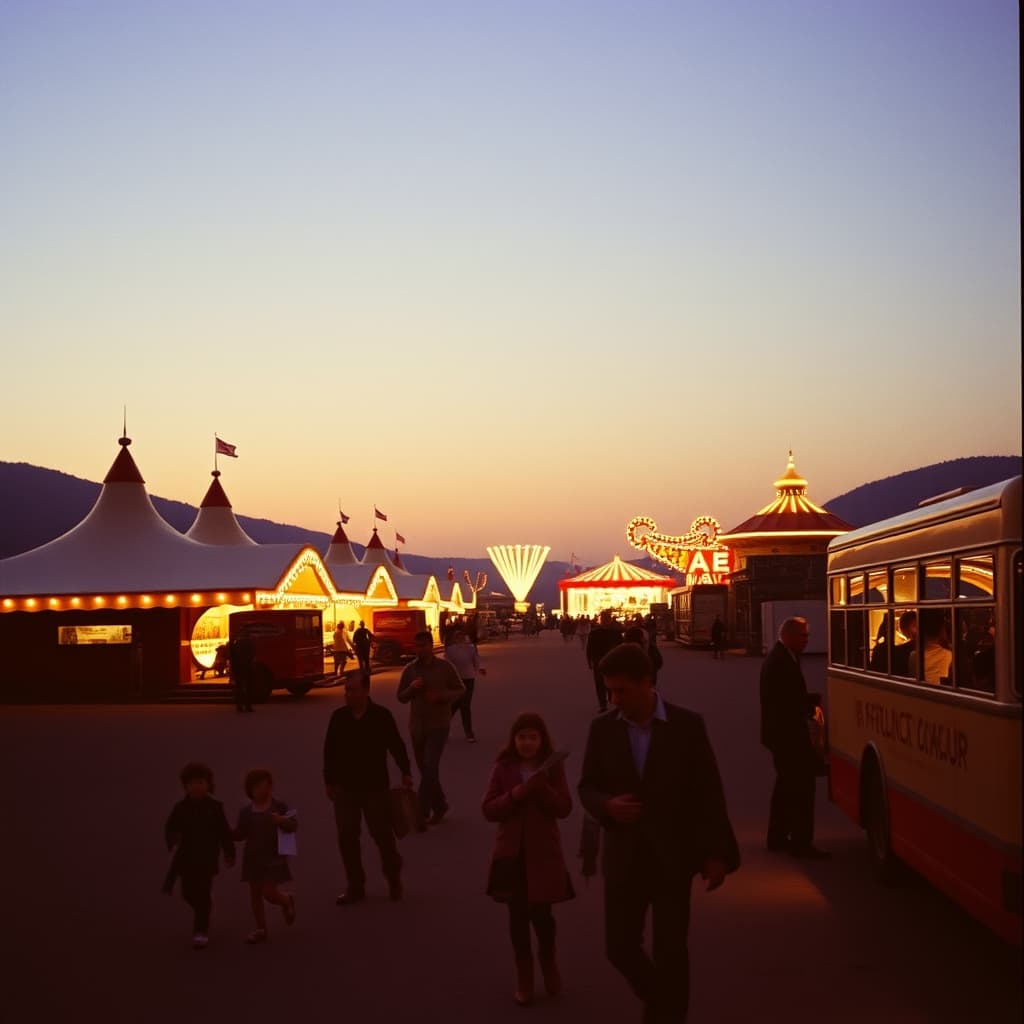
A large fairground promised visitors a condensed view of a changing country. Industrial machines, household goods, agricultural products, regional foods and public institutions appeared within walking distance of one another. Bright pavilions and evening lights turned display into spectacle, allowing families to encounter objects and ideas that might not yet have reached their own town or budget.
Fairs varied by place, organiser and period. Some combined international trade with national industry; others emphasised agriculture, regional production, entertainment or civic education. A family memory of “the fair” may merge several years, so reliable documentation needs the official name, site, season and exhibitors.
The Pavilion Made Progress Visible
Architecture and display design gave products a narrative. A tractor could stand beside photographs of modern farming; a refrigerator might be presented as a new household routine rather than a metal box. Demonstrators explained controls, offered samples and collected customer interest. Brochures carried the pavilion's message home.
These presentations were selective. Companies highlighted success, governments promoted policy and difficult working conditions usually stayed outside the display. The fair can reveal how progress was advertised, but it should not be treated as a complete report on national life. Archives need labour records, prices and critical accounts alongside promotional material.
Night Lighting Extended the Visit
Illuminated signs, fountains and pathways changed the grounds after sunset. Electricity itself could become part of the modern image. Families planned an evening around cooler air, entertainment and transport home. Lighting required wiring, maintenance and safety inspections, while power failures exposed how dependent the spectacle was on hidden infrastructure.
Restaurants, music stages and amusement rides blurred the line between trade exhibition and leisure. Children might remember a ride more clearly than a pavilion. Crowds, queues and loud sound also created fatigue. Accessible paths, rest areas, toilets, first aid and clear exits determined whether the event served all visitors well.
A Temporary City Required Permanent Work
Before opening, builders, electricians, gardeners, printers and cleaners prepared the site. During the season, ticket staff, security, vendors, performers and transport workers sustained it. After closing, exhibits were dismantled and waste removed. The apparently effortless festival depended on long and often seasonal shifts.
Public transport connected the fair to the wider city. Extra buses, trams or late services influenced attendance. Visitors without private cars relied on safe, affordable return routes. The site also changed nearby commerce, traffic and residents' experience for weeks.
Souvenirs extended the visit beyond the gate. Maps, badges, sample packets and branded bags entered household drawers and later became evidence of attendance. Their survival is uneven, so an object should be linked to a documented pavilion or year before it is used to reconstruct the fair.
A Digital Nostalgia Archive can connect entry tickets, pavilion plans, catalogues, product samples, employee photographs, transport schedules and oral histories. Corporate claims should be labelled as such, and dates verified from programmes. Fairgrounds remain bright in memory because they staged possibility at human scale: a visitor could walk from a regional food stand to a machine of the future in minutes. Preserving the whole scene means remembering not only what was displayed, but who built, explained, cleaned and carried that seasonal national shop window.