🇹🇷 Türkçe | Fabrika Düdüğünün Uyandırdığı Çiçek Kokulu Sabahların Mahalle Hafızası
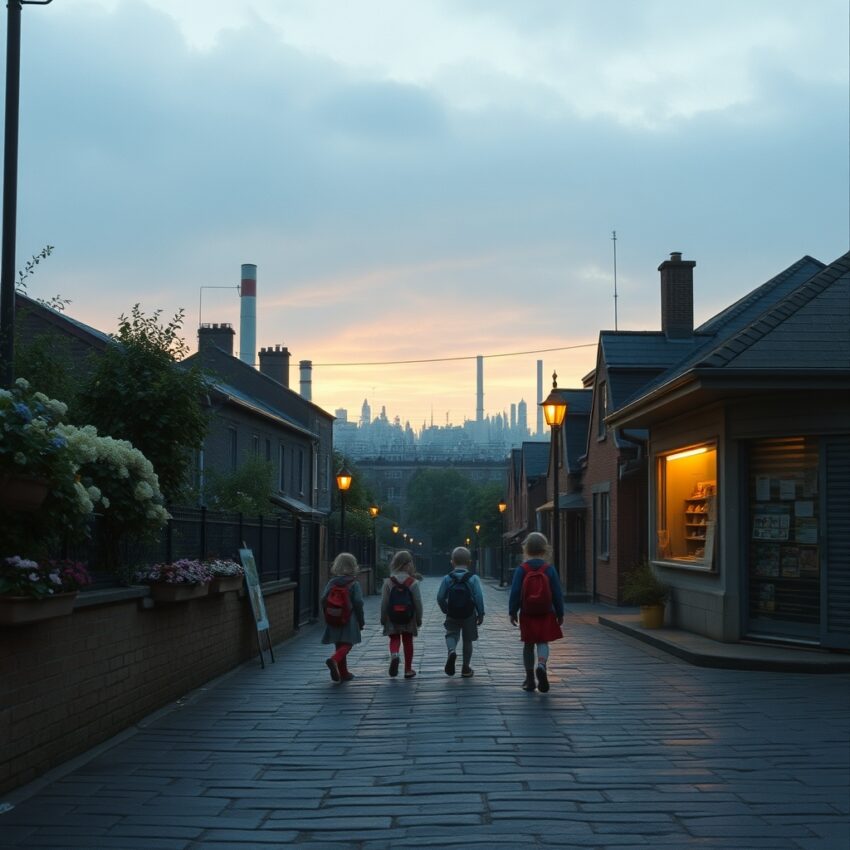
Bir zamanlar sabah, bugünkü gibi telefon ekranlarının soğuk ışığıyla değil, sokağın yavaş yavaş uyanan sesiyle başlardı. Gece boyunca sarı bir daire çizerek yanan sokak lambaları henüz sönmeden, kaldırımların üstüne serilmiş serinlik mahallede dolaşan ilk adımlara eşlik ederdi. Penceresi aralık evlerden çay suyunun kaynama sesi gelir, ince tüllerin ardından annelerin mutfakta telaşa geçtiği hissedilirdi. Tam o sırada uzaktan yükselen fabrika düdüğü, yalnız işçileri değil bütün semti aynı dakikada birbirine bağlayan bir işaret gibi duyulurdu. Çocuklar okul çantalarını omuzlarına geçirirken, bakkal kepengi yarıya kadar kaldırılırken, simit tablası sokağın köşesine yerleşirken o ses günün iskeletini kurardı. Çiçek kokulu sokaklar da bu iskeletin etrafına yumuşak bir ruh örerdi; bahçe duvarlarının ardından gelen yasemin, hanımeli ve ıslak toprak kokusu, erken saatin ciddiyetini bile daha insani hale getirirdi.
Zamanın İzinde bakıldığında fabrika düdüğü, sanayileşmenin yalnız çalışma hayatını değil mahalle düzenini de nasıl biçimlendirdiğini anlatan canlı bir ayrıntıdır. Kentin belli semtlerinde saatler duvardaki takvimlerden çok bu sesle anlaşılırdı. İşe giden babalar, önlüğünü katlayıp kapıya çıkan anneler, okul yoluna koyulan çocuklar ve sütçünün ardından sokağa serpişen kediler aynı işitsel işaret altında hareket ederdi. Bu ortak ritim, mahallenin gündelik hayatına görünmez bir disiplin kazandırırdı. Ama eski sabahları unutulmaz yapan yalnızca düzen değildi. Sokaklarda bir sertlik ile bir incelik aynı anda bulunurdu. Bir yanda üretimin çağrısı, emeğin ağırlığı ve erken kalkmanın mecburiyeti vardı; öte yanda pencere önlerindeki sardunyalar, kapı önüne su serpen komşular ve sokak lambasının altında geceyi saklamış taşların üstünde kalan hafif bir sessizlik. Bu karşıtlık, geçmişi bugün bu kadar derin hatırlamamıza neden olan duygusal dokuyu yaratır.
O yılların sabah manzarasında en çok da küçük ayrıntılar kalır akılda. Okul yolunda önlüğünün cebine mendil sıkıştırılmış çocuk, elinde fileyle erkenden pazara giden teyze, ekmek teknesini açmadan önce kaldırıma kısa bir bakış atan esnaf, hepsi o saatin içine yerleşmiş figürlerdir. Mahallenin bazı sokakları çiçek kokusunu duvar diplerinden değil, açık pencerelerden alırdı; bir evde kahvaltı için kızaran ekmek, bir başkasında reçel kaynayan ocak, bir diğerinde ütülenen okul gömleğinin sıcak kumaş kokusu sokağa karışırdı. Fabrika düdüğü bir anlamda zamanı resmi hale getirirken, bu kokular ve görüntüler sabahı evcilleştirirdi. Bu yüzden geçmişe dönüp baktığımızda o sokaklar yalnız emek tarihini değil, gündelik şefkat biçimlerini de anlatır. Çalışma hayatının sert çizgileri, mahalle hayatının yumuşak alışkanlıklarıyla dengelenirdi.
Bugün bu sabahları özlemle anmamızın nedeni, yalnız nostaljik bir görüntü aramak değildir. Çiçek kokulu sokaklar bize bir zamanlar hayatın kolektif bir ritim içinde aktığını hatırlatır. Fabrika düdüğünü herkes aynı anda duyar, ama herkes onu kendi hayatının içinden cevaplar; kimi servis yetiştirir, kimi çocuğunu uğurlar, kimi dükkânını açar, kimi perdeyi aralayıp sokağa bakardı. Unutulan ayrıntılar tam da burada önem kazanır: sokak lambasının geç sönmesi, demir kapının gıcırtısı, bahçe duvarına tırmanan sarmaşığın sabah nemi, ayakkabı boyacısının sandığını yerine koyuşu. Geçmişten kalan bu parçalar, bir semtin yalnız fiziksel değil duygusal mimarisini de kurar. Belki de bu yüzden bugün o sabahlara bakarken, kaybedilmiş olandan çok birlikte yaşanmış bir ritmin sıcaklığını arıyoruz. Çiçek kokulu sokaklar bize, modern hayatın hızında silinen ortak zaman duygusunu hâlâ fısıldamaya devam ediyor.
🇬🇧 English | The Neighborhood Memory of Flower-Scented Mornings Awakened by the Factory Whistle
There was a time when morning began not with the cold glow of phone screens, but with the slowly waking sound of the street. Before the street lamps that had drawn pale yellow circles through the night were fully switched off, the coolness spread over the pavements kept company with the first footsteps in the neighborhood. From houses with half-open windows came the sound of water boiling for tea, and through thin curtains one could sense mothers already moving quickly in the kitchen. Then, from a distance, the factory whistle rose like a signal that tied not only workers but the whole district to the same minute. As children slipped schoolbags onto their shoulders, the grocer lifted his shutter halfway, and the simit seller settled his tray at the corner, that sound built the skeleton of the day. The flower-scented streets wrapped a softer spirit around that skeleton; jasmine, honeysuckle, and damp soil drifting over garden walls made even the seriousness of the early hour feel more humane.
Seen through the trace of time, the factory whistle is a vivid detail showing how industrialization shaped not only working life, but the order of the neighborhood as well. In certain parts of the city, people understood the hour less from clocks than from that sound. Fathers leaving for work, mothers stepping out after folding an apron, children heading toward school, and the cats appearing after the milkman all moved beneath the same audible sign. This common rhythm gave daily life an invisible discipline. Yet what made those old mornings unforgettable was not discipline alone. The streets held hardness and tenderness at once. On one side stood the call of production, the weight of labor, and the necessity of rising early; on the other stood geraniums on windowsills, neighbors sprinkling water before their doors, and the faint quiet left on stones that had spent the night beneath the street lamps. That contrast created the emotional texture that makes those mornings linger so deeply in memory.
What remains most vividly from those scenes are the small details. A child on the way to school with a handkerchief tucked into the pocket of an apron, an aunt hurrying to market with a net bag in hand, a shopkeeper glancing at the pavement before opening for the day, all of them are figures placed inside that hour. Some streets carried the scent of flowers not only from garden walls, but from open windows: toast browning for breakfast in one home, jam simmering on the stove in another, the warm cloth smell of a school shirt being ironed in a third. While the factory whistle made time official, those smells and images domesticated the morning. That is why, when we look back, those streets speak not only of labor history but of ordinary forms of care. The sharper lines of working life were balanced by the softer habits of neighborhood life.
The reason we remember those mornings with longing is not merely the search for a nostalgic image. Flower-scented streets remind us that life once moved within a collective rhythm. Everyone heard the factory whistle at the same time, yet each answered it from within a different life: one rushed for the service bus, another waved a child off to school, another opened a shop, another parted the curtain and looked out. Forgotten details matter precisely there: the late fading of a street lamp, the creak of an iron gate, the morning dampness on ivy climbing a garden wall, the shoe shiner setting his box into place. These fragments from the past build not only the physical architecture of a district, but its emotional one. Perhaps that is why, looking back on those mornings now, we search less for what was lost than for the warmth of a rhythm once shared. The flower-scented streets still whisper the feeling of common time that modern speed has worn away.
🇧🇷 Português (Brasil) | A Memória do Bairro nas Manhãs com Cheiro de Flores Despertadas pelo Apito da Fábrica
Houve um tempo em que a manhã não começava com a luz fria das telas, mas com o som lento de uma rua despertando. Antes mesmo de os postes que haviam desenhado círculos amarelos durante a noite se apagarem por completo, o frescor espalhado pelas calçadas acompanhava os primeiros passos no bairro. Das casas com janelas entreabertas vinha o barulho da água do chá fervendo, e por trás das cortinas finas era possível sentir as mães já apressadas na cozinha. Então, ao longe, subia o apito da fábrica, como um sinal que unia não apenas os operários, mas o bairro inteiro ao mesmo minuto. Enquanto as crianças colocavam as mochilas nos ombros, o merceeiro erguia a porta até a metade e o vendedor de simit armava sua bandeja na esquina, aquele som montava o esqueleto do dia. As ruas com cheiro de flores davam a esse esqueleto uma alma mais suave; o jasmim, a madressilva e o perfume de terra úmida que vinham dos muros dos jardins tornavam mais humano até o rigor da primeira hora.
Quando olhamos pelo rastro do tempo, o apito da fábrica revela como a industrialização moldou não só a vida de trabalho, mas também a ordem afetiva do bairro. Em certas partes da cidade, a hora era percebida menos pelo relógio e mais por aquele chamado. Pais indo para o serviço, mães saindo à porta depois de dobrar o avental, crianças a caminho da escola e gatos surgindo logo após a passagem do leiteiro se moviam sob o mesmo sinal sonoro. Esse ritmo comum dava disciplina invisível ao cotidiano. Mas o que tornava aquelas manhãs inesquecíveis não era apenas a organização. As ruas carregavam dureza e delicadeza ao mesmo tempo. De um lado havia o chamado da produção, o peso do trabalho e a obrigação de acordar cedo; de outro, os gerânios nas janelas, os vizinhos jogando água diante de casa e o resto de silêncio deixado sobre as pedras que haviam passado a noite sob os postes. Foi esse contraste que criou a textura emocional que ainda hoje mantém essas manhãs tão vivas na lembrança.
O que mais permanece dessas cenas são os pequenos detalhes. A criança indo para a escola com um lenço no bolso do uniforme, a tia seguindo cedo para a feira com a sacola de rede na mão, o comerciante que olha rapidamente para a calçada antes de abrir o negócio, todos são figuras colocadas dentro daquela hora. Em algumas ruas, o cheiro de flores não vinha apenas dos muros dos jardins, mas também das janelas abertas: pão tostando para o café da manhã em uma casa, geleia fervendo em outra, o cheiro quente do tecido de uma camisa escolar sendo passada em uma terceira. Se o apito da fábrica oficializava o tempo, esses cheiros e imagens tornavam a manhã doméstica e acolhedora. Por isso, quando voltamos a essas ruas, elas falam não só da história do trabalho, mas também das formas ordinárias de cuidado. As linhas mais duras da vida produtiva eram equilibradas pelos hábitos mais suaves da vida de bairro.
O motivo de lembrarmos dessas manhãs com tanta saudade não é apenas a busca por uma imagem nostálgica. As ruas com cheiro de flores nos recordam que a vida já correu dentro de um ritmo coletivo. Todos ouviam o apito da fábrica ao mesmo tempo, mas cada um respondia a partir do próprio lugar: um corria para o ônibus do trabalho, outro se despedia do filho, outro levantava a porta da loja, outro apenas afastava a cortina para olhar a rua. É nesse ponto que os detalhes esquecidos ganham valor: o poste que demora a apagar, o rangido do portão de ferro, a umidade da manhã sobre a trepadeira no muro, o engraxate ajeitando sua caixa. Esses fragmentos do passado constroem não só a arquitetura física do bairro, mas também a emocional. Talvez por isso, ao olhar hoje para aquelas manhãs, procuremos menos o que se perdeu e mais o calor de um ritmo vivido em comum. As ruas perfumadas continuam sussurrando a sensação de um tempo compartilhado que a pressa moderna quase apagou.