Eski Pano
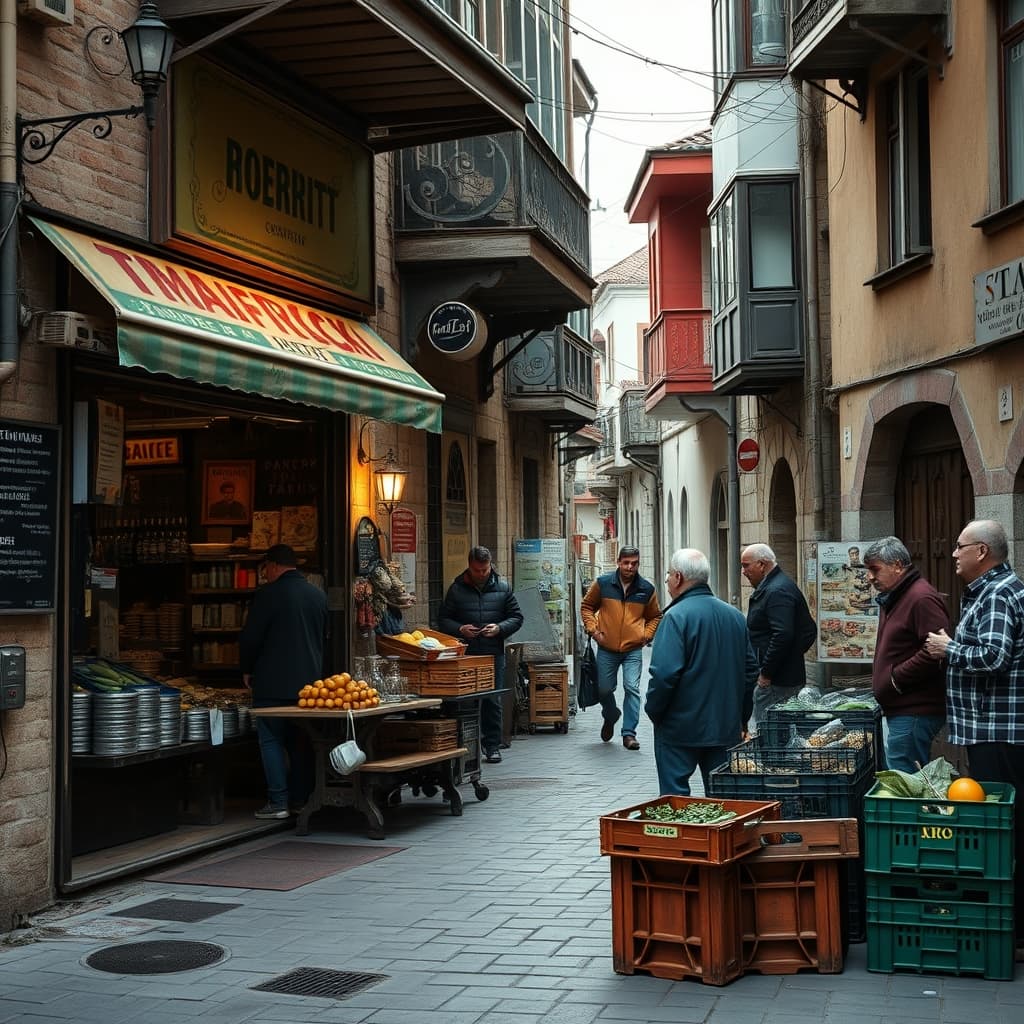
There was a time when the neighborhood morning began with the sound of shop shutters and the greetings that immediately followed. As soon as the grocer lifted his shutter halfway, a cheerful "good morning" came from inside; while the greengrocer arranged his crates, he would ask after the passerby with a nod. The smell of fresh bread spread from the bakery, the butcher wiped his display window, the tailor opened his door, and the tea seller lined up the first glasses of the day. What made these mornings truly warm was the familiarity that came before the purchase itself. Before buying anything, people often already knew one another's concerns: who was ill at home, whose child had an exam, what news had come from the hometown. That is why the days opened by a shopkeeper's greeting were not only the hours in which trade began, but also the hours in which neighborliness was sustained.
Within neighborhood culture, the shopkeeper was never merely a provider of goods. He was an interface that held the memory of the street, regulated its rhythm, and linked people to one another. He knew who bought bread at what hour, whose ledger of unpaid tabs had grown thick, which family had guests, and which child had been sent alone to shop for the first time. This knowledge was not intrusive surveillance, but the natural outcome of reciprocal trust. The strength of the greeting came from that trust. When a grocer asked, "How is your mother now?", when the tailor said, "Don't worry, I'll finish the jacket tomorrow," or when the greengrocer set aside the best tomatoes for a regular customer, these were unspoken agreements of neighborly life. In return, the residents did not see the shopkeeper merely as the owner of a business, but as a figure of closeness woven into daily life.
The mornings opened by the shopkeeper's greeting made neighborliness strong because they created small moments of trust repeated every day. More than the grand promises of modern life, it is the continuity of daily order that makes a person feel rooted. To see the same face each morning, to be addressed by name, to know that someone notices your passage as you leave home; these are invisible yet deep bonds. For an elderly person living alone, such a greeting might serve as a sign of well-being. For a child on the way to school, it might create a sense of safety in the environment. For a family managing its household economy, it might mean the understanding that stood behind the notebook of credit. For that reason, the morning greeting of the shopkeeper went beyond courtesy and became an everyday form of social resilience.
The spatial side of this culture also mattered. Small shops did not live shut off from the street; they lived open into it. Crates spilled onto the pavement, a stool stood at the doorway, and the sound of the radio inside mixed with the noise outside. Shopping was not always a quick transaction, but often a brief stop in which two sentences of conversation naturally belonged. Even someone hurrying to work would nod while passing the grocer, receive a nod in return, and another invisible line of belonging would be drawn across the neighborhood map. That is exactly what is missing today in chain stores and delivery apps: the feeling that while entering an economic exchange, one is also socially recognized. Those old mornings showed that shopping could also be a way of belonging to a place.
Now, in many places, the sound of shutters has been replaced by automatic doors, and being addressed by name has been replaced by screen notifications. Yet the mornings opened with a shopkeeper's greeting are not forgotten, because those times made it clearer that what turns a district into a neighborhood is not only buildings, but repeated encounters. Strong neighborliness is not built with grand declarations, but with small greetings offered patiently every day. Two sentences exchanged in front of a shop can sometimes create more connection than a formal apartment meeting. That is why, when we think of the past, we remember not only old shop signs, but the human voice beneath them. What made neighborliness strong was the reassurance carried by that voice every morning.
The Days When Mornings Opened with the Shopkeeper's Greeting: Why Did They Make Neighborliness So Strong?