🇹🇷 Türkçe | Hatıraların tozlu raflarında eski lunaparkların ışıklarla kurduğu küçük mucizeler: bugüne hangi sessiz alışkanlıkları bıraktı çiçek kokulu sokaklar
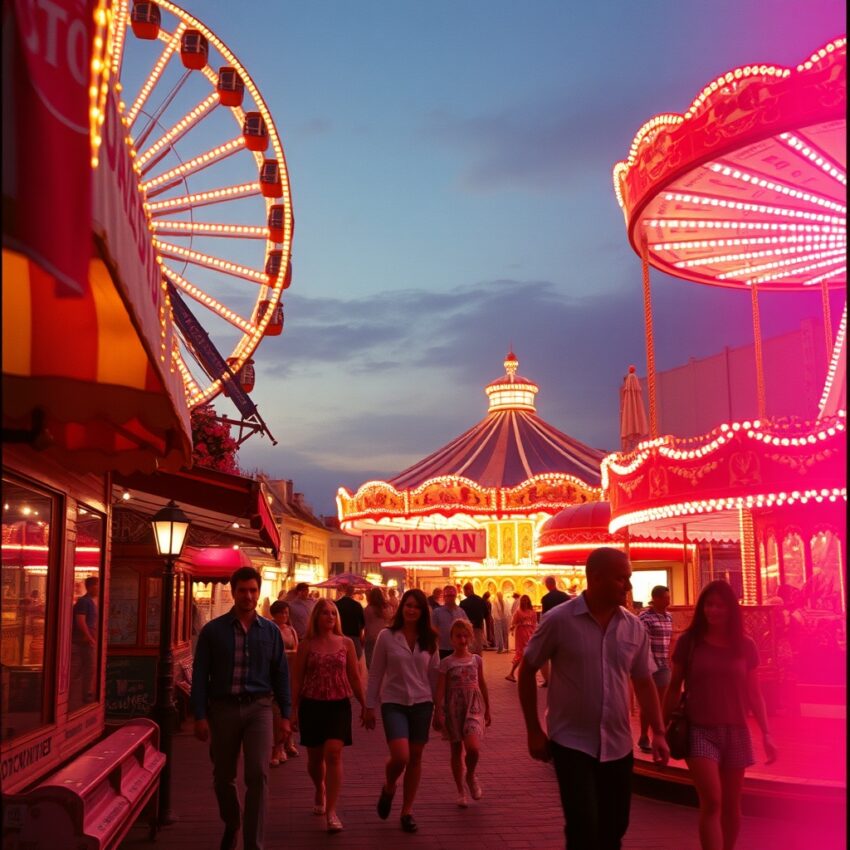
Bir zamanlar yaz akşamı denince bazı şehirlerde akla önce lunaparkın uzaktan görünen ışıkları gelirdi. Hava kararmaya başladığında mahalle arasında açan akşam sefası ve ıhlamur kokusuna, dönme dolabın tepesinden taşan sarı ampullerin titreyişi karışırdı. Çocuklar ellerini biraz daha sıkı tutan anneleriyle geniş kaldırımlarda yürür, babalar bozuk para keselerini yoklar, sokak satıcılarının renkli sesleri çiçek kokulu caddelerin üstünde yankılanırdı. O lunaparklar yalnız eğlence için kurulmuş geçici alanlar değildi; şehrin gündelik hayatına küçük bir mucize hissi bırakan, akşam olunca herkesi biraz daha yavaşlatan ortak sahnelerdi. Işıklar yandığında sokakların sesi bile değişir, insanlar eve yetişme telaşını bir süreliğine ertelerdi.
Zamanın İzinde bakımından eski lunaparkların asıl önemi, modern şehir hayatına kattıkları törensel ritimde saklıydı. Her mahallede lunapark yoktu, ama kurulduğu yerde çevresindeki sokak düzeni hemen değişirdi. Gazoz şişeleri kasalara dizilir, kâğıt helva tezgâhı biraz daha öne çekilir, fotoğrafçılar flaşlı makinelerini hazırlardı. Bir akşam gezisi için daha temiz gömlek giyilir, çocuklara “önce bakacağız, sonra bineceğiz” denirdi. Bu küçük cümleler, bugünün alışveriş merkezi gezilerinden farklı bir sabır terbiyesini işaret ederdi. İnsanlar her şeye hemen sahip olmayı değil, sıranın gelmesini, ışıkların altında beklemeyi, kalabalığı seyretmeyi öğrenirdi. Lunaparkın şehirde bıraktığı sessiz alışkanlıklardan biri belki de buydu: sevinci biraz geciktirerek büyütmek.
O dönemin gündelik sahnesinde lunapark, yalnız oyuncakların döndüğü bir alan değildi; şehir hafızasının görsel arşivi gibiydi. Çarpışan arabaların metal kokusu, pamuk şekerin yapışkan pembesi, atlıkarıncanın boyası hafif dökülmüş atları ve hoparlörden gelen çatallı müzik aynı akşamın parçaları olurdu. Gençler en çok ışıklı giriş kapısının önünde oyalanır, çocuklar balonlarını sıkı sıkı tutar, yaşlılar biraz uzakta taburelerde oturup kalabalığı seyrederdi. Lunapark dönüşü eve taşınan şey yalnız bilet parçaları değildi; “sen en çok hangi oyuncağı sevdin” sorusu, vitrinde görülen renkleri ertesi gün okulda anlatma heyecanı ve akşam yürüyüşünü aile geleneğine dönüştüren yumuşak bir alışkanlık da eve dönerdi. Bugün bile yaz akşamı gezintilerinde, sokakta ağır ağır yürüme isteğinde ve çocukların vitrin karşısında biraz daha fazla oyalanmasına izin vermemizde o eski akşamların izi sezilir.
Eski gazetelere ve aile albümlerine bakıldığında lunaparkların çoğu zaman şehrin kenarında, boş arsaların ya da panayır alanlarının yanında kurulduğu görülür. Fakat onların etkisi merkezdeydi; çünkü insanlar orada yalnızca eğlenmiyor, birlikte görünmenin, birlikte şaşırmanın ve birlikte beklemenin ortak dilini kuruyordu. Bir dönme dolabın kabininde kısa bir korku ile kahkaha arasındaki ince çizgi, toplumsal hayatta daha ölçülü ama daha sıcak bir yakınlık üretiyordu. Mahallede ertesi gün anlatılan hikâyeler de bu yüzden önemliydi: “Işıklar bir anda yandı”, “en üstten bütün şehir görünüyordu”, “pamuk şeker çiçek gibi kokuyordu.” Bunlar, gündelik hayatın büyük tarih içinde kaybolmayan küçük cümleleriydi.
Bugün eski lunaparkların yerinde çoğu zaman başka yapılar, otoparklar ya da sessiz arsalar var. Yine de onların ışıklarla kurduğu küçük mucizeler bütünüyle kaybolmuş değil. Akşamüstü dışarı çıkarken biraz özenmek, çocukları yalnızca sonuca değil yolun kendisine de sevindirmek, kalabalık içinde bile birbirine yer açmak ve sokak gezisini başlı başına bir hatıraya dönüştürmek gibi alışkanlıklar o günlerden bugüne kaldı. Çiçek kokulu sokaklar ile lunapark ışıkları arasında kurulan o eski bağ, şehir yaşamının sertleşmeyen bir yüzünü hatırlatıyor. Belki tam da bu yüzden, hafızanın tozlu raflarında duran lunaparklar hâlâ yalnız geçmişi değil, bugünün yavaş ve zarif sevinç ihtimalini de aydınlatıyor.
🇬🇧 English | The Little Miracles Old Amusement Parks Built with Lights on the Dusty Shelves of Memory: Which Quiet Habits Did the Flower-Scented Streets Leave to Today
There was a time when summer evenings in some cities first brought to mind the distant lights of the amusement park. As darkness began to fall, the scent of evening flowers and linden drifting through neighborhood streets mixed with the trembling yellow bulbs rising above the Ferris wheel. Children walked along wide pavements with mothers holding their hands a little tighter, fathers checked the coins in their pockets, and the colorful calls of street vendors echoed over flower-scented avenues. Those amusement parks were not merely temporary grounds set up for entertainment. They were shared scenes that left a feeling of small miracle in urban life and slowed everyone down for a while once evening arrived. When the lights came on, even the sound of the streets seemed to change, and people postponed the rush of getting home.
From the perspective of time, the real importance of old amusement parks lay in the ceremonial rhythm they added to modern city life. Not every neighborhood had one, yet wherever one appeared, the order of the surrounding streets changed at once. Soda bottles were lined up in crates, the wafer stall was pushed a little farther forward, and photographers prepared their flash cameras. People wore a cleaner shirt for an evening outing, and children were told, “First we’ll look, then we’ll ride.” Such small sentences pointed to a discipline of patience quite different from today’s shopping mall visits. People learned not to possess everything at once, but to wait for their turn, to stand beneath the lights, to watch the crowd. Perhaps this was one of the quiet habits the amusement park left in the city: enlarging joy by delaying it a little.
In the daily scenes of that era, the amusement park was not only a place where rides turned. It was almost a visual archive of urban memory. The metallic smell of bumper cars, the sticky pink of cotton candy, the slightly chipped horses of the carousel, and the crackling music from the loudspeaker all belonged to the same evening. Young people lingered most often near the illuminated entrance, children held their balloons tightly, and elders sat a little farther away on stools watching the crowd. What people carried home afterward was not only ticket stubs. They also brought back the question, “Which ride did you love most?”, the eagerness to describe the colors they had seen to school friends the next day, and a gentle habit that turned the evening walk into a family custom. Even today, in slow summer strolls and in the way children are allowed to linger a little longer before a display, traces of those old evenings can still be felt.
When one looks at old newspapers and family albums, it becomes clear that amusement parks were often set up on the edges of the city, beside empty lots or fairgrounds. Yet their influence was central, because people were not only having fun there; they were building a shared language of appearing together, being astonished together, and waiting together. Inside a Ferris wheel cabin, that fine line between brief fear and laughter created a closeness in social life that was measured yet warm. This is why the stories told in the neighborhood the next day mattered: “The lights came on all at once,” “You could see the whole city from the top,” “The cotton candy smelled like flowers.” They were small sentences of daily life that did not disappear inside grand history.
Today, the places of those old amusement parks are often occupied by other buildings, parking lots, or silent empty grounds. Still, the little miracles they built with lights have not vanished entirely. The habit of dressing a little more carefully before going out at dusk, teaching children to enjoy not only the result but the path toward it, making room for one another within a crowd, and turning a street outing into a memory of its own all remain from those days. The old bond between flower-scented streets and amusement park lights reminds us of a version of city life that had not yet hardened. Perhaps that is exactly why the amusement parks resting on the dusty shelves of memory still illuminate not only the past, but also the possibility of a slower and more graceful joy in the present.
🇧🇷 Português (Brasil) | Os Pequenos Milagres que os Antigos Parques de Diversão Criavam com Luzes nas Prateleiras Embaçadas da Memória: Quais Hábitos Silenciosos as Ruas com Cheiro de Flores Deixaram para Hoje
Houve um tempo em que, em certas cidades, falar de noite de verão era pensar primeiro nas luzes do parque de diversões vistas de longe. Quando começava a escurecer, o cheiro das flores da tarde e do tília nas ruas do bairro se misturava ao tremor das lâmpadas amarelas que subiam acima da roda-gigante. As crianças caminhavam pelas calçadas largas com as mães segurando suas mãos um pouco mais forte, os pais conferiam as moedas no bolso, e as vozes coloridas dos vendedores ambulantes ecoavam sobre as avenidas perfumadas. Aqueles parques não eram apenas áreas temporárias montadas para divertir. Eram cenários compartilhados que deixavam uma sensação de pequeno milagre na vida urbana e faziam todos desacelerar um pouco quando a noite chegava. Quando as luzes acendiam, até o som das ruas parecia mudar, e a pressa de voltar para casa era adiada.
Pelo olhar do tempo, a verdadeira importância dos antigos parques de diversão estava no ritmo quase cerimonial que acrescentavam à vida moderna da cidade. Nem todo bairro tinha um, mas onde apareciam, a ordem das ruas ao redor mudava na mesma hora. Garrafas de refrigerante eram alinhadas em caixotes, a barraca de doces era puxada um pouco mais para a frente, e os fotógrafos preparavam suas câmeras com flash. Vestia-se uma camisa melhor para o passeio da noite, e dizia-se às crianças: “Primeiro vamos olhar, depois vamos brincar.” Essas frases pequenas apontavam para uma educação da paciência bem diferente dos passeios de shopping de hoje. As pessoas aprendiam não a possuir tudo imediatamente, mas a esperar a vez, a ficar sob as luzes, a observar a multidão. Talvez esse tenha sido um dos hábitos silenciosos deixados pelo parque: aumentar a alegria ao retardá-la um pouco.
Nas cenas cotidianas daquela época, o parque de diversões não era apenas um espaço de brinquedos girando. Era quase um arquivo visual da memória urbana. O cheiro metálico dos carrinhos de choque, o rosa pegajoso do algodão-doce, os cavalos do carrossel com a tinta um pouco gasta e a música rachada vinda do alto-falante pertenciam à mesma noite. Os jovens demoravam mais na entrada iluminada, as crianças seguravam seus balões com força e os mais velhos se sentavam um pouco mais longe em banquinhos para observar o movimento. O que voltava para casa não eram apenas pedaços de ingresso. Voltavam também a pergunta “de qual brinquedo você gostou mais?”, a vontade de contar na escola no dia seguinte as cores vistas ali e um hábito suave que transformava o passeio da noite em costume de família. Ainda hoje, nas caminhadas lentas das noites de verão e na permissão dada às crianças para ficarem um pouco mais diante de uma vitrine, é possível sentir o rastro dessas antigas noites.
Quando se olham jornais antigos e álbuns de família, percebe-se que muitos parques de diversão eram montados na borda da cidade, ao lado de terrenos vazios ou áreas de feira. Mesmo assim, seu efeito era central, porque ali as pessoas não apenas se divertiam; elas construíam uma linguagem comum de aparecer juntas, se surpreender juntas e esperar juntas. Dentro da cabine de uma roda-gigante, aquela linha fina entre um medo breve e uma risada criava uma proximidade social mais contida, porém mais calorosa. Por isso as histórias contadas no bairro no dia seguinte eram importantes: “As luzes acenderam de uma vez”, “Lá de cima dava para ver a cidade inteira”, “O algodão-doce tinha cheiro de flor.” Eram frases pequenas do cotidiano que não desapareciam dentro da grande história.
Hoje, no lugar desses antigos parques, muitas vezes existem outros prédios, estacionamentos ou terrenos silenciosos. Ainda assim, os pequenos milagres que eles criavam com luzes não desapareceram por completo. O hábito de sair ao entardecer com um pouco mais de cuidado, ensinar às crianças a apreciar não só o resultado, mas também o caminho, abrir espaço uns para os outros no meio da multidão e transformar um passeio de rua em memória por si só continua vindo daqueles dias. A antiga ligação entre ruas cheirando a flores e luzes de parque de diversão nos lembra uma face da cidade que ainda não havia endurecido. Talvez seja justamente por isso que os parques guardados nas prateleiras empoeiradas da memória ainda iluminam não apenas o passado, mas também a possibilidade de uma alegria mais lenta e mais delicada no presente.