🇹🇷 Türkçe | domatesli yaz menemeni günleri: bir dönemin paylaşma kültürünü nasıl taşıyor
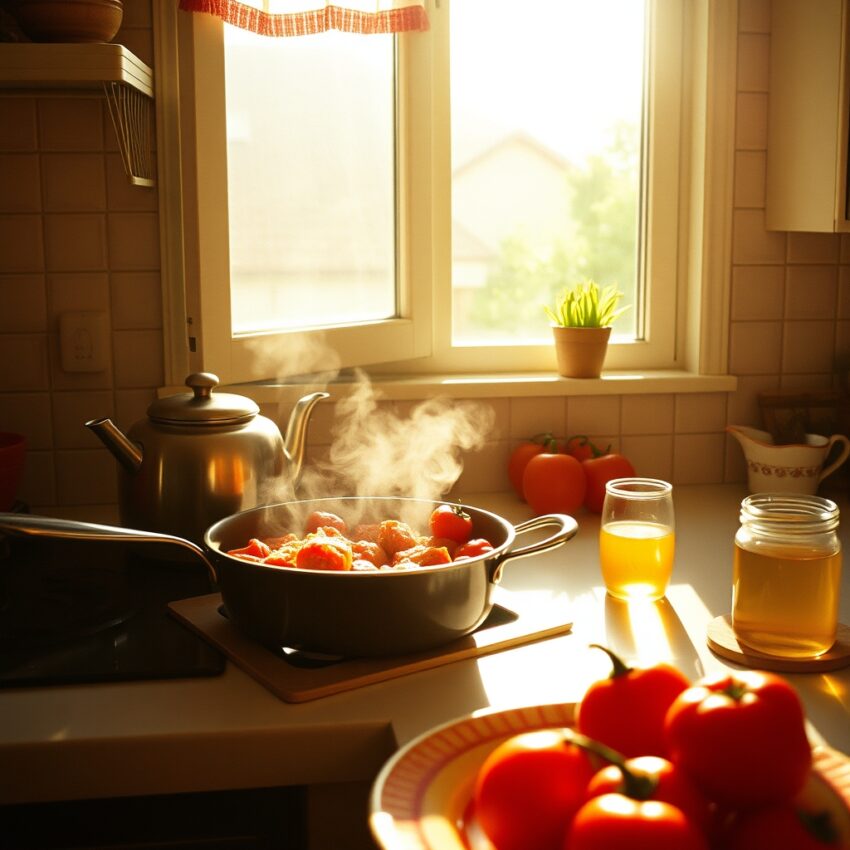
Bir zamanlar yaz sabahları mutfağa girildiğinde mevsimin kendisi tavaya düşmüş gibi olurdu. Tezgâhta içi güneş görmüş domatesler, henüz pazardan gelmiş sivri biberler, bir tabakta bekleyen yumurtalar ve ekmek sepetinden taşan taze somun, günün daha başında sofranın sıcaklığını hissettirirdi. Menemen yapılacağı anlaşıldığında evin içindeki hareket bile değişirdi; biri domatesleri doğrar, biri çayı koyar, biri balkon kapısını açıp içeri yaz rüzgârını alırdı. Tereyağı ya da zeytinyağı tavada ısınırken yayılan koku, komşu mutfaklardan gelen benzer seslerle birleşir ve mahallenin sabahını ortak bir iştahla doldururdu. Domatesli yaz menemeni, yalnız bir kahvaltı yemeği değil; mevsimin, ev içi bereketin ve paylaşmanın gündelik dile dönüşmüş haliydi.
Damak Hafızası açısından bakıldığında menemenin asıl gücü, malzemesinin sadeliğinden çok, etrafında kurduğu paylaşım kültüründe saklıdır. Yazın bol domatesi çoğu zaman tek bir bahçeden, yazlıktan ya da pazar dönüşü taşınan büyük filelerden gelirdi. “Bizim bahçenin domatesi çok oldu, size de verdik” cümlesi, menemenin daha tavaya düşmeden komşuluk hikâyesine karıştığını gösterirdi. Sofraya getirildiğinde ayrı ayrı tabaklara bölünmekten çok, ortaya konur ve herkes ekmeğini aynı tavaya uzatırdı. Çocukların sarısına, büyüklerin suyuna düşkünlüğü konuşulur; kimi soğanlı sever, kimi sade ister ama sonuçta aynı yemek aynı masada buluşurdu. Bir dönemin paylaşma kültürü biraz da bu sade yemeğin etrafında görünür olurdu.
Menemen günlerinin unutulmamasının bir nedeni de yazın gündelik ritmini taşımasıydı. Domatesin çekirdeği, biberin kokusu, tavadan yükselen buhar ve açık pencereden içeri giren serçe sesi, kahvaltıyı yalnız damakta değil hafızada da yer eden bir ana dönüştürürdü. Yazlık evlerde balkona kurulan küçük masalar, şehirdeyse mutfakla salon arasında koşturulan tabaklar, bu yemeğin mekâna göre biçim değiştirse de duygusunu koruduğunu gösterirdi. Bazen bir akraba ansızın gelir, tavaya biraz daha domates eklenir; bazen çocuklar ekmeğin ucuyla son lokmayı paylaşırdı. Menemen, kıtlık anlatısı değil ama ölçülü bereket duygusuydu: elde olanı çoğaltmadan, paylaşarak yetirmenin lezzetli yolu.
Bugün menemen hâlâ yapılmaya devam ediyor, ama o eski yaz sabahlarına duyulan özlem yalnız tariften kaynaklanmıyor. Asıl özlenen, mevsimlik malzemenin sofrada bir araya getirdiği insanlar ve o sofranın doğal açıklığıdır. Domatesli yaz menemeni günleri bize, yemeğin sadece karın doyurmadığını; komşuluk, aile yakınlığı ve gündelik cömertlik gibi duyguları da taşıdığını hatırlatır. Bir dönemin paylaşma kültürü bazen büyük bayram sofralarında değil, tavadan ortaya konan bu sade kahvaltıda daha belirgin hissedilir. Bu yüzden menemenin hafızası, domatesin tadı kadar ekmeğin bölünüşünde, çayın tazelenişinde ve sofranın çevresinde oluşan o sıcak ortaklıkta yaşamaya devam eder.
Üstelik menemenin bu paylaşılan dili, mutfakta hiyerarşi kurmadan herkesi işe katardı. Çocukların ekmek dizmesi, bir büyüğün domates kabuklarını ayırması, bir başkasının çayı bardaklara doldurması sofrayı hazırlamanın da ortak bir eylem olduğunu gösterirdi. Yaz sabahının telaşı sert değil yumuşaktı; herkesin küçük bir katkısı olur, yemek pişerken konuşmalar da çoğalırdı. Belki bu yüzden menemen, yalnız yenilen bir yemek değil, birlikte hazırlanıp birlikte tüketilen bir ev içi anlaşma gibi hatırlanır. Paylaşma kültürü bazen en iyi, böyle sade tavaların çevresinde anlaşılır.
🇬🇧 English | Days of Summer Menemen with Tomatoes: How It Carries a Period’s Culture of Sharing
There was a time when entering the kitchen on a summer morning felt as though the season itself had fallen into the pan. Sun-warmed tomatoes stood on the counter, green peppers fresh from the market waited nearby, eggs rested on a plate, and a loaf of bread spilled from the basket, already promising the warmth of breakfast. As soon as it became clear that menemen would be made, the movement inside the house changed. One person chopped the tomatoes, another prepared the tea, another opened the balcony door to let the summer breeze in. As butter or olive oil heated in the pan, its aroma mixed with similar sounds and scents from neighboring kitchens, filling the morning of the whole street with a shared appetite. Summer menemen with tomatoes was not only a breakfast dish; it was the everyday language of seasonality, domestic abundance, and sharing.
Seen through the lens of taste memory, the real strength of menemen lies less in the simplicity of its ingredients than in the culture of sharing formed around it. The summer tomatoes often came from one garden, one holiday house, or the large shopping bags carried home from the market. The sentence, “Our garden gave too many tomatoes, we brought some for you,” shows that menemen entered the story of neighborliness even before it reached the pan. Once at the table, it was usually not divided into separate plates, but placed in the middle so that everyone could reach toward the same pan with bread. Children were said to love the yolk, elders the juicy part; some preferred onions, others wanted it plain, yet the same dish still united everyone at the same table. Part of a whole era’s culture of sharing became visible around this modest meal.
Another reason those menemen days are remembered is that they carried the rhythm of summer daily life. Tomato seeds, the smell of pepper, steam rising from the pan, and the sound of sparrows entering through the open window turned breakfast into a moment that stayed not only on the tongue, but in memory. In summer houses it might be served on a small balcony table; in the city, plates moved quickly between kitchen and sitting room, showing that although the setting changed, the feeling remained the same. Sometimes a relative arrived unexpectedly and a few more tomatoes were added to the pan; sometimes children shared the last bite with the end of a loaf. Menemen was not a story of scarcity, but of measured abundance: the delicious art of making what was available enough by sharing it well.
Menemen is still cooked today, yet the longing for those older summer mornings does not come only from the recipe. What is truly missed is the way seasonal ingredients gathered people naturally around the table and made that table feel open. Summer menemen with tomatoes reminds us that food does more than satisfy hunger; it also carries neighborliness, family closeness, and everyday generosity. A period’s culture of sharing is sometimes felt more clearly in this simple pan placed in the middle than at grand holiday feasts. That is why the memory of menemen lives on not only in the taste of tomatoes, but in the dividing of bread, the refilling of tea, and the warm sense of togetherness formed around the table.
The shared language of menemen also drew everyone into the kitchen without strict hierarchy. Children lined up slices of bread, an elder separated tomato skins, and someone else filled the tea glasses, showing that preparing the meal was itself a collective act. The rush of a summer morning was not harsh, but gentle; everyone contributed something small, and conversation grew as the food cooked. Perhaps that is why menemen is remembered not only as something eaten, but as a quiet domestic agreement prepared and consumed together. A culture of sharing is often understood best around such simple pans.
🇧🇷 Português (Brasil) | Dias de Menemen de Verão com Tomate: Como Carrega a Cultura de Partilha de uma Época
Houve um tempo em que entrar na cozinha numa manhã de verão dava a sensação de que a própria estação tinha caído na frigideira. Tomates aquecidos pelo sol ficavam sobre a bancada, pimentões recém-chegados da feira esperavam ao lado, ovos descansavam num prato e o pão fresco transbordava da cesta, anunciando o calor do café da manhã. Quando se entendia que haveria menemen, o movimento da casa mudava. Uma pessoa picava os tomates, outra colocava o chá, outra abria a porta da varanda para deixar entrar o vento do verão. Quando a manteiga ou o azeite aquecia, o cheiro se misturava aos sons e aromas de outras cozinhas vizinhas, enchendo a manhã do bairro com um apetite compartilhado. O menemen de verão com tomate não era apenas uma comida de café da manhã; era a linguagem cotidiana da estação, da abundância doméstica e da partilha.
Pela ótica da memória do paladar, a força do menemen está menos na simplicidade dos ingredientes do que na cultura de partilha construída ao seu redor. Os tomates do verão muitas vezes vinham de uma horta, de uma casa de temporada ou das grandes sacolas trazidas da feira. A frase “deu muito tomate no nosso quintal, trouxemos um pouco para vocês” mostra que o menemen já entrava na história da vizinhança antes mesmo de chegar à frigideira. Na mesa, em vez de ser dividido em pratos separados, ele era colocado no centro para que todos mergulhassem o pão na mesma panela. Dizia-se que as crianças gostavam mais da gema, os mais velhos do molho; alguns preferiam cebola, outros queriam mais simples, mas no fim o mesmo prato reunia todos na mesma mesa. Parte da cultura de partilha de uma época se tornava visível justamente em torno dessa refeição modesta.
Esses dias de menemen também ficaram na lembrança porque carregavam o ritmo do verão cotidiano. As sementes do tomate, o cheiro do pimentão, o vapor subindo da frigideira e o som dos pardais entrando pela janela aberta transformavam o café da manhã em um momento gravado não apenas no paladar, mas na memória. Nas casas de veraneio, podia ser servido numa pequena mesa da varanda; na cidade, os pratos corriam entre a cozinha e a sala, mostrando que o lugar mudava, mas a emoção permanecia. Às vezes um parente aparecia de surpresa e mais tomates eram colocados na frigideira; às vezes as crianças dividiam a última mordida de pão. O menemen não era uma narrativa de escassez, mas de abundância medida: a arte saborosa de fazer o que existe render por meio da partilha.
Hoje o menemen continua sendo preparado, mas a saudade daquelas manhãs antigas de verão não nasce apenas da receita. O que faz falta de verdade é a maneira como os ingredientes da estação reuniam naturalmente as pessoas e deixavam a mesa aberta. Os dias de menemen de verão com tomate lembram que a comida não serve só para matar a fome; ela também carrega vizinhança, proximidade familiar e generosidade cotidiana. A cultura de partilha de uma época às vezes aparece com mais força nessa frigideira simples no centro da mesa do que em banquetes festivos. Por isso, a memória do menemen segue viva não só no sabor do tomate, mas também no pão repartido, no chá servido de novo e no calor da convivência criada em volta da mesa.
Além disso, essa linguagem compartilhada do menemen fazia todos participarem da cozinha sem criar hierarquias rígidas. As crianças arrumavam o pão, um adulto separava as cascas do tomate e outra pessoa enchia os copos de chá, mostrando que preparar a refeição também era um gesto coletivo. A pressa da manhã de verão não era dura, mas suave; cada um oferecia uma pequena ajuda e as conversas aumentavam enquanto a comida cozinhava. Talvez por isso o menemen seja lembrado não só como um prato consumido, mas como um acordo doméstico preparado e vivido em conjunto. Muitas vezes a cultura da partilha se entende melhor ao redor de frigideiras assim tão simples.