Eski Pano
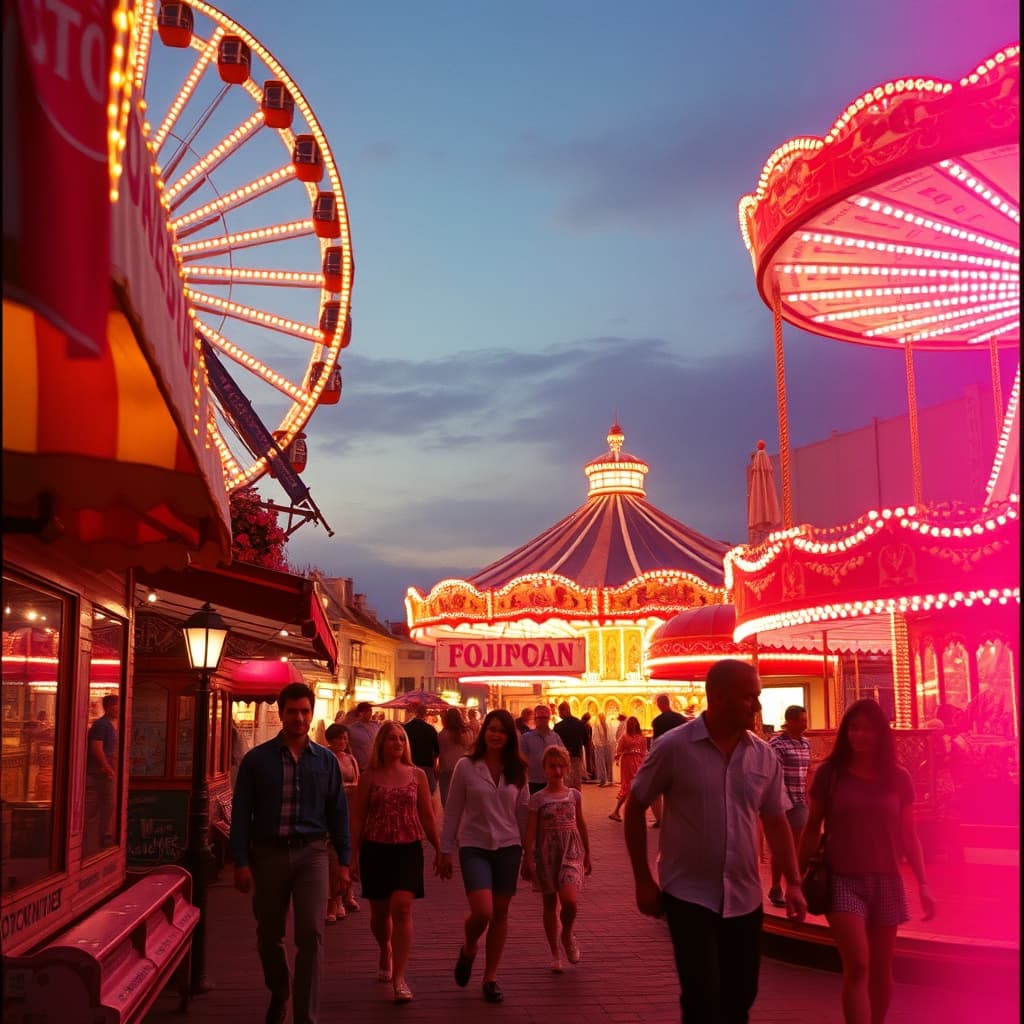
There was a time when summer evenings in some cities first brought to mind the distant lights of the amusement park. As darkness began to fall, the scent of evening flowers and linden drifting through neighborhood streets mixed with the trembling yellow bulbs rising above the Ferris wheel. Children walked along wide pavements with mothers holding their hands a little tighter, fathers checked the coins in their pockets, and the colorful calls of street vendors echoed over flower-scented avenues. Those amusement parks were not merely temporary grounds set up for entertainment. They were shared scenes that left a feeling of small miracle in urban life and slowed everyone down for a while once evening arrived. When the lights came on, even the sound of the streets seemed to change, and people postponed the rush of getting home.
From the perspective of time, the real importance of old amusement parks lay in the ceremonial rhythm they added to modern city life. Not every neighborhood had one, yet wherever one appeared, the order of the surrounding streets changed at once. Soda bottles were lined up in crates, the wafer stall was pushed a little farther forward, and photographers prepared their flash cameras. People wore a cleaner shirt for an evening outing, and children were told, “First we’ll look, then we’ll ride.” Such small sentences pointed to a discipline of patience quite different from today’s shopping mall visits. People learned not to possess everything at once, but to wait for their turn, to stand beneath the lights, to watch the crowd. Perhaps this was one of the quiet habits the amusement park left in the city: enlarging joy by delaying it a little.
In the daily scenes of that era, the amusement park was not only a place where rides turned. It was almost a visual archive of urban memory. The metallic smell of bumper cars, the sticky pink of cotton candy, the slightly chipped horses of the carousel, and the crackling music from the loudspeaker all belonged to the same evening. Young people lingered most often near the illuminated entrance, children held their balloons tightly, and elders sat a little farther away on stools watching the crowd. What people carried home afterward was not only ticket stubs. They also brought back the question, “Which ride did you love most?”, the eagerness to describe the colors they had seen to school friends the next day, and a gentle habit that turned the evening walk into a family custom. Even today, in slow summer strolls and in the way children are allowed to linger a little longer before a display, traces of those old evenings can still be felt.
When one looks at old newspapers and family albums, it becomes clear that amusement parks were often set up on the edges of the city, beside empty lots or fairgrounds. Yet their influence was central, because people were not only having fun there; they were building a shared language of appearing together, being astonished together, and waiting together. Inside a Ferris wheel cabin, that fine line between brief fear and laughter created a closeness in social life that was measured yet warm. This is why the stories told in the neighborhood the next day mattered: “The lights came on all at once,” “You could see the whole city from the top,” “The cotton candy smelled like flowers.” They were small sentences of daily life that did not disappear inside grand history.
Today, the places of those old amusement parks are often occupied by other buildings, parking lots, or silent empty grounds. Still, the little miracles they built with lights have not vanished entirely. The habit of dressing a little more carefully before going out at dusk, teaching children to enjoy not only the result but the path toward it, making room for one another within a crowd, and turning a street outing into a memory of its own all remain from those days. The old bond between flower-scented streets and amusement park lights reminds us of a version of city life that had not yet hardened. Perhaps that is exactly why the amusement parks resting on the dusty shelves of memory still illuminate not only the past, but also the possibility of a slower and more graceful joy in the present.
The Little Miracles Old Amusement Parks Built with Lights on the Dusty Shelves of Memory: Which Quiet Habits Did the Flower-Scented Streets Leave to Today