🇹🇷 Türkçe | joystick: anteni çevirdikçe netleşen umut içinde tamircilerin elinde neden ikinci bir ömür bulduğunu açıklıyor eski şehir hayatının kıyısında sanki dün yaşanmış gibi
Bir zamanlar elektronik dükkânlarının camekanlarında, tozlu kutuların ve kabloların arasında duran bir joystick yalnız oyuncağa benzeyen bir alet değildi; evlerin içine bağlanan başka bir heyecanın işaretiydi. Televizyonun yanına yaklaştırılan konsol, anten biraz sağa biraz sola çevrilirken görüntünün netleşmesini bekleyen çocuklar ve sabırla eğilen babalar, bu küçük parçayı eski şehir hayatının sessiz mucizelerinden birine dönüştürürdü. Cızırtılı ekran bir anda toparlandığında, sanki yalnız piksel değil umut da belirginleşirdi. Mahalle aralarında dolaşan tamirciler için ise joystick, bozulduğu anda çöpe gidecek bir plastik parça değil; tornavida, lehim kokusu ve ustalıkla yeniden hayata çağrılabilecek bir eşya demekti. Bu yüzden onda hep ikinci bir ömür ihtimali saklıydı.
Teknoloji Mirası bakımından joystick, yalnız bir oyun aksesuarı değil; analog ile erken dijital arasında sıkışmış bir dönemin dokunulabilir hafızasıdır. O yıllarda teknoloji bugünkü kadar kapalı kutu değildi. Bir düğme içine çökerse açılır, kablo temassızlık yaparsa soyulur, tuşlar bazen karbon temizliğiyle yeniden işler hale gelirdi. Şehrin kenar mahallelerindeki televizyon tamircileri, uydu ustaları ve küçük elektronikçiler tam da bu yüzden teknoloji kültürünün görünmeyen taşıyıcılarıydı. Onlar yalnız cihaz tamir etmez, insanların hevesini de onarırdı. Çocuk için oyun yarım kalmasın, abi akşam arkadaşları gelince maç açabilsin, evdeki o tek eğlence tekrar çalışsın diye verilen bu emek, joystick gibi eşyaları nesneden fazlasına dönüştürdü.
“Anteni çevirdikçe netleşen umut” duygusu, bugünün kusursuz bağlantı çağında ilk bakışta abartılı görünebilir; oysa o dönemde görüntünün gelmesi başlı başına ortak bir beklenti anıydı. Birinin televizyonun yanında kalıp “şimdi oldu mu” diye seslenmesi, diğerinin balkonda ya da pencere önünde anten yönünü değiştirmesi, çocukların ekran başında nefesini tutması, teknolojiyi ailece yaşanan küçük bir törene çevirirdi. Joystick bu törenin sonunda ele alınan nesneydi. Yani mesele yalnız oyun oynamak değildi; oyuna varana kadar geçen bekleme, ayarlama ve başarma hissiydi. Bu nedenle joystick hafızada hep görüntü netleşmesiyle, akşamüstü ışığıyla ve odada yükselen kısa sevinç nidalarıyla birlikte yer etti.
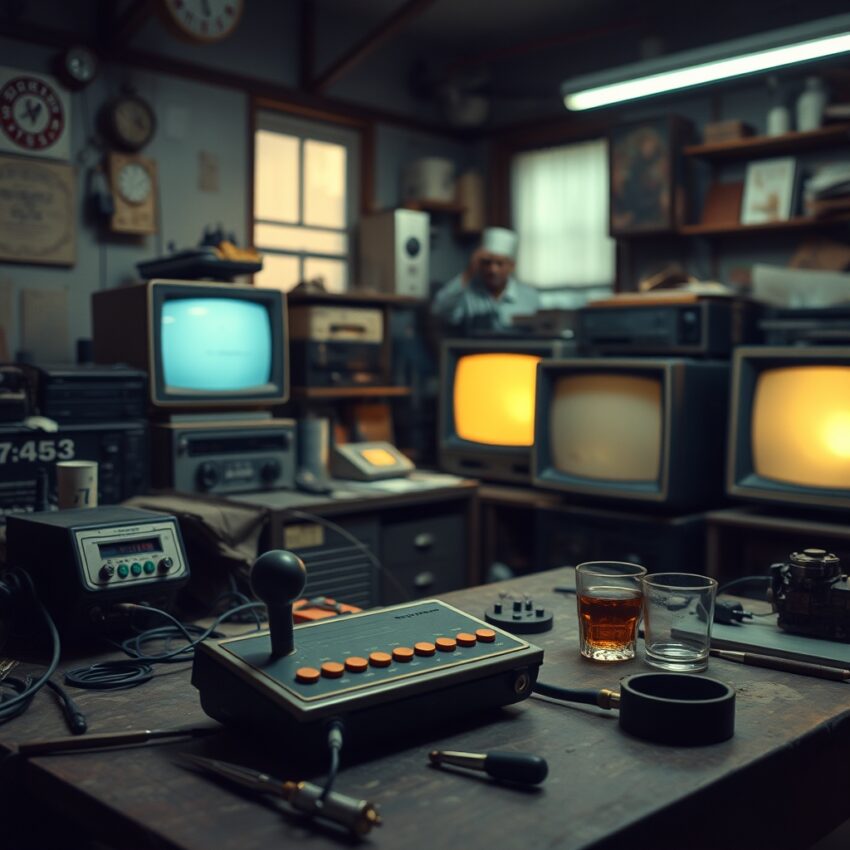
Tamircilerin elinde ikinci bir ömür bulması da o yılların eşya ahlakıyla ilgiliydi. Bozulan şey hemen atılmaz, önce kime gösterileceği düşünülürdü. Dar sokak içlerindeki küçük dükkânlarda ustalar joystick kablosunu yoklar, fişini değiştirir, içini açıp gevşeyen parçayı sabitlerdi. Tezgah üzerinde lehim teli, küçük pense, çatlamış plastik kapağın yanında duran bir çay bardağı ve radyodan gelen kısık ses, tamirin kendisini de şehrin gündelik kültürünün parçası yapardı. Çocuk cihazını almaya geldiğinde usta bazen “sert basma, yine kopar” der, bazen de hiçbir ücret almadan yalnız tanışıklığın hakkını gözetirdi. Nesnelerin böylece yeniden dolaşıma girmesi, eski şehir hayatında teknolojiyi daha dayanıklı ve daha samimi kılıyordu.
Bugün joystick dendiğinde çoğu insanın aklına daha pürüzsüz, daha hızlı ve kolayca değiştirilebilir aygıtlar geliyor. Bu yüzden eski joysticklerin tamircilerin elinde kazandığı ikinci ömür daha da anlamlı görünüyor. Onlar, kullanım ile tamir arasındaki bağın henüz kopmadığı yılların tanıklarıydı. Anteni çevirdikçe netleşen umut aslında yalnız ekrana ait değildi; eşyanın yeniden çalışabileceğine, emeğin işe yarayacağına ve küçük bir sevincin onarımla geri dönebileceğine dair bir inançtı. Eski şehir hayatının kıyısında yaşanan bu sahneler bugün sanki dün olmuş gibi hatırlanıyorsa, nedeni joystickin yalnız teknoloji değil, aynı zamanda bekleyiş, tamir ve paylaşılmış sevinç nesnesi olmasıdır.
🇬🇧 English | Joystick: It Explains Why, within the Hope That Became Clearer as the Antenna Was Turned, It Found a Second Life in the Hands of Repairmen, as if on the Edge of Old City Life Only Yesterday
There was a time when a joystick sitting among dusty boxes and cables in the display window of an electronics shop was not merely a toy-like device. It was the sign of another excitement entering the home. The console placed beside the television, children waiting for the image to clear while the antenna was turned a little right and a little left, and fathers bending patiently over the set turned this small object into one of the quiet miracles of old city life. When the crackling screen suddenly settled into focus, it felt as if not only the pixels but hope itself had sharpened. For neighborhood repairmen, meanwhile, a joystick was not a piece of plastic to be thrown away once it broke. It was something that could be called back to life with a screwdriver, the smell of solder, and practical skill. That is why it always carried the possibility of a second life.
Seen as part of technological heritage, the joystick is not only a game accessory, but the tangible memory of a period caught between the analog and the early digital. In those years technology was not yet as sealed shut as it is today. If a button sank inward, it could be opened; if a cable lost contact, it could be stripped and fixed; keys could sometimes work again after carbon cleaning. The television repairmen, satellite installers, and small electronics sellers of the city’s outer neighborhoods were therefore the invisible carriers of technological culture. They repaired not only devices, but people’s excitement. Their effort so that a child’s game would not remain unfinished, so an older brother could play a football match with friends that evening, or so the family’s one entertainment device could work again, transformed objects like the joystick into something larger than mere things.
The feeling of “hope becoming clearer as the antenna was turned” may seem exaggerated in today’s age of seamless connection, yet at that time getting the picture to come in was itself a shared moment of expectation. One person stayed beside the television asking, “Is it clear now?” while another changed the antenna’s direction from the balcony or window, and the children held their breath in front of the screen. Technology became a small domestic ritual lived by the whole family. The joystick was the object finally taken into the hand at the end of that ritual. So the matter was never only playing a game; it was also the feeling of waiting, adjusting, and succeeding before the game could begin. For that reason, the joystick remains in memory together with the image clearing, the light of late afternoon, and the short cries of joy rising in the room.
Its finding a second life in the hands of repairmen also belongs to the moral world of objects in those years. When something broke, it was not thrown away immediately; people first thought about whom to show it to. In small shops set into narrow streets, masters felt the joystick cable, replaced its plug, opened the casing, and fixed whatever had come loose inside. On the workbench, solder wire, small pliers, a cracked plastic cover, a glass of tea, and the low sound of the radio made repair itself part of the city’s daily culture. When the child returned to pick up the device, the repairman sometimes said, “Don’t press so hard, it will break again,” and sometimes asked no money at all, protecting only the rights of familiarity. That return of objects into circulation made technology feel both sturdier and more intimate in old city life.
Today the word joystick brings to mind devices that are smoother, faster, and more easily replaced. That is precisely why the second life old joysticks gained in repair shops seems even more meaningful. They were witnesses to years when the bond between use and repair had not yet been severed. The hope that became clearer as the antenna turned did not belong only to the screen. It was also a belief that an object could work again, that labor could still matter, and that a small joy could return through repair. If these scenes on the edge of old city life are remembered as if they happened only yesterday, the reason is that the joystick was not merely technology, but also an object of waiting, mending, and shared delight.
🇧🇷 Português (Brasil) | Joystick: Explica por que, Dentro da Esperança que Ficava Mais Nítida à Medida que a Antena Era Girada, Encontrou uma Segunda Vida nas Mãos dos Consertadores, como se Fosse Ontem na Beira da Vida Urbana Antiga
Houve um tempo em que um joystick parado entre caixas empoeiradas e fios na vitrine de uma loja de eletrônicos não era apenas um aparelho com cara de brinquedo. Era o sinal de outra emoção entrando dentro de casa. O console aproximado da televisão, as crianças esperando a imagem ficar nítida enquanto a antena era girada um pouco para a direita e um pouco para a esquerda, e os pais inclinados com paciência sobre o aparelho transformavam esse pequeno objeto em um dos milagres silenciosos da antiga vida urbana. Quando a tela chiada de repente se organizava, parecia que não apenas os pixels, mas a própria esperança ficava mais clara. Para os consertadores do bairro, por sua vez, um joystick não era um pedaço de plástico a ser jogado fora quando quebrava. Era algo que podia ser chamado de volta à vida com chave de fenda, cheiro de solda e habilidade de ofício. Por isso ele sempre guardou a possibilidade de uma segunda vida.
Pelo olhar do legado tecnológico, o joystick não é apenas um acessório de jogo, mas a memória palpável de um período preso entre o analógico e o início do digital. Naqueles anos, a tecnologia ainda não era tão fechada quanto hoje. Se um botão afundasse, podia ser aberto; se um cabo perdesse contato, podia ser desencapado e ajustado; as teclas às vezes voltavam a funcionar depois de uma limpeza simples. Os técnicos de televisão, instaladores de antena e pequenos lojistas de eletrônica dos bairros mais afastados eram, por isso, portadores invisíveis da cultura tecnológica. Eles não consertavam apenas aparelhos, mas também o entusiasmo das pessoas. O esforço para que o jogo da criança não ficasse pela metade, para que o irmão mais velho pudesse jogar com os amigos à noite, ou para que o único entretenimento da casa voltasse a funcionar transformava objetos como o joystick em algo maior do que simples coisas.
A sensação de “esperança que ficava mais nítida à medida que a antena era girada” pode parecer exagerada na era atual das conexões sem falhas, mas naquele tempo conseguir a imagem já era um momento coletivo de expectativa. Uma pessoa ficava ao lado da televisão perguntando “agora melhorou?”, outra mudava a direção da antena na varanda ou na janela, e as crianças prendiam a respiração diante da tela. A tecnologia virava um pequeno ritual doméstico vivido em conjunto. O joystick era o objeto finalmente tomado nas mãos ao fim desse ritual. Portanto, a questão nunca foi só jogar; era também o sentimento de esperar, ajustar e conseguir antes de a partida começar. Por isso o joystick permanece na memória junto com a imagem clareando, a luz do fim de tarde e os gritos curtos de alegria dentro do quarto.
O fato de ele ganhar uma segunda vida nas mãos dos consertadores também pertence à ética dos objetos daqueles anos. Quando algo quebrava, não era jogado fora de imediato; primeiro se pensava em a quem mostrar. Nas pequenas oficinas escondidas em ruas estreitas, os mestres apalpavam o cabo do joystick, trocavam o plugue, abriam a carcaça e fixavam a peça que se soltou por dentro. Sobre a bancada, fio de solda, alicate pequeno, tampa plástica rachada, um copo de chá e o som baixo do rádio faziam do próprio conserto parte da cultura cotidiana da cidade. Quando a criança voltava para buscar o aparelho, o técnico às vezes dizia “não aperte tão forte, senão quebra de novo”, e às vezes nem cobrava, respeitando apenas a intimidade do bairro. Essa volta dos objetos à circulação tornava a tecnologia mais resistente e mais próxima na vida urbana antiga.
Hoje, quando se fala em joystick, muita gente pensa em aparelhos mais lisos, mais rápidos e facilmente substituíveis. Justamente por isso a segunda vida que os joysticks antigos ganhavam nas oficinas parece ainda mais significativa. Eles foram testemunhas de anos em que o vínculo entre uso e conserto ainda não tinha sido rompido. A esperança que ficava mais nítida ao girar a antena não pertencia apenas à tela. Era também uma crença de que o objeto podia voltar a funcionar, de que o trabalho ainda tinha valor e de que uma pequena alegria podia regressar por meio do reparo. Se essas cenas na beira da antiga vida urbana são lembradas como se tivessem acontecido ontem, é porque o joystick não era apenas tecnologia, mas também um objeto de espera, conserto e alegria compartilhada.