 Eski Pano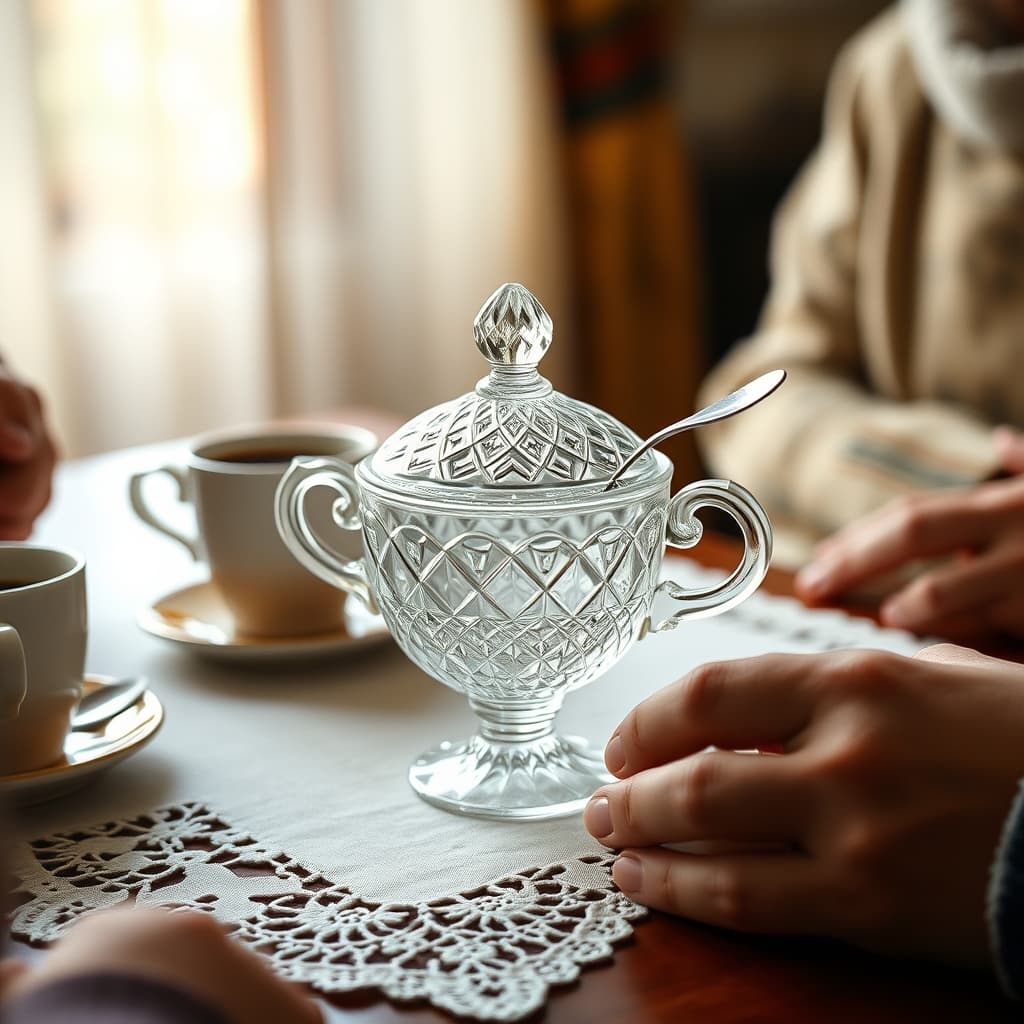
A crystal sugar bowl could enter family memory one teaspoon at a time. It appeared when guests arrived, when coffee was served or when holiday sweets shared space on the table. Hands lifted its lid, searched for the small spoon and passed it towards the next person. Through repetition, a purchased object acquired a route among relatives and rooms.
The word “crystal” is often used loosely for bright, heavy or patterned glass. Accurate description requires care. Lead crystal, other crystal glass and pressed soda-lime glass can resemble one another. Weight, ring, seams, cutting quality, maker's marks and documentation offer clues, but none should be treated alone as proof. Specialist assessment is safer than confident guesswork.
Pattern and Light Created Table Presence
Facets and cut motifs broke light across the table, giving a small container visual importance. Stars, fans, diamonds and floral geometries reflected changing fashions and manufacturing methods. Some patterns were cut by hand; others were moulded and polished. A lid, pedestal, handles or matching spoon could identify a set or reveal that pieces were combined later.
Use left evidence. Fine scratches gathered on the base, the spoon touched the inner wall, and a tiny chip might appear at the rim. Families sometimes continued using a damaged bowl because of attachment, but chipped edges can cut skin and should not remain in food service. An heirloom may need to move from active tableware to protected display.
Inheritance Was a Process, Not a Single Moment
The bowl might pass after a death, a marriage, a household move or an informal decision by an older relative. Such transfers were not always written down. Different family members could remember different owners. A note recorded today should identify the speaker and distinguish “I saw my grandmother use it” from “we believe it belonged to her mother.”
Photographs can confirm presence at a table, though reflections and partial views complicate identification. Gift cards, shop labels, invoices and matching objects add evidence. The story becomes stronger when ordinary details are preserved: who filled it, what it held, where it was stored and on which occasions it appeared.
Care Should Respect Material and History
Warm water, gentle handling and a padded surface reduce risk during basic cleaning, but material-specific advice matters. Dishwashers, sudden temperature changes and abrasive products can cloud or damage delicate glass. Adhesive repairs may yellow or fail; old mends should be documented before any conservation treatment.
Food safety requires additional caution. Historic lead crystal is not appropriate for long-term storage of food or acidic liquids, and uncertain material should be treated conservatively. Display supports must distribute weight without placing pressure on thin rims or handles. Separate lid padding prevents contact damage.
A Digital Nostalgia Archive can photograph pattern, base, marks, chips and repair lines, then link these images to family testimony and dated table scenes. The sugar bowl becomes an heirloom not because crystal automatically carries prestige, but because care, service and narration keep moving with it. Its real inheritance is the chain of relationships: the person who placed it on the table, the guest who reached for it and the relative who later decided that its modest history should not disappear.