Eski Pano
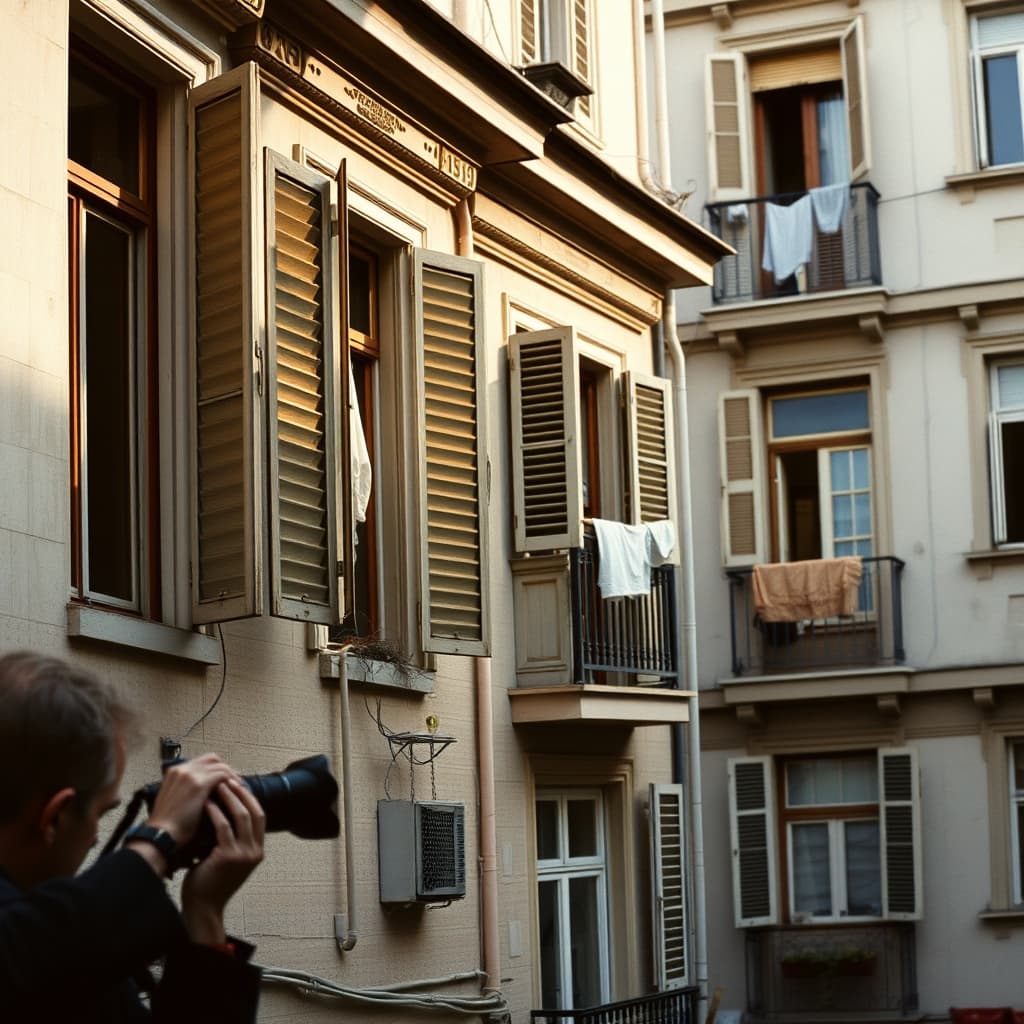
There was once a kind of morning that warmed the inside of a home before the sun had fully risen, carrying a brightness and freshness that pulled people toward the window. Winter had already loosened its grip, while the heavy weight of summer had not yet arrived; in that brief interval, the streets seemed to prepare the exact light a city photographer had been waiting for. The opening of wooden shutters, the slight movement of laundry hanging from balcony rails, the simit seller appearing at the corner with a tray not yet fully emptied, all belonged to the invisible stage those seasons built across the city. In such days, opening a window was not simply a way to let in air. It was a small but meaningful ritual of touching the city again, leaning toward the morning, and listening to the sounds of life. Part of what warmed an entire generation was precisely this: the distance between home and street could suddenly shrink with a window opened only a few inches.
Viewed through the lens of time, these window-opening mornings show that urban memory is shaped not only by major events, but also by seasonal feelings. In the archives of city photographers, from black and white images to later color frames, many of the most truthful photographs come from mornings like these. The light was neither too harsh nor too tired; faces appeared not in posed importance, but in their ordinary states; the paving stone, the cracked wall, and the shop sign could all fall into the same frame with natural harmony. This is why photographers loved such seasons. What we call postcard-worthy was not merely a visual arrangement, but the moment when city life revealed itself most sincerely. The milkman crossing the avenue, the smell of breakfast drifting into a building stairwell, a child running in a school apron, an office worker waiting for the tram, all carried the feeling of a season and later became part of a shared memory instantly recognizable years afterward.
Another reason those mornings remain unforgettable is that they slowly made everyday life visible. A person opening the window could notice the position of flowerpots in the opposite apartment, the hand movement of a neighbor sprinkling water on the pavement below, the wooden sound made by a greengrocer arranging crates. For city photographers, such moments often mattered more than grand events, because the real spirit of an era usually hides not in ceremonies, but in the quiet harmonies of ordinary life. Published in old newspapers beside municipal notices or tucked into cultural pages, these images gradually became records of how a city wished to see itself. Older residents feeding pigeons from balconies, children’s bicycles resting by the curb, the shadow of a lace curtain falling inward through an open window, all preserved the warm yet measured rhythm of urban life. What became postcard-like, then, was not an embellished city, but a city that looked beautiful simply by being itself.
The longing we feel today when looking at those photographs, or imagining those mornings, cannot be explained only by a belief that the past was calmer. What is truly missed is the natural way a city disclosed itself in the early hours. Mornings that made people open the window remind us that urban life is not made only of concrete, traffic, and signs; light, air, human voices, and small habits also build the identity of a place. The days that warmed a generation from within made the relationship with the street more direct, more sensory, and more human. The images captured by city photographers remain alive for exactly that reason: they hold not just a season, but the feeling of life entering indoors from outside the moment a window is opened. The deep trace in urban memory begins there, in seeing the city not for the first time, but anew each morning.
The Seasons When City Photographers Captured Postcard-Worthy Frames in Days That Warmed a Generation from Within: How Did Window-Opening Mornings Leave Such a Deep Mark on Urban Memory?