🇹🇷 Türkçe | Buharı Sofraya Sinmiş Sade Bir Yemeğin Mevsimlik Tesellisi
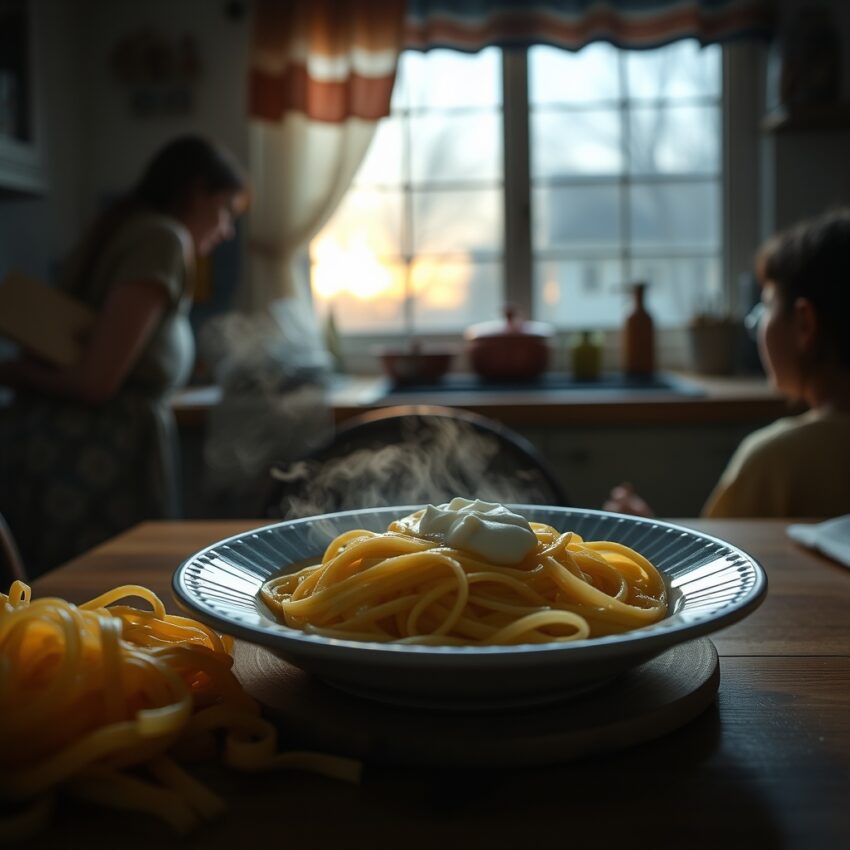
Bir zamanlar tereyağlı erişte, gösterişli sofraların değil ama en içten sofraların yemeği sayılırdı. Tencerenin kapağı açıldığında yükselen buğu, kızdırılmış tereyağının mutfağa yayılan kokusu ve eriştenin sade ama doyurucu görüntüsü, özellikle mevsim geçişlerinde eve başka türlü bir sıcaklık getirirdi. Yazın hafifliğinden çıkılıp serin akşamlara dönülürken ya da kışın ağırlığı yavaş yavaş çözülürken insanın aradığı şey çoğu zaman karmaşık tatlar değil, tanıdık bir teselliydi. Tereyağlı erişte günlerinin hafızada yer etmesi biraz da bu yüzdendir: mevsim değişirken evin ritmini yeniden kuran yumuşak bir yemektir.
Damak Hafızası bakımından erişte, eski mutfak kültürünün en pratik ama en duygulu hazırlıklarından biridir. Yaz sonu ya da sonbahar başında topluca kesilen hamurlar, temiz bezler üzerinde kurutulur, sonra kavanozlara ya da bez torbalara aktarılırdı. Böylece yalnız kış için yiyecek hazırlanmış olmaz; evin emeği ileriki günlere saklanmış olurdu. Mevsim geçişlerinde ocakta erişte kaynaması, mutfakta geçmiş yazın çalışkanlığını ve annelerin, ninelerin önceden kurduğu düzeni yeniden hatırlatırdı. Bir tabağın içindeki tereyağlı erişte, aslında önceden düşünülmüş bir ev ekonomisinin ve aile içi emeğin görünür hâline dönüşürdü.
Gündelik hayatın ayrıntıları bu yemeğin niçin daha anlamlı geldiğini iyice açıklar. Havaların serinlemeye başladığı günlerde camlar biraz daha erken kapanır, ince hırkalar sandalyelerin arkasına bırakılır, çorba ile ana yemek arasındaki sınır bazen bir tabak erişteyle yumuşardı. Üzerine dökülen kızgın tereyağının sesi, yanına açılan yoğurt kâsesi, belki bir miktar ceviz ya da karabiber, sofranın sadeliğini zayıflatmaz; tam tersine güçlendirirdi. Çünkü erişte, bolluktan çok tanıdıklığın yemeğiydi. Çocuklar için okuldan dönünce gelen rahatlık, büyükler için ise yorgun günün ardından ağır olmayan bir huzur taşırdı.
Mevsim geçişleri insan ruhunu da hafifçe yerinden oynatır. Yaz bitince bir eksilme, bahar yaklaşınca bir çözülme hissi gelir. Tereyağlı erişte tam bu eşiklerde anlam kazanır; çünkü hem geçmiş mevsimin izini hem de gelecek günlerin hazırlığını taşır. Kurutulmuş eriştenin raflardan inmesi, mutfaktaki düzenin hâlâ yerli yerinde olduğunu hissettirir. Sofraya konan tabak, yalnız karın doyurmaz; değişen havaya, değişen ruha da bir geçiş köprüsü sunar. Bu yüzden bazı yemekler yalnız lezzetiyle değil, tam zamanında gelmesiyle hatırlanır. Erişte de onlardan biridir.
Bugün tereyağlı erişte günlerinin neden özellikle mevsim geçişlerinde daha anlamlı göründüğünü düşündüğümüzde, cevabın yalnız damakta değil hafızada da olduğunu anlarız. O tabak, evde önceden hazırlanmış emeği, sade mutfak bilgeliğini ve aile sofralarının gösterişsiz sıcaklığını aynı anda çağırır. Tereyağlı erişte belki mütevazıdır, ama tam da bu yüzden kalıcıdır. Üstelik çoğu evde bu tabak, mevsim dönerken “her şey yine yerli yerinde” duygusunu sofraya ilk getiren yemeklerden biri olurdu. Mevsimler değişirken insanın ihtiyaç duyduğu şey bazen yenilik değil; tanıdık bir koku, buharlı bir tabak ve çocukluktan kalma bir güven duygusudur. Bu yemeğin değeri de, sofraya bunu sessizce geri getirebilmesindedir.
🇬🇧 English | The Seasonal Consolation of a Simple Dish Whose Steam Settled Over the Table
There was a time when buttered noodles belonged not to the most showy tables, but to the most sincere ones. When the lid was lifted from the pot, steam rose upward, the scent of browned butter spread through the kitchen, and the plain yet nourishing appearance of the noodles brought a special kind of warmth into the home, especially during seasonal transitions. When people moved from the lightness of summer toward cool evenings, or when winter slowly began to loosen its hold, what they often longed for was not complexity of flavor, but a familiar consolation. That is part of why days of buttered noodles remain in memory: as the season changed, they gently restored the rhythm of the house.
From the perspective of taste memory, noodles belonged to one of the most practical yet emotional preparations of older kitchen culture. At the end of summer or the beginning of autumn, dough was cut collectively, dried on clean cloths, and later transferred to jars or fabric sacks. In that way, the household was not merely preparing food for colder days; it was storing labor for the future. To hear noodles boiling on the stove during a shift of seasons was to remember the diligence of the previous summer, and the domestic order once arranged in advance by mothers and grandmothers. A plate of buttered noodles thus became the visible form of family effort, economy, and foresight.
The details of daily life explain even more clearly why the dish gains meaning at such times. On days when the weather begins to cool, windows close a little earlier, light cardigans are draped over chair backs, and the line between soup and the main meal softens into a plate of noodles. The sound of hot butter poured over them, the bowl of yogurt set beside the plate, perhaps some black pepper or walnuts, did not weaken the meal’s simplicity. They strengthened it. Noodles belonged less to abundance than to familiarity. For children they carried the relief of returning home from school; for adults they offered a quiet ease after a tiring day.
Seasonal transitions gently unsettle the human spirit as well. When summer ends, one feels a small sense of loss; when spring approaches, something inside begins to loosen. Buttered noodles gain meaning precisely at those thresholds because they hold both the trace of the season that is leaving and the preparation for the one that is coming. Bringing dried noodles down from the shelf makes the order of the kitchen feel intact. The plate placed on the table does more than satisfy hunger; it offers a bridge for the changing weather and the changing inner life. That is why some foods are remembered not only for their flavor, but for arriving at exactly the right time. Noodles are one of them.
When we think today about why buttered noodle days seem even more meaningful in seasonal transitions, we understand that the answer lives not only on the tongue, but in memory. That plate calls up labor prepared long beforehand, the quiet wisdom of simple cooking, and the unpretentious warmth of family meals all at once. Buttered noodles may be modest, yet for exactly that reason they endure. In many homes, this was also one of the first dishes to place on the table the feeling that, as the season turned, everything inside the house still remained in its proper place. As the seasons change, what a person needs is not always novelty, but a familiar scent, a steaming plate, and a sense of security carried forward from childhood. The value of this dish lies in how quietly it can bring all of that back to the table.
🇧🇷 Português (Brasil) | O Consolo de Estação de um Prato Simples cujo Vapor Ficava sobre a Mesa
Houve um tempo em que o macarrão com manteiga pertencia não às mesas mais vistosas, mas às mais sinceras. Quando a tampa da panela era levantada, o vapor subia, o cheiro da manteiga dourada tomava a cozinha e a aparência simples, porém nutritiva, do prato trazia um calor especial para dentro de casa, sobretudo nas mudanças de estação. Quando se saía da leveza do verão em direção às noites frias, ou quando o peso do inverno começava a se desfazer devagar, o que as pessoas buscavam muitas vezes não era um sabor complexo, mas um consolo conhecido. É por isso que os dias de macarrão com manteiga permanecem na memória: enquanto a estação mudava, eles restabeleciam com suavidade o ritmo da casa.
Do ponto de vista da memória do paladar, o macarrão caseiro fazia parte de uma das preparações mais práticas e ao mesmo tempo mais afetivas da antiga cultura culinária. No fim do verão ou no começo do outono, a massa era cortada em conjunto, secava sobre panos limpos e depois era guardada em potes ou sacos de tecido. Dessa forma, a casa não preparava apenas alimento para os dias frios; guardava também trabalho para o futuro. Ouvir o macarrão fervendo no fogão durante a troca de estação era lembrar a dedicação do verão anterior e a ordem doméstica organizada com antecedência por mães e avós. Um prato de macarrão com manteiga se tornava, assim, a forma visível do esforço familiar, da economia da casa e da capacidade de prever o amanhã.
Os detalhes da vida cotidiana explicam ainda melhor por que esse prato ganha mais sentido nesses períodos. Nos dias em que o clima começa a esfriar, as janelas se fecham um pouco mais cedo, casacos leves ficam pendurados nas cadeiras e a fronteira entre sopa e prato principal se suaviza num prato de macarrão. O som da manteiga quente sendo derramada por cima, a tigela de iogurte ao lado e talvez um pouco de pimenta-do-reino ou nozes não enfraquecem a simplicidade da refeição. Pelo contrário, a reforçam. O macarrão pertence menos à abundância do que à familiaridade. Para as crianças, traz o alívio de voltar da escola; para os adultos, oferece um sossego discreto depois de um dia cansativo.
As mudanças de estação também deslocam um pouco o espírito humano. Quando o verão termina, aparece uma pequena sensação de perda; quando a primavera se aproxima, algo dentro de nós começa a se soltar. O macarrão com manteiga ganha sentido justamente nesses limiares, porque carrega ao mesmo tempo o rastro da estação que vai embora e a preparação para a que se aproxima. Tirar o macarrão seco da prateleira faz sentir que a ordem da cozinha continua intacta. O prato posto na mesa faz mais do que matar a fome; oferece uma ponte para o clima que muda e para o humor que muda junto com ele. Por isso, certos alimentos são lembrados não apenas pelo sabor, mas por chegarem na hora exata. O macarrão é um deles.
Quando pensamos hoje por que os dias de macarrão com manteiga parecem ainda mais significativos nas mudanças de estação, entendemos que a resposta não está apenas na boca, mas também na memória. Esse prato chama ao mesmo tempo o trabalho preparado com antecedência, a sabedoria silenciosa da cozinha simples e o calor sem ostentação das refeições em família. O macarrão com manteiga pode ser modesto, mas justamente por isso permanece. Em muitas casas, ele era também um dos primeiros pratos a colocar sobre a mesa a sensação de que, mesmo com a estação mudando, tudo dentro do lar seguia no seu devido lugar. Quando as estações mudam, o que muitas vezes se precisa não é de novidade, mas de um cheiro conhecido, de um prato fumegante e de uma sensação de segurança trazida da infância. O valor dessa comida está em conseguir devolver tudo isso à mesa de maneira silenciosa.