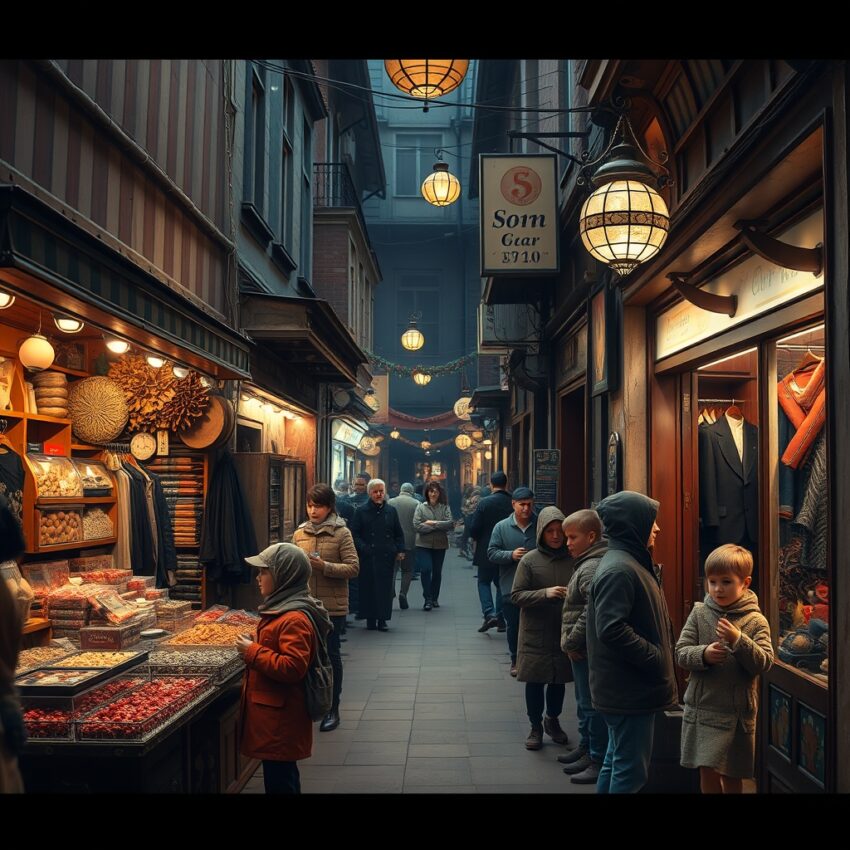
🇹🇷 Türkçe | Arife Gününün Sokaklara Dağılan Tatlı Telaşı
Bir zamanlar bayram arifesi, takvimde yalnızca bir hazırlık günü değil; şehrin nabzını hızlandıran özel bir eşikti. Sabah erken saatlerde çarşıya yayılan kalabalık, bakır tepsilerde taşınan tatlılar, terzilerin önünde son prova için bekleyenler, ayakkabıcı vitrininde çocukların gözünü alan ruganlar ve berber dükkânından sokağa taşan sıra, arife gününü başka hiçbir güne benzemeyen bir canlılığa büründürürdü. Bu telaş yorucu olduğu kadar neşeli, gürültülü olduğu kadar ölçülüydü. Çünkü herkesin acelesi kişisel değildi; ortak bir bayramın eşiğine yetişme duygusundan beslenirdi.
Mahalle Kültürü bakımından arife günü, eski şehir hayatının kalbinde yer alan en görünür toplu hareketlerden biriydi. Sokaklar yalnız alışveriş için değil, birbirini görme ve hazırlığın ortak heyecanını paylaşma için de dolardı. Eski gazetelerde bayram öncesi fiyatlar, tatlıcıların yoğunluğu, ulaşım saatleri ya da esnafın uzatılmış mesaisi anlatılırken, arka planda şehirli bir dayanışma resmi belirirdi. Kimisi komşusuna eksik kalan malzemeyi hatırlatır, kimisi mahalle fırınına bırakılan tepsinin saatini takip eder, çocuklar yeni ayakkabısını erkenden giymek isterdi. Arife telaşı, insanları aynı duyguda bir araya getiren nadir kamusal zamanlardan biriydi.
Gündelik hayatın ayrıntıları bu özel günün neden unutulmadığını açıkça gösterir. Evlerde sabun kokusu ve temizlik sesi birbirine karışır, koltukların üstüne bayramlık kıyafetler serilir, mutfakta sarma tencereleri ve tatlı tepsileri arasında mekik dokunulurdu. Sokakta ise kasabın önünde kısa ama sabırlı kuyruklar, aktarın raflarında mis gibi baharat kokuları, şekerci dükkânında özenle tartılan akideler ve çocukların ellerinde küçük paketlerle eve dönüşü görünürdü. Berberde traş olan babalar, misafir odasını son kez gözden geçiren anneler, kapı önünde halı silkelerken komşusuyla haberleşen teyzeler, arife gününün temposunu birlikte kurardı.
Bu telaşın kalpte yer etmesinin bir nedeni de onun sadece iş yükü değil, duygu taşımasıydı. Bayram yaklaşırken şehir birden daha dikkatli, daha temiz, daha sesli ama aynı zamanda daha yumuşak olurdu. İnsanlar birbirine “yarına hazır mısınız” der gibi bakar, esnaf yorgun olsa da yüzünde bir bayram yaklaşması sevinci taşırdı. Çocuklar için arife, sabırsız bir bekleyişti; büyükler için ise düzen kurma, eksik tamamlama ve aileyi ağırlamaya hazırlanma zamanıydı. Böylece aynı gün, her kuşak için başka bir anlam kazanır ama hepsini ortak bir ritimde buluştururdu.
Bugün bayram arifesi telaşının eski şehir hayatının kalbinde neden yer ettiğini anlamak zor değildir. Çünkü o telaş, tüketim odaklı bir koşuşturmadan çok toplumsal bir hazırlık duygusunu taşırdı. Mahalle esnafı, ev içi emek, komşuluk ilişkileri ve çocukların heyecanı aynı günün içinde birleşirdi. Şehir, adeta ertesi gün paylaşılacak sevinç için kendini birlikte toparlardı. Bu yüzden arife günü hatırlandığında akla sadece kalabalık gelmez; sabun kokulu evler, yeni ayakkabıların sesi, tatlı buharı ve komşu selamları da gelir. Onu kalpte tutan şey, hazırlığın bile başlı başına bir kültürel hatıra olmasıdır.
🇬🇧 English | The Sweet Rush of the Eve of the Holiday Spreading Through the Streets
There was a time when the eve of a holiday was not merely a day of preparation on the calendar, but a special threshold that quickened the pulse of the city. From early morning, crowds spread through the market streets, trays of sweets were carried in copper platters, families waited outside tailors for final fittings, children stared at polished shoes in shop windows, and queues from barbershops spilled into the street. The eve-of-holiday rush gave the day a liveliness unlike any other. It was tiring, yet joyful; noisy, yet measured. The urgency belonged not to private errands alone, but to the shared feeling of trying to arrive together at the edge of a communal celebration.
From the point of view of neighborhood culture, the eve of the holiday held one of the most visible collective movements in old urban life. Streets filled not only for shopping, but for seeing one another and sharing the excitement of preparation. Old newspapers described pre-holiday prices, crowded confectioners, transport schedules, and longer working hours for shopkeepers, yet behind all that one can discern a picture of urban solidarity. One neighbor reminded another of an ingredient still missing, someone checked the timing of the tray left at the neighborhood bakery, and children longed to wear their new shoes before the proper morning arrived. The rush of the eve was one of those rare public times that gathered people into the same emotional rhythm.
The details of daily life show clearly why that day remains so memorable. Inside homes, the scent of soap mingled with the sounds of cleaning, holiday clothes were spread out on couches, and pots of stuffed vegetables shared the kitchen with trays of dessert. Outside, there were short but patient lines in front of the butcher, fragrant rows of spices at the grocer’s, candies being weighed carefully in the sweet shop, and children returning home with small parcels in their hands. Fathers waited at the barber, mothers checked the guest room one last time, and women beating carpets at the doorway exchanged news with their neighbors. Together they composed the tempo of the eve.
One reason this rush settled so deeply in the heart is that it carried emotion as much as labor. As the holiday approached, the city seemed suddenly cleaner, more attentive, louder, and at the same time softer. People looked at one another as if asking, “are you ready for tomorrow?” Shopkeepers, though tired, carried the pleasure of the coming feast on their faces. For children, the eve was a restless anticipation; for adults, a time to complete tasks, restore order, and prepare to receive family. The same day therefore held a different meaning for each generation, while bringing all of them together in one rhythm.
It is not difficult to understand today why the eve-of-holiday rush occupied the heart of old city life. It carried less the spirit of consumer haste than the feeling of collective preparation. Neighborhood tradesmen, domestic labor, relations among neighbors, and the excitement of children all met within the same day. The city seemed to gather itself for the joy that would be shared on the next morning. That is why remembering the eve of the holiday does not bring crowds alone to mind. It also recalls soap-scented homes, the sound of new shoes, the steam of desserts, and the greetings exchanged at doorways. What keeps that day alive in the heart is the fact that preparation itself once became a cultural memory.
🇧🇷 Português (Brasil) | A Doce Correria da Véspera de Festa Espalhada pelas Ruas
Houve um tempo em que a véspera de festa não era apenas um dia de preparação no calendário, mas um limiar especial que acelerava o pulso da cidade. Desde cedo, a multidão tomava o centro comercial, doces eram carregados em bandejas de cobre, famílias esperavam diante das alfaiatarias pelos últimos ajustes, crianças fixavam os olhos nos sapatos brilhantes das vitrines e as filas das barbearias avançavam pela calçada. A correria da véspera dava ao dia uma vivacidade diferente de qualquer outra. Era cansativa, mas alegre; barulhenta, mas medida. A pressa não vinha apenas de tarefas pessoais, mas do sentimento compartilhado de chegar juntos ao começo de uma celebração coletiva.
Do ponto de vista da cultura de bairro, a véspera de festa ocupava um dos movimentos coletivos mais visíveis da antiga vida urbana. As ruas se enchiam não só para comprar, mas também para se ver, se reconhecer e dividir a excitação dos preparativos. Os jornais antigos falavam dos preços antes da festa, das confeitarias lotadas, dos horários do transporte e do expediente estendido dos comerciantes, mas por trás de tudo isso surgia uma imagem de solidariedade urbana. Um vizinho lembrava ao outro do ingrediente que faltava, alguém acompanhava o horário da assadeira deixada na padaria do bairro, e as crianças queriam usar os sapatos novos antes da manhã certa. A agitação da véspera era um desses raros tempos públicos que colocavam todos no mesmo compasso emocional.
Os detalhes da vida cotidiana mostram claramente por que esse dia ficou tão marcante. Dentro de casa, o cheiro de sabão se misturava ao som da limpeza, as roupas da festa eram estendidas sobre os sofás e panelas de pratos especiais dividiam a cozinha com travessas de sobremesa. Na rua, apareciam filas curtas, mas pacientes, diante do açougue, prateleiras de especiarias perfumadas no empório, doces sendo pesados com cuidado e crianças voltando para casa com pequenos pacotes nas mãos. Os pais esperavam no barbeiro, as mães conferiam o quarto de visitas uma última vez e as mulheres, batendo tapetes na porta, trocavam notícias com as vizinhas. Juntas, elas construíam o ritmo da véspera.
Uma das razões de essa correria ter ocupado tanto espaço no coração é o fato de ela carregar emoção tanto quanto trabalho. À medida que a festa se aproximava, a cidade parecia de repente mais limpa, mais atenta, mais sonora e ao mesmo tempo mais suave. As pessoas se olhavam como quem pergunta: “está tudo pronto para amanhã?” Os comerciantes, mesmo cansados, traziam no rosto a alegria da celebração que se aproximava. Para as crianças, a véspera era uma espera inquieta; para os adultos, um tempo de completar o que faltava, pôr ordem e preparar a recepção da família. Assim, o mesmo dia ganhava um sentido diferente para cada geração, sem deixar de reuni-las no mesmo ritmo.
Não é difícil entender hoje por que a correria da véspera de festa ocupou o coração da antiga vida urbana. Ela carregava menos o espírito de consumo apressado do que um sentimento de preparação coletiva. O comércio do bairro, o trabalho doméstico, as relações de vizinhança e a empolgação das crianças se encontravam dentro do mesmo dia. A cidade parecia se recompor para a alegria que seria compartilhada na manhã seguinte. Por isso, lembrar da véspera não significa pensar apenas na multidão. Significa também lembrar das casas cheirando a sabão, do som dos sapatos novos, do vapor dos doces e das saudações trocadas de porta em porta. O que mantém esse dia vivo no coração é o fato de a própria preparação ter se tornado uma memória cultural.