🇹🇷 Türkçe | boncuklu perde ve elden ele geçen aile yadigârı oluşu: ustalık ve sabrın izini neden hâlâ taşıyor
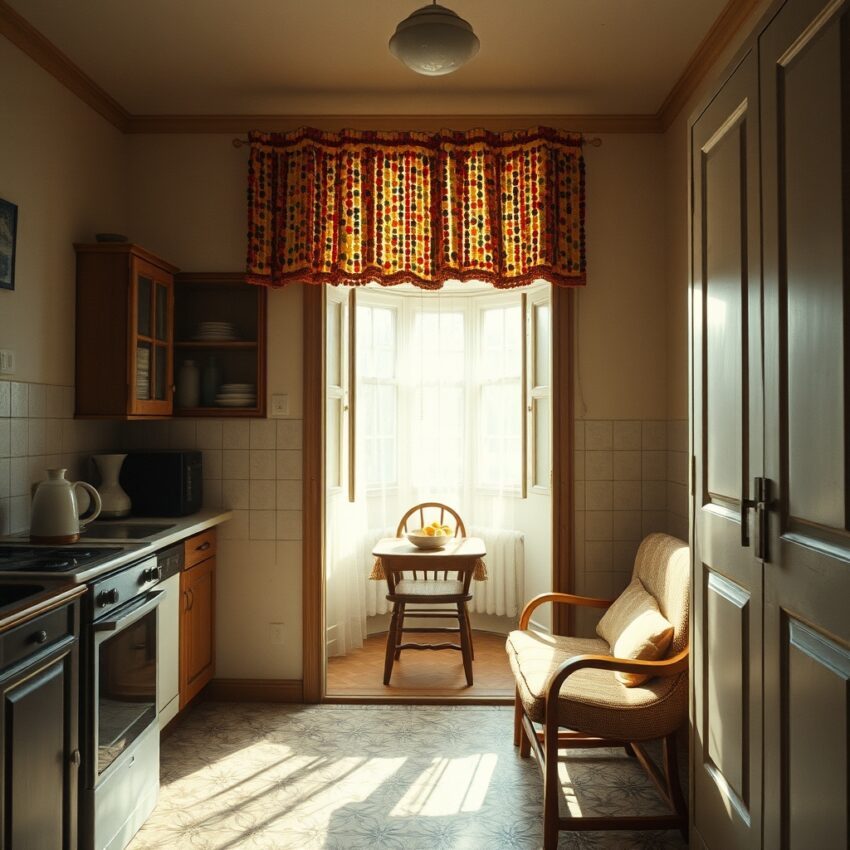
Bazı ev eşyaları vardır; işlevi basit görünür ama kapı eşiğinde asılı duruşuyla bütün bir evin ruhunu taşır. Boncuklu perde tam da böyle bir nesnedir. Yaz akşamlarında hafif esintiyle tıkırdayan, mutfakla sofa arasındaki geçişi yumuşatan ya da balkon kapısında gölgeyle ışık arasında ince bir sınır kuran bu perdeler, eski evlerin en tanıdık seslerinden birini üretirdi. Renkli plastik, ahşap ya da cam boncuklar ipe dizilirken yalnız bir süs yapılmaz; sabırla örülmüş bir ev içi estetik kurulurdu. Bu yüzden boncuklu perdenin elden ele geçerek aile yadigârına dönüşmesi şaşırtıcı değildir. O, yalnız bir eşya değil; dokunulduğunda ses veren bir hatıra biçimidir.
Obje Hikayeleri bakımından boncuklu perdenin değeri, seri üretimle açıklanamayacak kadar kişiseldir. Pek çok evde bu perdeler ya evin hanımı tarafından hazırlanır ya da mahallenin eli yatkın bir kadınına sipariş edilirdi. Boncukların rengi, diziliş biçimi, aralara eklenen motifler ve kapıya göre ayarlanan uzunluk, her perdeyi neredeyse tekil bir tasarıma çevirirdi. Burada ustalık yalnız teknik değil aynı zamanda ölçü duygusuydu. Boncukların fazla ağır gelmemesi, ipin gergin durması, kapıdan geçerken rahatsız etmemesi ama yine de varlığını hissettirmesi gerekirdi. Bu dengeyi kurmak sabır isterdi. Belki de bu yüzden boncuklu perdeler yıllar geçse bile üzerinde yapan elin dikkatini taşımaya devam ediyor.
Elden ele geçen aile yadigârı oluşu da tam bu emeğin görünürlüğüyle ilgilidir. Bir ev taşınırken sökülüp yeni eve asılan, anne evinden kızına geçen ya da kullanılmasa bile sandıkta saklanan boncuklu perde, ailenin sessiz eşyaları arasında özel bir yer edinirdi. Çünkü onda kullanım izi kadar duygusal aktarım da vardı. Kimi zaman çocuk, boncukların arasından geçerken çıkan sesi anneannesinin eviyle özdeşleştirir; kimi zaman yıllar sonra bir dolapta karşılaşılan eski perde, bir yazlığın öğle serinliğini ya da eski bir mutfaktaki limon kolonyası kokusunu geri getirirdi. Nesnenin hafızası tam da burada derinleşirdi. O, geçmişin temsilcisi olmaktan çok geçmişi ses ve dokuyla yeniden kuran bir araç haline gelirdi.
Boncuklu perdenin hâlâ ustalık ve sabır izini taşımasının bir nedeni de onarım ve koruma kültürüyle bağlantısıdır. Kopan ipler yeniden bağlanır, eksik boncuklar benzerleriyle tamamlanır, üst çıtası gevşediğinde çivi ya da küçük bir tamiratla yeniden yerine yerleştirilirdi. Bu yaklaşım nesneyi geçici bir dekor olmaktan çıkarırdı. İnsanlar boncuklu perdeyi modası geçti diye hemen atmaz, önce ona biraz daha ömür kazandırmayı düşünürdü. Böylece obje, evin zamanına eşlik eden bir tanık olurdu. Gün ışığını süzen boncukların zemine düşürdüğü kırık renkler, yazın açık kapılardan geçen rüzgârla çıkan ses ve arka odadan gelen yemek kokusu, onun çevresinde küçük ama güçlü bir atmosfer kurardı.
Bugün minimal, sessiz ve birbirine benzeyen iç mekânların arasında boncuklu perde daha da anlamlı görünüyor. Çünkü o, ev içi estetiğin yalnız şıklıkla değil emekle de kurulabildiğini hatırlatıyor. Elden ele geçen aile yadigârı olması, nesnelerin yalnız maddi değil duygusal ömürlerinin de bulunduğunu gösteriyor. Ustalık bazen büyük atölyelerde değil, akşam ışığında boncuk dizerken yorulan parmaklarda saklıdır. Sabır ise aynı diziyi bozmadan sürdürmekte, eksilen parçayı tamamlamakta ve bir eşyanın sesini yıllar sonra bile tanıyabilmektedir. Bu yüzden boncuklu perde bugün hâlâ geçmişi temsil etmekten fazlasını yapıyor; ev kavramının içindeki inceliği, el emeğini ve kuşaklar arası aktarımı görünür kılıyor.
🇬🇧 English | The Beaded Curtain and Its Becoming a Family Heirloom Passed from Hand to Hand: Why Does It Still Carry the Traces of Craftsmanship and Patience
Some household objects may appear simple in function, yet by the way they hang in a doorway they carry the spirit of an entire home. The beaded curtain is exactly such an object. Swaying softly on summer evenings, clicking gently as air moved through it, softening the passage between kitchen and hall or creating a delicate boundary between shadow and light at the balcony door, these curtains produced one of the most familiar sounds of older houses. As plastic, wooden, or glass beads were strung together, something more than decoration was made. A domestic aesthetic patiently built by hand came into being. That is why it is no surprise that the beaded curtain, passed from hand to hand, could become a family heirloom. It is not merely an object, but a form of memory that makes a sound when touched.
From the perspective of object stories, the value of the beaded curtain is too personal to be explained through mass production. In many homes these curtains were either made by the woman of the house or commissioned from a talented neighbor. The colors of the beads, the order in which they were arranged, the motifs added between them, and the length adjusted to the doorway made each curtain almost a singular design. Craftsmanship here was not only technical skill, but a sense of proportion. The beads should not become too heavy, the strings had to remain taut, and the curtain needed to be easy enough to pass through while still making its presence felt. Creating that balance required patience. Perhaps that is why such curtains continue to carry the attentiveness of the hands that made them, even after many years.
Its becoming a family heirloom passed from hand to hand is connected precisely to the visibility of that labor. A curtain taken down during a move and hung again in the next home, one passed from mother to daughter, or one kept in a chest even after it stopped being used occupied a special place among the quiet possessions of a family. It carried not only signs of use, but emotional transmission as well. A child might associate the sound of brushing through the beads with a grandmother’s house, while years later an old curtain found in a cupboard might bring back the coolness of a summer home at noon or the scent of lemon cologne from an old kitchen. That is where the memory of the object grows deep. It becomes not only a representative of the past, but a means of rebuilding the past through sound and touch.
Another reason the beaded curtain still carries traces of craftsmanship and patience lies in its connection to a culture of repair and preservation. Broken strings were tied again, missing beads replaced with similar ones, and when the upper strip loosened it was fixed back into place with a nail or a small repair. This approach prevented the object from becoming a temporary decoration. People did not throw a beaded curtain away simply because it had gone out of fashion. They first thought about giving it a little more life. In that way the object became a witness accompanying the time of the home itself. The fractured colors cast on the floor by beads filtering daylight, the sound raised by wind coming through open doors in summer, and the aroma of food drifting from the back room all created around it a small yet powerful atmosphere.
Today, among interiors that are minimalist, silent, and increasingly alike, the beaded curtain appears even more meaningful. It reminds us that domestic beauty can be built not only through elegance, but through labor. Its being a family heirloom passed from hand to hand shows that objects have emotional lifespans, not only material ones. Craftsmanship is sometimes hidden not in grand workshops, but in fingers growing tired while stringing beads in the evening light. Patience lies in continuing the same pattern without breaking it, in completing a missing piece, and in still recognizing the sound of an object years later. That is why the beaded curtain does more than represent the past. It makes visible the delicacy, handwork, and intergenerational transmission contained within the very idea of home.
🇧🇷 Português (Brasil) | A Cortina de Miçangas e o Fato de se Tornar uma Herança de Família Passada de Mão em Mão: Por que Ainda Carrega os Vestígios da Habilidade e da Paciência
Existem objetos domésticos que parecem simples em sua função, mas que, pendurados na soleira de uma porta, carregam o espírito inteiro de uma casa. A cortina de miçangas é exatamente um desses objetos. Balançando de leve nas noites de verão, fazendo um som delicado quando o ar passava, suavizando a passagem entre a cozinha e a sala ou criando uma fronteira fina entre sombra e luz na porta da varanda, essas cortinas produziam um dos sons mais familiares das casas antigas. Quando miçangas de plástico, madeira ou vidro eram enfiadas em fios, fazia-se algo maior do que um enfeite. Surgia uma estética doméstica construída à mão e com paciência. Por isso não surpreende que a cortina de miçangas, passada de mão em mão, pudesse virar herança de família. Ela não é apenas um objeto, mas uma forma de memória que produz som quando é tocada.
Pelo ponto de vista das histórias dos objetos, o valor da cortina de miçangas é pessoal demais para ser explicado pela produção em massa. Em muitas casas, essas cortinas eram feitas pela própria dona da casa ou encomendadas a uma vizinha habilidosa. As cores das miçangas, a ordem em que eram organizadas, os motivos colocados entre elas e o comprimento ajustado à porta transformavam cada peça em um desenho quase único. Aqui, habilidade não era só técnica, mas também senso de medida. As miçangas não podiam ficar pesadas demais, os fios precisavam permanecer firmes, e a cortina tinha de permitir a passagem sem deixar de marcar sua presença. Construir esse equilíbrio exigia paciência. Talvez por isso essas cortinas continuem carregando a atenção das mãos que as fizeram, mesmo depois de tantos anos.
O fato de ela se tornar uma herança de família passada de mão em mão está ligado justamente à visibilidade desse trabalho. Uma cortina retirada durante uma mudança e pendurada de novo na casa seguinte, uma peça que passa da mãe para a filha ou que permanece guardada num baú mesmo sem uso ganha um lugar especial entre os objetos silenciosos da família. Ela traz não apenas marcas de uso, mas também transmissão afetiva. Uma criança pode associar o som das miçangas à casa da avó, enquanto anos depois uma cortina antiga encontrada no armário devolve a frescura de uma casa de verão ao meio-dia ou o cheiro de colônia de limão numa cozinha antiga. É aí que a memória do objeto se aprofunda. Ele deixa de representar apenas o passado e passa a reconstruí-lo por meio do som e do toque.
Outro motivo para a cortina de miçangas ainda carregar vestígios de habilidade e paciência está em sua ligação com a cultura do conserto e da preservação. Fios arrebentados eram amarrados de novo, miçangas perdidas eram substituídas por outras parecidas e, quando a barra superior afrouxava, um prego ou um pequeno reparo resolvia o problema. Esse cuidado impedia que o objeto virasse uma decoração passageira. As pessoas não jogavam a cortina fora só porque ela saiu de moda. Primeiro pensavam em lhe dar mais um pouco de vida. Assim, o objeto se tornava uma testemunha do tempo da própria casa. As cores quebradas que as miçangas lançavam no chão ao filtrar a luz do dia, o som levantado pelo vento nas portas abertas de verão e o cheiro de comida vindo do cômodo do fundo criavam ao redor dela uma atmosfera pequena, mas poderosa.
Hoje, entre interiores minimalistas, silenciosos e cada vez mais parecidos, a cortina de miçangas parece ainda mais significativa. Ela lembra que a beleza da casa pode ser construída não apenas com elegância, mas também com trabalho manual. O fato de ser uma herança passada de mão em mão mostra que os objetos têm durações emocionais, e não somente materiais. A habilidade às vezes não está nas grandes oficinas, mas nos dedos cansados de enfiar miçangas à luz do entardecer. A paciência está em manter o mesmo padrão sem quebrá-lo, completar a peça que faltou e ainda reconhecer o som daquele objeto muitos anos depois. Por isso a cortina de miçangas faz mais do que representar o passado. Ela torna visíveis a delicadeza, o trabalho manual e a transmissão entre gerações que existem dentro da própria ideia de lar.