 Eski Pano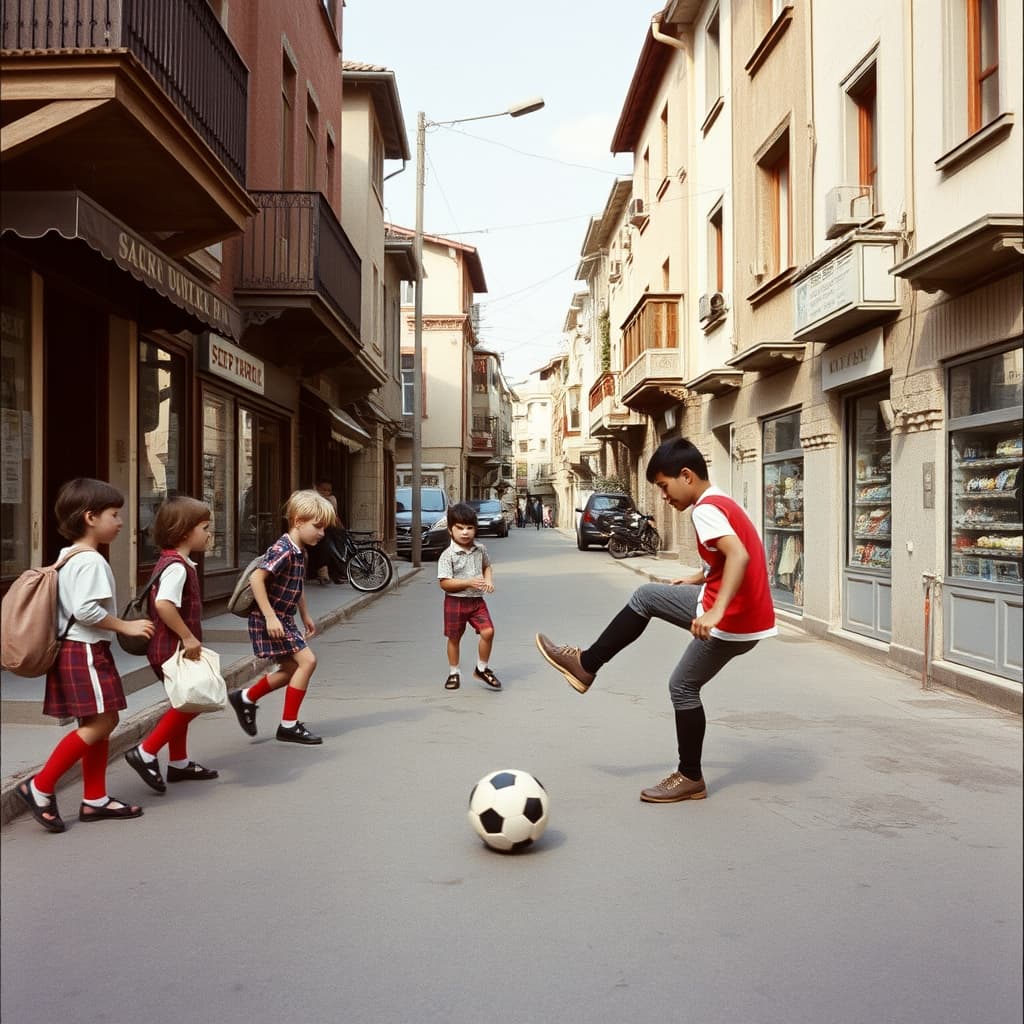
After school, a ball could turn a narrow street into a playing field whose boundaries moved with every delivery van and open shop door. Children used stones as goalposts, carried bags to the edge, and called the score across the pavement. When the ball rolled beneath a grocer's display or struck a shutter, the game entered the adult world. Apology, permission, and negotiation became as important as the next goal.
Street play varied by neighbourhood, traffic, season, gender expectations, age, and available open space. Some children played freely near familiar businesses; others faced restrictions, household duties, disability barriers, or unsafe roads. The image of a whole generation outside should not erase those who were excluded or working. Still, where play was possible, repeated contact with shopkeepers created a distinctive form of public familiarity.
The Shopfront Marked a Boundary
A greengrocer's crates, barber's chairs, bakery queue, or repair shop entrance could not simply become part of the pitch. Children learned which owner tolerated a gentle rebound and who required the ball to stay away from glass. Rules changed during busy hours. These negotiations taught that shared space belonged to several activities at once, and that play carried responsibility for damage and obstruction.
Shopkeepers sometimes held a ball while a vehicle passed, warned children about a stranger, offered water, or called home after a scraped knee. They also complained about noise, moved players away from customers, or demanded payment for broken goods. Trust did not mean unlimited permission. It grew when children respected limits and adults responded proportionately rather than treating every game as disorder.
Small Errands Deepened Recognition
A child sent for bread, yogurt, batteries, or a missing ingredient entered the same shops as a customer. They learned names, prices, change, queues, and how a family account worked. A shopkeeper might allow a minor purchase on credit because the household was known. Such arrangements could provide practical support, yet they relied on informal records and should not be romanticised as a substitute for financial security.
The relationship also carried unequal power. Adults controlled goods, space, and information; children needed safe ways to refuse inappropriate requests or attention. Community familiarity can protect, but it can also discourage reporting when an adult behaves badly. Child safeguarding requires clear boundaries, trusted guardians, and the principle that recognition is not the same as unquestioned trust.
Traffic Changed the Possible Game
As parked cars and moving traffic increased, the improvised pitch narrowed. A ball entering the road could cause a child to run without looking. Safe play requires designated space, speed control, visibility, and adult responsibility from drivers. Memories of agile children avoiding vehicles should not become an argument against parks and traffic-calmed streets.
Shop work also deserves attention. Owners and employees lifted goods, managed customers, extended long hours, and protected fragile stock while the game continued outside. A friendly warning came during a working day, not from a person assigned solely to supervise children. The neighbourhood bond depended on this overlapping rhythm, but its costs and limits belonged to the workers.
A Digital Nostalgia Archive can connect street photographs, shop ledgers, school bags, balls, delivery schedules, oral histories, and maps of changing traffic. Images of children require consent and careful identification. The ball strengthened neighbourhood ties because it repeatedly crossed a boundary and had to be returned. Each return carried a small exchange: a warning, a joke, an apology, or a name remembered the next afternoon.