 Eski Pano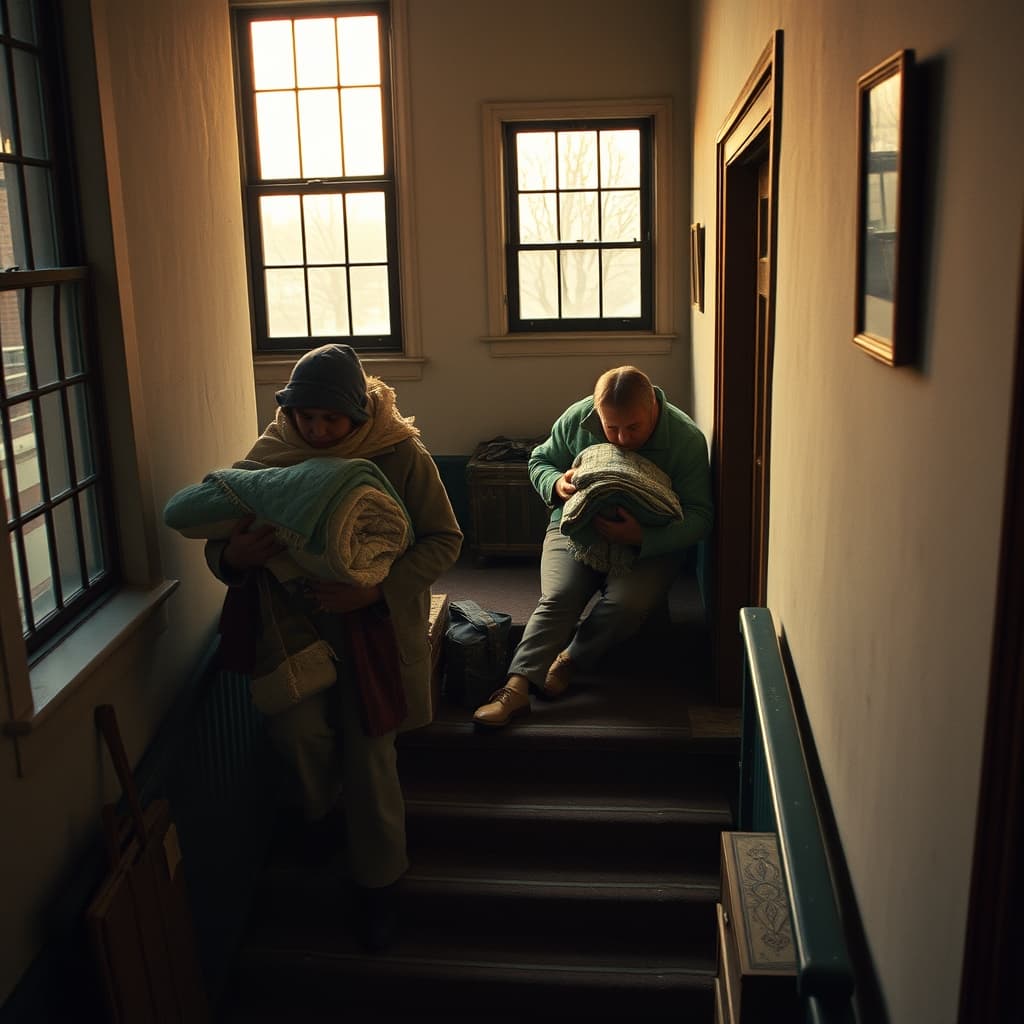
An apartment building rarely changed season on a single day. One household washed heavy blankets while another kept the stove ready for a cold night. Balcony doors opened at midday and closed before evening. Boots, rugs, fuel containers, jars, and winter clothing moved between flats, cellars, lofts, and cupboards. The building registered spring as a sequence of practical decisions rather than a date on the calendar.
Preparations depended on climate, heating system, income, building design, and family routine. Coal or wood stoves created different work from central heating. Damp ground-floor rooms and sunny upper balconies did not dry at the same speed. Families with storage could rotate possessions; others lived with seasonal goods in already crowded rooms. A collective memory should not flatten these unequal conditions.
Shared Areas Revealed the Transition
Corridors smelled briefly of soap, dust, fuel, or airing textiles. Rugs and bedding appeared on rails where rules allowed. Cellar doors opened, rooftop access increased, and discarded packaging accumulated near bins. Neighbors coordinated water, drying space, stairs, and the movement of bulky items. Cooperation reduced effort, while dripping, dust, blocked passages, and noise caused familiar disputes.
Building work was shaped by gender and age. Women often carried responsibility for washing, sorting, preserving food, and reorganising wardrobes; men may be remembered for stove pipes or heavy lifting. Children were sent for supplies or asked to hold doors. These patterns varied, but nostalgia should not present a building as if seasonal order appeared by itself.
Weather Knowledge Was Local and Provisional
Residents watched cloud, wind, wall temperature, and the behaviour of laundry. A few warm afternoons did not guarantee the end of cold. Bedding stored too early could be needed again; damp textiles risked mould. The first evening outside felt brighter partly because it followed weeks of uncertainty and repeated adjustments.
Today, health and safety guidance matters when handling mould, chimney soot, fuels, pesticides, or heavy loads. Old heaters and flues require qualified servicing. Shared escape routes should remain clear. Recreating inherited cleaning mixtures or lifting practices without understanding their risks is unnecessary for preserving the memory.
Evidence Lives in Ordinary Lists
Shopping notes, fuel receipts, laundry photographs, building meeting records, weather data, and oral histories can reconstruct the transition. Ask which objects moved, who performed each task, where items were stored, and what sign convinced the household that spring had arrived. Dates should remain approximate when memory provides only a sequence.
The first spring evenings can seem unusually bright in retrospect because labor made them possible. Fresh air entered after windows were cleaned; balcony chairs returned after storage was reorganised; neighbors lingered after weeks indoors. The deeper trace lies not in claiming that the past was warmer, but in seeing how an apartment building collectively managed uncertainty, limited space, and the recurring work of making a new season habitable. Even the timing of taking down a stove pipe or washing a curtain could become a reference point repeated by several households. These decisions formed an informal building calendar, revised whenever cold returned unexpectedly.