Eski Pano
The Window of Knowledge at Home: Encyclopedias
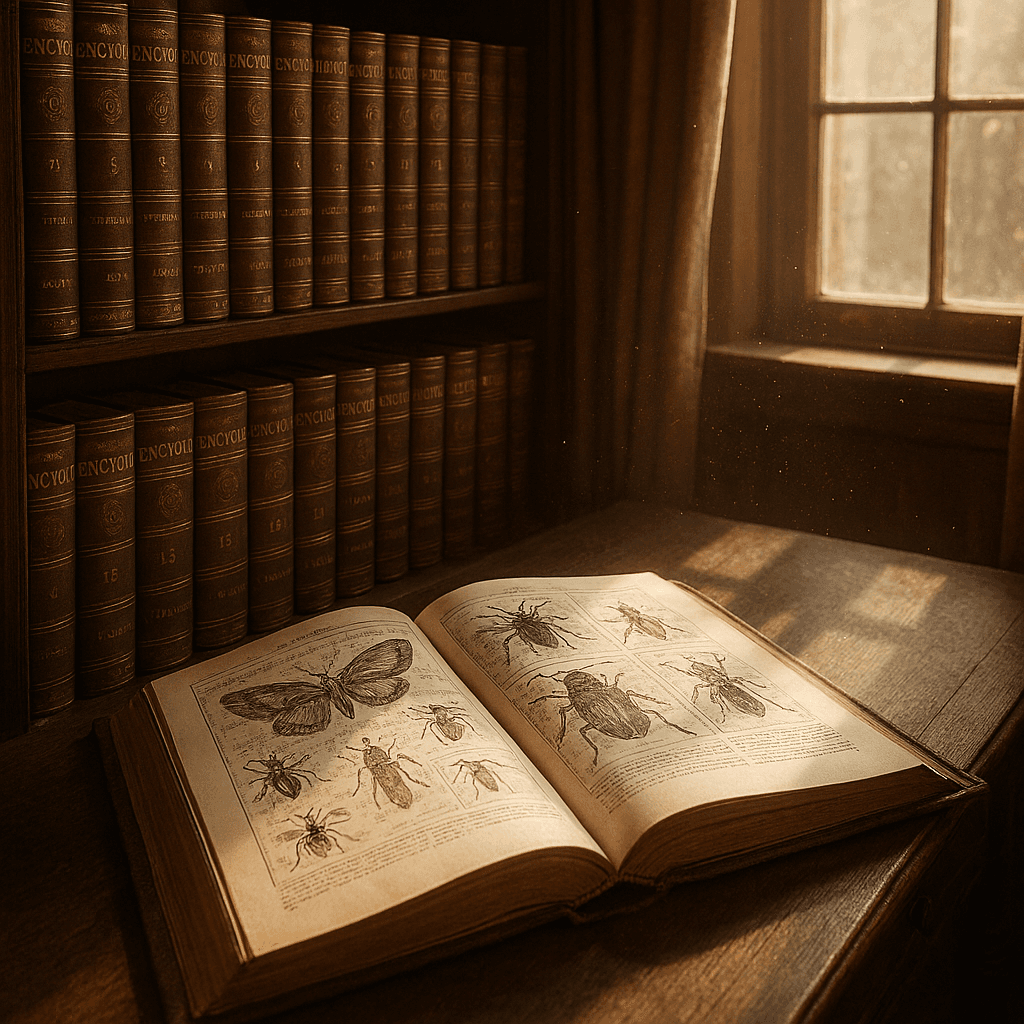
Once upon a time, there were books arranged like monuments in the most respected corners of homes, on the upper shelves of display cabinets or inside heavy wooden libraries: encyclopedias. With their thick volumes, leather-like covers, and gold-embossed lettering, these books were not merely sources of knowledge but also symbols representing the cultural identity of a household. Having a full encyclopedia set at home was considered a quiet sign of the family’s respect for education. When guests visited, the neatly arranged volumes on the shelf were often noticed and admired, representing a sense of pride and hope for the children growing up in that home.
In the years before the internet entered our daily lives, accessing information was almost a ritual. When someone wondered about a topic, the appropriate volume of the encyclopedia would be taken from the shelf, its pages turned carefully, and the desired entry patiently located. This process was not only about gaining knowledge; it was also a slow and enjoyable journey of discovery.
One of the most exciting aspects of encyclopedia culture, especially in many countries, was the famous newspaper coupon campaigns. Every morning, small coupons found inside newspapers were carefully cut out and stored in envelopes or small boxes. After days or even weeks of patient collection, completing a missing volume brought great happiness to both children and parents. Visiting a newspaper kiosk to exchange those coupons for a new volume of the encyclopedia felt almost like receiving a reward.
Prestigious series such as Encyclopaedia Britannica around the world and collections like Meydan Larousse in Turkey held a special place in many home libraries. These volumes offered not only information but also aesthetic harmony. Arranged alphabetically from A to Z, they represented a structured and organized world of knowledge.
Studying with these heavy books placed on a desk was an experience in itself. Color photographs, maps, and illustrations printed on glossy coated paper were examined with fascination. Sometimes an encyclopedia opened for a single topic would lead readers to discover entirely different subjects as they flipped through the pages. In this way, encyclopedias became not only references but also maps of curiosity and exploration.
And of course, there was the distinctive smell of the pages. The gentle scent created by paper, ink, and time formed an unforgettable memory for anyone who opened those volumes. For many people, that smell still evokes childhood years and the excitement of learning.
Today, in the digital age, information can be reached within seconds. A few words typed into a search engine bring thousands of results instantly. Yet within that speed often lies a sense of superficiality. Wandering through the heavy volumes of an encyclopedia, turning pages and truly reading the material was a very different experience. Perhaps that is why old encyclopedia sets are still valued today—not merely as books, but as tangible reminders of an era that deeply respected knowledge.
The Window of Knowledge at Home: Encyclopedias