Eski Pano
The Ticking Poetry of Time: Pocket Watches
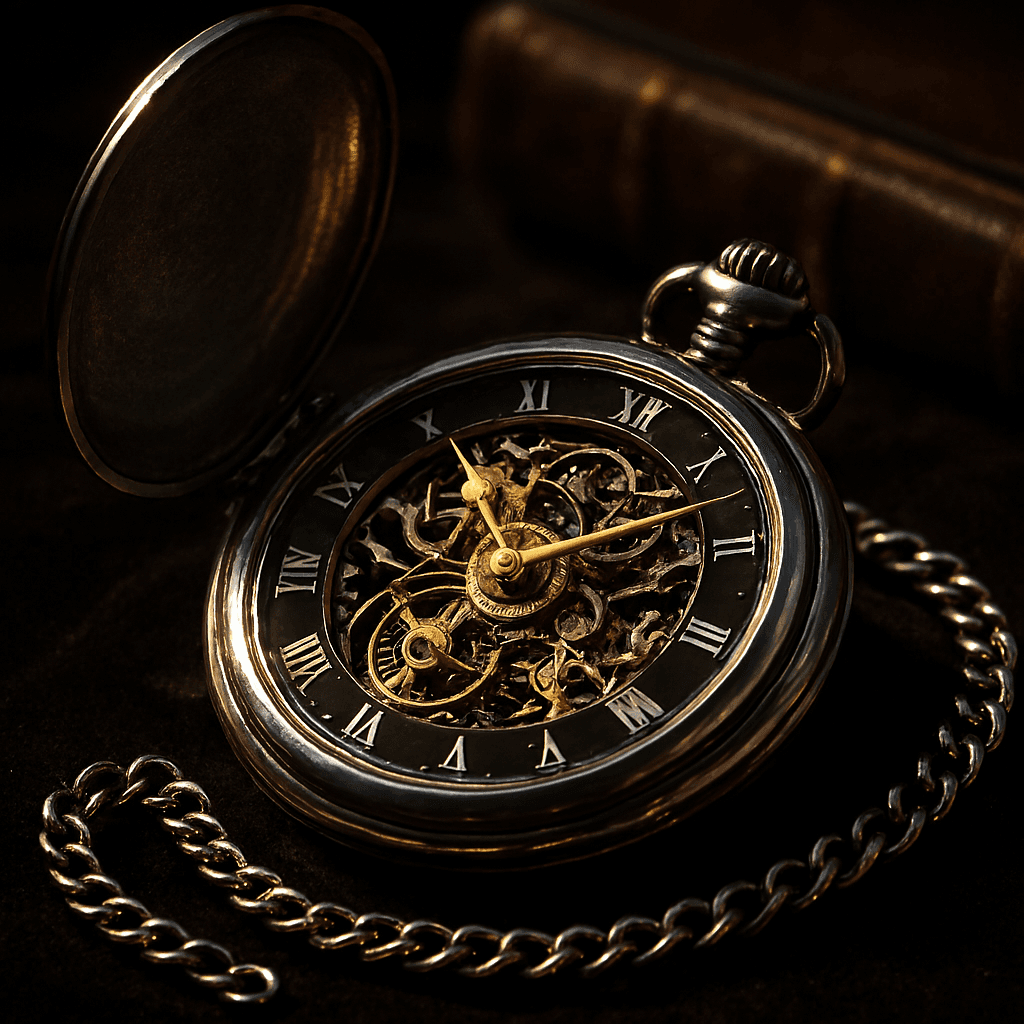
A silver chain slowly drawn from the pocket of a waistcoat… At the end of that chain hangs a heavy metal watch, and when its lid opens with a crisp “click,” a small but meaningful ritual unfolds. Pocket watches were never merely instruments for telling time. They were elegant mechanical companions that reflected the dignity, craftsmanship, and aesthetic sensibilities of an entire era.
During the late nineteenth and early twentieth centuries, pocket watches were symbols of refinement across Europe and the Ottoman world alike. Swiss watchmakers in particular earned global respect for their precision engineering. Brands such as Omega became renowned for producing highly accurate and beautifully designed pocket watches. Likewise, the craftsmanship of Patek Philippe represented the pinnacle of mechanical watchmaking, where artistry and engineering were inseparable.
Inside every pocket watch lies a miniature mechanical universe. At the crown of the watch sits the winding mechanism. When turned gently by hand, it tightens the mainspring within the case. This stored energy gradually releases into a network of tiny gears, each turning in perfect harmony with the others. The escapement mechanism carefully regulates the flow of this energy, producing the familiar ticking rhythm that defines mechanical timekeeping. The steady “tick-tock” does more than measure seconds—it gives the impression that the watch itself is alive.
The aesthetic dimension of pocket watches is equally captivating. Many models feature porcelain dials whose bright white surfaces create a perfect canvas for Roman numerals. Delicate hour and minute hands, often finished in blue steel or gold tones, move gracefully across the dial. The protective lid of the watch frequently carries engraved artwork: hunting scenes, floral patterns, family crests, or railway emblems. These engravings transform the watch into a deeply personal object, reflecting the story of its owner.
The chain, known as the “fob,” is another distinctive element of pocket watch design. More than a safety measure, it was also an important accessory of style. The chain would attach to a waistcoat buttonhole while the watch itself rested safely inside the pocket. At the end of the chain, small decorative seals, medallions, or symbolic charms often appeared, adding another layer of individuality to the object.
During the age of railroads, pocket watches gained even greater importance. Railway conductors and engineers relied on highly accurate watches to maintain precise schedules. Special “railroad-grade” standards ensured reliability and accuracy under demanding conditions. In this context, pocket watches were not just elegant accessories but critical tools for safe transportation.
Today, digital displays and smartphones deliver time instantly and effortlessly. Yet the experience of holding a pocket watch is something entirely different. When brought close to the ear, the gentle ticking echoes like the heartbeat of a tiny machine. That sound carries a quiet reassurance, a reminder of a world where craftsmanship and patience shaped everyday objects. Pocket watches do not simply show time—they allow us to hear it.
The Ticking Poetry of Time: Pocket Watches