Eski Pano
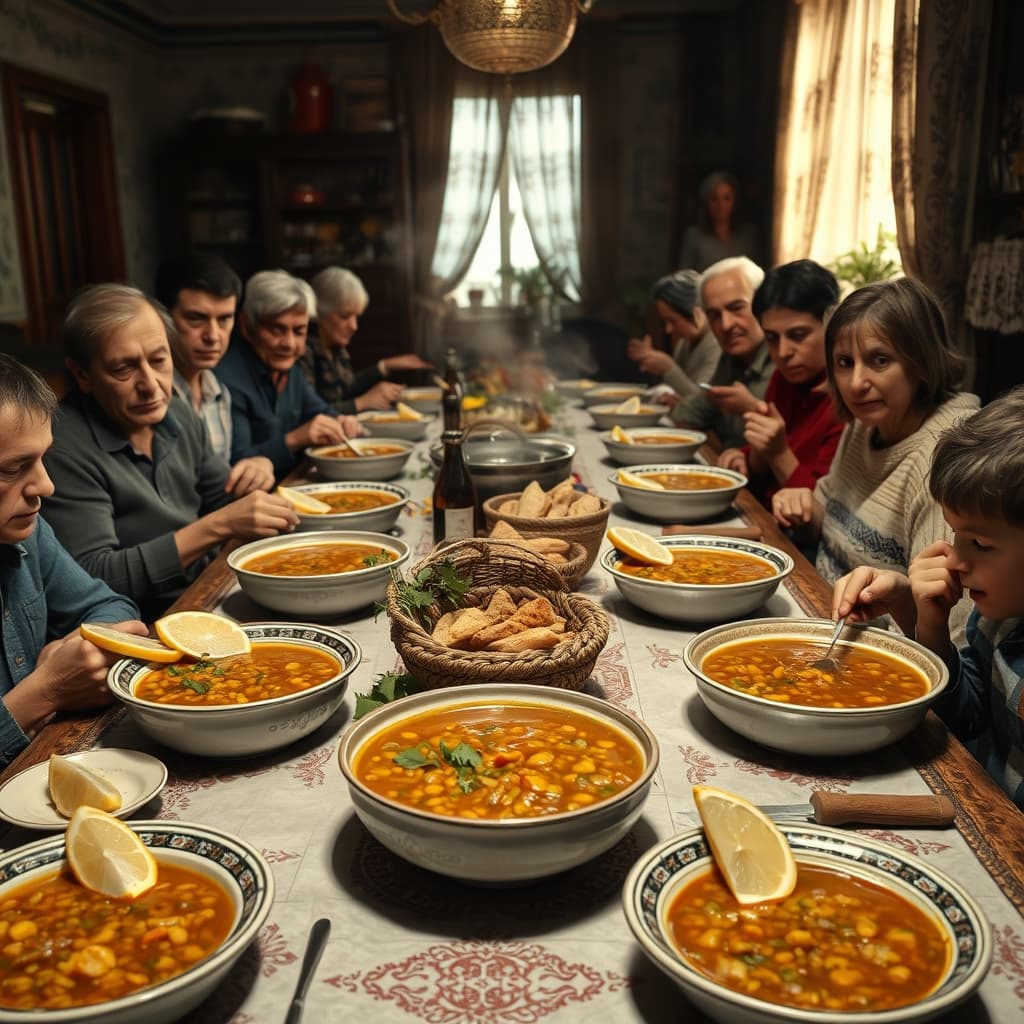
Some foods become unforgettable not because they are written in recipe notebooks, but because the moment they arrive at the table they turn all the sounds of the house in the same direction. Mother-style lentil soup belongs to that kind. The full sound made as it is ladled from pot to bowl, the smell of warm butter or oil drizzled over it, the lemon wedges brought at the last moment, and the bread basket quietly pulled closer all feel like signs that a crowded family meal is beginning. This soup is rarely seen as a grand dish, yet the feeling it creates is more lasting than display. It is not only a warm beginning, but a sign of order carrying the older habits of the kitchen. Around it there is a household rhythm that waits for everyone to sit down, for the bowls to be distributed, and for the first spoonful to be taken together.
Seen as taste memory, lentil soup is one of the strongest examples of continuity built through measure, repetition, and tenderness in older kitchen culture. The sorting of red or yellow lentils, the patient sautéing of onion, the carrot or potato added in some homes, the separate seasoning prepared in others all show that soup is cooked not only with ingredients, but with habits settled in the hand. That is why the phrase mother-style does not suggest one single formula. It suggests instead a feeling of care that remains similar even when the taste changes from family to family. At crowded tables the place of soup becomes special, because it is expected to reach everyone and gather everyone in the same warmth. As the first bowl is given to the child, then to the elder, and then to the rest of the table, the unseen order of the kitchen makes itself known.
Its ability to call back forgotten kitchen habits comes partly from that unseen order. Today many tables are shaped by speed, single portions, and scattered hours. Mother-style lentil soup leads the mind back to the idea of shared time. While the pot simmers slowly on the stove, the smell moving through the house becomes the first announcement of the approaching meal. One person brings the lemon press, another arranges the bowls, the bread is sliced in advance, and the familiar order of "soup first" gently returns. What is recalled is a kind of household discipline, yet not a harsh one. It is a tender discipline based on the thought that everyone will be fed at the same moment and will receive the same warmth. Lentil soup is therefore not only a flavor. It is also the taste of coordination within the family and of mutual care.
The unforgettable taste of the soup is closely linked to the simplicity of its ingredients. Lentils, water, onion, a little oil, and a few finishing touches. This modest structure makes old kitchen habits more visible. In such dishes, flavor is often created less by complexity than by the hand's experience. The right amount of salt, the consistency that is neither too thick nor too thin, the fragrant topping prepared without burning, the ability to blend the soup while still preserving its pot-cooked character all require learned attention. For a child, this soup may be the consolation of illness, the first warmth of a winter evening, or the familiar opening taste at a crowded table. For an adult, it becomes a memory trace of the rhythm of the mother, or of whoever in the house used to prepare it.
When we ask today how mother-style lentil soup calls back forgotten kitchen habits, we are really trying to understand how a meal can preserve the feeling of community. The soup reminds us that in older tables, food was cooked not only to satisfy hunger, but also to establish a shared order. What remains unforgettable about crowded family tables is often not the most elaborate dishes, but the simple beginnings that include everyone at once. Lentil soup is exactly such a beginning. It carries the patience of older kitchens, the practiced hand of the mother, and the order of sharing at the table. That is why what returns with the first spoonful is not taste alone, but the warm and familiar echo of a forgotten domestic order.
Mother-Style Lentil Soup and the Unforgotten Taste of Crowded Family Tables: How Does It Call Back Forgotten Kitchen Habits?