
The Golden Age of Analog Calculators: How Analog Devices Changed Everyday Life
analog-calculators-golden-age-technology-heritage

🇬🇧 How Analogue Calculators Changed the Everyday Rhythm of Working with Numbers

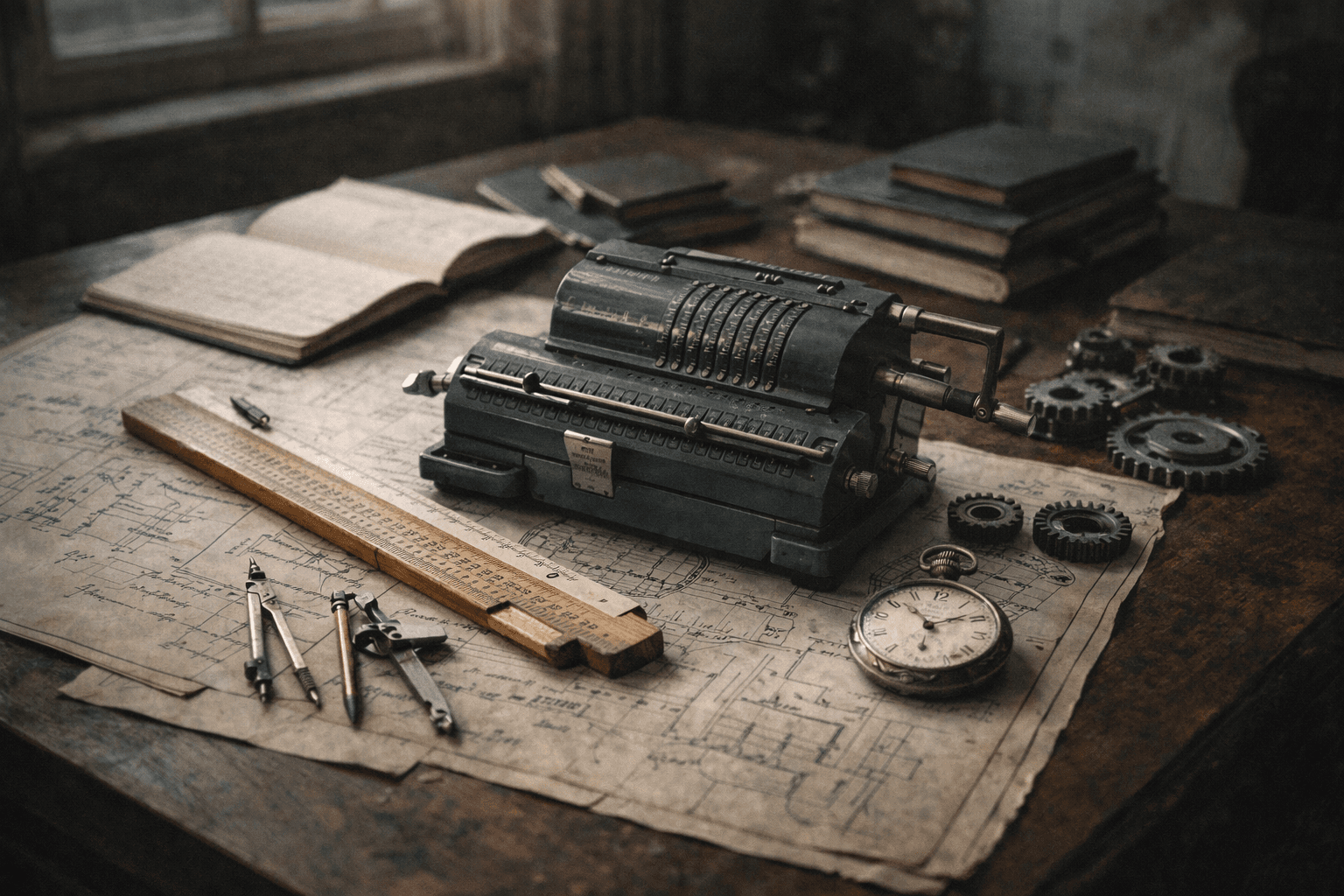
The Age of Gears and Slide Rules: The Quiet Architects of Analog Calculation There was a time when small machines quietly working on desks helped shape the modern world. Metal-bodied calculators beside typewriters, slide rules carried in engineers’ pockets, and analog measuring devices resting on laboratory tables. In an era before glowing screens and digital processors, numbers came to life through mechanical and analog tools. Imagine an engineering office in the 1960s. Wooden desks are covered with technical drawings, thick notebooks, and a heavy mechanical calculator. When the handle is turned, gears inside begin to move with a metallic rhythm. Each calculation sounds like a small mechanical orchestra. These devices, which might seem simple today, were once the essential instruments of scientific and industrial progress.

Mathematics of Sliding Scales and Rotating Gears

The roots of analog calculators reach far back in history. Mechanical calculating machines developed from the 17th century onward gradually became indispensable tools for engineers, scientists, and accountants. Beginning with early devices like Pascal’s calculator, these machines used rotating gears and counting mechanisms to perform addition and subtraction. By the 20th century, the slide rule had become a symbol of engineering culture. Long, slim, often made of wood or ivory-colored plastic, these tools used logarithmic scales to allow rapid multiplication, division, and complex calculations. University students studying engineering almost always carried a slide rule in their pockets. In exam halls, the quiet sound of sliding rulers across desks filled the room as students searched for answers. The slide rule was not merely a tool—it was a badge of belonging to a technical world.

Analog Machines in Everyday Work

Analog calculating devices were not limited to laboratories or engineering offices. They were also common in banks, accounting firms, and large commercial offices. Picture a bookkeeping office early in the morning. Large ledgers are open, pencils sharpened. At the corner of the desk sits a mechanical calculator. As the handle turns, a rhythmic clicking fills the room: click, click, click. Those sounds formed part of the background music of economic life in the mid-20th century.

The Quiet Evolution of Technology

By the 1970s, electronic calculators began to appear, slowly replacing analog and mechanical systems. Small digital displays and battery-powered devices offered faster and more convenient calculations. Yet the legacy of analog devices remained profound. These machines were more than practical tools; they were elegant combinations of mechanical engineering, design, and human ingenuity. Today, collectors and historians preserve slide rules and mechanical calculators as artifacts of technological heritage. They remind us not only of how people calculated numbers, but how they thought about problems.

An Old Dialogue with Numbers

The golden age of analog calculators reminds us that technology once required patience and physical interaction. Calculations meant turning handles, sliding rulers, and carefully reading scales. Perhaps that is why these devices remain fascinating today. Within their gears and markings lies not only mechanical precision, but also the story of human curiosity and craftsmanship.