🇹🇷 Türkçe | anteni çevirdikçe netleşen umut ve ses kayıt cihazı: tamircilerin elinde neden ikinci bir ömür bulduğunu açıklıyor cam buğusunun ardından sokakların hafızasına sinerek
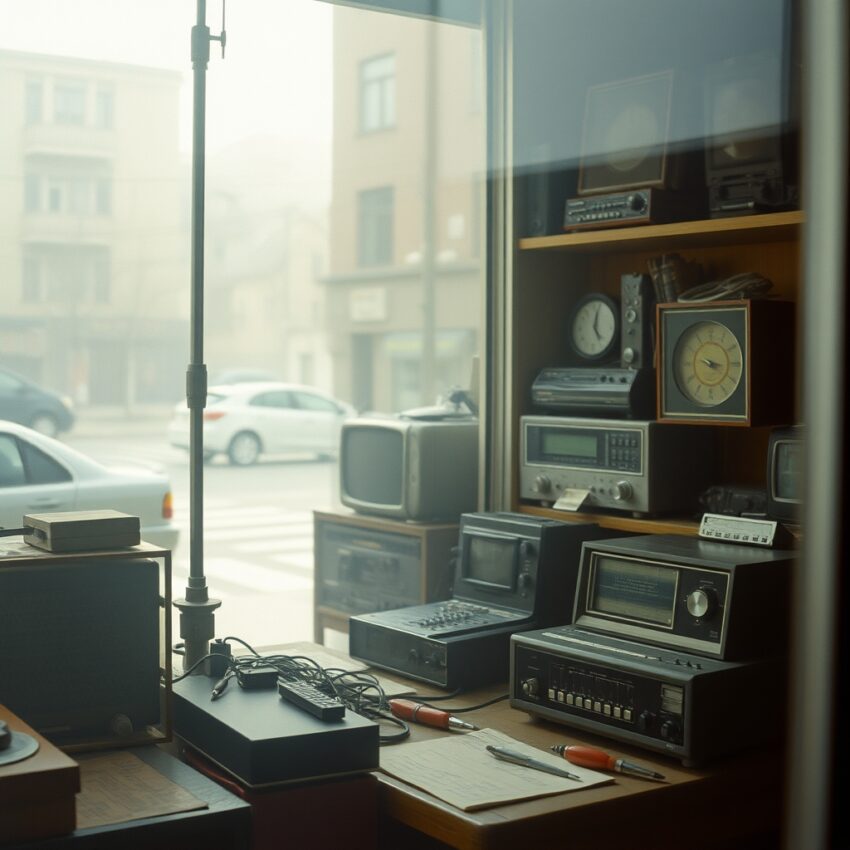
Bir zamanlar kış sabahlarında elektronikçi dükkânlarının camı içeriden buğulanır, dışarıdan bakınca sokakla dükkân arasında ince bir sis perdesi oluşurdu. O buğulu camın ardından görülen antenler, makaralar, kaset kapakları ve küçük tornavidalar, yalnız arızalı cihazları değil, gündelik hayatın kırılgan beklentilerini de tamir eden bir dünyanın parçalarıydı. Anteni çevirdikçe bir istasyonun netleşmesi nasıl evin içine umut taşıyorsa, ses kayıt cihazı da insanların sesini, türküsünü, hatırasını ve bazen ilk kez duydukları kendi tınısını saklıyordu. Bu yüzden o cihazların tamircilerin elinde ikinci bir ömür bulması teknik bir zorunluluktan fazlasını anlatır. Sokakların hafızasına sinen eski teknoloji, yenisi alınamadığı için değil; onunla kurulan duygusal emek kolay kolay terk edilmediği için yaşatılırdı.
Teknoloji Mirası açısından bakıldığında radyo anteni ile ses kayıt cihazı, analog çağın iki ayrı ama birbirine komşu duygusunu temsil ederdi: dışarıdan gelen sesi yakalamak ve içeride oluşan sesi saklamak. Anteni çevirmek, parazit içinden bir yayın bulma sabrını öğretirdi. Hafif bir cızırtının ardından haber bülteni, sevilen bir şarkı ya da uzak bir şehirden gelen anons belirince evin içindeki sessizlik bir anda değişirdi. Ses kayıt cihazı ise düğmesine basıldığında çocukların şiirini, dedenin nasihatini, düğün eğlencesini ya da prova yapan gençlerin heyecanını kayda geçirirdi. Bu cihazlar bozuldüğunda mesele yalnız mekanik bir arıza değildi; evin kurduğu ritmin bir parçası aksıyordu. Tamirciler tam da bu yüzden yalnız usta değil, mahallenin ses hafızasını koruyan kişilerdi.
Cam buğusunun ardından görülen tamir tezgâhları, eski şehir hayatının sabırlı çalışma kültürünü de yansıtırdı. Çekmecelerde dirençler, bantlar, iğneler, ampuller ve lehim kokusu olur; duvarda bazen sararmış takvim yaprakları, bazen yarım bırakılmış bir devre şeması asılı dururdu. Usta, eline aldığı radyoyu ya da kayıt cihazını hemen hurdaya çıkarmaz; önce dinler, sonra kapağını açar, sonra sorunun hangi parçada saklandığını anlamaya çalışırdı. Müşteri de çoğu kez cihazını bırakıp gitmez, biraz oyalanır, benzer arızalardan söz eder, dükkâna uğrayan bir başkasıyla sohbete karışırdı. Böylece tamir dükkânı bir hizmet noktası olmaktan çıkıp mahalle içi haberleşmenin, deneyim paylaşımının ve teknik merakın buluştuğu küçük bir sosyal mekâna dönüşürdü. İkinci ömür dediğimiz şey, aslında cihazın çevresinde yeniden kurulan bu toplumsal dikkat sayesinde mümkün olurdu.
Anteni çevirdikçe netleşen umut sözü boşuna güçlü değildir. Çünkü radyo ve teybin olduğu yıllarda netlik, yalnız sesin berraklaşması değil, beklenen bir dünyanın eve biraz daha yaklaşması anlamına gelirdi. Uzak kentlerden gelen müzikler, maç anlatımları, gece programları ya da kasete kaydedilmiş bir aile sohbeti, insanlara gündelik hayatın dışına açılan küçük ama önemli pencereler verirdi. Bir cihaz arızalandığında bu pencere kapanmış gibi hissedilirdi. Tamircinin lehim yaptığı, kayışı değiştirdiği ya da anten bağlantısını güçlendirdiği o an, teknik müdahaleden çok hayatın akışını yeniden kurma çabasıydı. Bu nedenle birçok aile eski cihazını yıllarca attıramadı; çünkü o cihaz evin geçmiş seslerini de içinde taşıyordu. Cızırtılı bile olsa tanıdık bir sesin geri dönmesi, yepyeni bir cihaz almaktan daha büyük bir sevinç yaratabiliyordu.
Bugün dijital dünyanın hızında eski ses kayıt cihazları ve radyolar bize yavaş, kırılgan ve zahmetli görünebilir. Ama tam da bu yüzden değerlidirler. Onlar, sesin bir zamanlar uğraşla bulunduğunu, dikkatle saklandığını ve arızalandığında onarılmaya değer görüldüğünü hatırlatır. Tamircilerin elinde ikinci bir ömür bulan cihazlar, tüketmekten çok sürdürmeye dayalı bir kültürün izini taşır. Cam buğusunun ardından görünen o dükkânlar artık azalmış olabilir; fakat sokakların hafızasına sinen lehim kokusu, cızırtı ve bant sesi hâlâ kolay kolay silinmez. Çünkü bu hikâye sadece eski teknolojiye ait değildir. Bu hikâye, bir toplumun umudu bazen anteni milim milim çevirerek, bazen de kendi sesini silinmesin diye küçük bir banda emanet ederek yaşatmasının hikâyesidir.
🇬🇧 English | Hope Becoming Clearer as the Antenna Was Turned and the Voice Recorder: Explaining Why It Found a Second Life in the Hands of Repairmen While Sinking into the Memory of the Streets Behind Fogged Glass
There was a time when, on winter mornings, the windows of electronics repair shops fogged from the inside, leaving a thin veil between the street and the workshop. Behind that misted glass, antennas, reels, cassette covers, and tiny screwdrivers could be seen, and they seemed to belong not only to broken devices but to a world that repaired the fragile expectations of everyday life. Just as hope became clearer when an antenna was turned and a station slowly emerged from static, a voice recorder preserved songs, family voices, cherished recollections, and sometimes the shock of hearing one’s own sound for the first time. That is why such devices finding a second life in the hands of repairmen meant more than simple technical necessity. The old technology absorbed into the memory of the streets survived not merely because a new one could not be bought, but because the emotional labor built around it was not easily abandoned.
From the perspective of technological heritage, the radio antenna and the voice recorder represented two neighboring feelings of the analog age: catching a sound from outside and preserving a sound formed inside. Turning the antenna taught patience in the search for a signal hidden inside interference. After a veil of crackle, a news bulletin, a beloved song, or an announcement from a distant city would emerge, and the silence of the house changed at once. The voice recorder, by contrast, captured a child’s recitation, a grandfather’s advice, the music of a wedding, or the nervous rehearsal of young people trying out a song. When these devices broke, the issue was never purely mechanical. Something in the rhythm of the home had faltered. That is why repairmen were more than craftsmen; they were caretakers of the neighborhood’s acoustic memory.
The workbenches visible through fogged glass also reflected the patient labor culture of the old city. Drawers held resistors, tape, needles, bulbs, and the familiar smell of solder; on the wall there might hang a yellowed calendar page or a half-finished circuit sketch. A master repairman did not instantly condemn a radio or recorder to the scrap pile. He listened first, then opened the case, then tried to understand where exactly the fault was hiding. Customers often did not simply drop off the machine and leave. They lingered, spoke of similar breakdowns, and sometimes joined conversations with others passing through the shop. In this way the repair shop became more than a service point. It turned into a small social place where neighborhood news, practical experience, and technical curiosity met. What we call a second life was made possible largely through this renewed circle of human attention around the device.
The phrase hope becoming clearer as the antenna was turned carries force for a reason. In the years when radios and tape machines shaped domestic life, clarity meant not only better sound but the sense that a desired world had come a little closer to home. Music from distant cities, football broadcasts, late-night programs, or a family conversation recorded on tape opened small yet meaningful windows beyond routine life. When a device failed, it could feel as if that window had closed. The moment when the repairman soldered a joint, changed a belt, or strengthened the antenna connection was therefore not only a technical intervention, but an effort to restore the flow of life itself. Many families kept old devices for years because those machines also carried the sounds of their own past. The return of a familiar voice, even through a little static, could bring more joy than buying something entirely new.
Today, in the speed of the digital world, old radios and voice recorders may seem slow, delicate, and inconvenient. Yet that is precisely why they matter. They remind us that sound was once found with effort, stored with care, and considered worthy of repair when damaged. The devices that found a second life in the hands of repairmen carry the traces of a culture built more on continuity than on disposal. The fogged shop windows may be rarer now, but the smell of solder, static, and magnetic tape that entered the memory of the streets does not disappear easily. Because this story is not only about old technology. It is also about how a society kept hope alive by turning an antenna millimeter by millimeter, and by entrusting its own voice to a small strip of tape so it would not be lost.
🇧🇷 Português (Brasil) | A Esperança que Ficava Mais Nítida ao Girar a Antena e o Gravador de Voz: Explicando Por Que Encontrou uma Segunda Vida nas Mãos dos Consertadores ao se Entranhar na Memória das Ruas por Trás do Vidro Embaçado
Houve um tempo em que, nas manhãs de inverno, os vidros das oficinas de eletrônica ficavam embaçados por dentro, criando uma película fina entre a rua e o balcão de trabalho. Por trás desse vidro enevoado apareciam antenas, rolos, capas de fita cassete e pequenas chaves de fenda, peças de um mundo que parecia consertar não apenas aparelhos quebrados, mas também as expectativas frágeis do cotidiano. Assim como a esperança ficava mais nítida quando alguém girava a antena e uma estação surgia no meio do chiado, o gravador de voz guardava canções, vozes de família, lembranças e às vezes até o espanto de ouvir a própria voz pela primeira vez. Por isso o fato de esses aparelhos encontrarem uma segunda vida nas mãos dos consertadores significava mais do que necessidade técnica. A velha tecnologia preservada na memória das ruas continuava viva porque o trabalho afetivo construído ao seu redor não era abandonado facilmente.
Do ponto de vista do legado tecnológico, a antena do rádio e o gravador de voz representavam dois sentimentos vizinhos da era analógica: captar um som vindo de fora e guardar um som nascido dentro de casa. Girar a antena ensinava paciência para encontrar um sinal escondido no ruído. Depois de um pouco de chiado, surgiam um boletim de notícias, uma música querida ou um anúncio vindo de uma cidade distante, e o silêncio da casa mudava de repente. Já o gravador registrava o poema recitado por uma criança, o conselho do avô, a música de um casamento ou o ensaio ansioso de jovens preparando uma canção. Quando esses aparelhos quebravam, o problema nunca era apenas mecânico. Algo no ritmo da casa havia falhado. Por isso os consertadores eram mais do que técnicos: eram guardiões da memória sonora do bairro.
As bancadas visíveis por trás do vidro embaçado também refletiam a cultura paciente de trabalho da velha cidade. Nas gavetas havia resistores, fitas, agulhas, lâmpadas e o cheiro conhecido da solda; na parede, às vezes pendia uma folha amarelada de calendário ou o desenho inacabado de um circuito. O mestre não jogava imediatamente o rádio ou o gravador fora. Primeiro escutava, depois abria a carcaça e então procurava entender em qual peça o defeito estava escondido. Muitos clientes também não deixavam o aparelho e iam embora. Ficavam um pouco, contavam casos parecidos e às vezes entravam na conversa com outra pessoa que chegava à oficina. Assim, o conserto deixava de ser apenas um serviço para se tornar um pequeno espaço social onde notícias do bairro, experiência prática e curiosidade técnica se encontravam. Aquilo que chamamos de segunda vida se tornava possível graças a esse círculo renovado de atenção humana em torno do aparelho.
A ideia de uma esperança que se torna mais clara ao girar a antena é poderosa por um motivo. Nos anos em que rádios e gravadores organizavam parte da vida doméstica, nitidez significava não apenas um som melhor, mas a sensação de que um mundo desejado havia se aproximado da casa. Músicas de cidades distantes, narrações esportivas, programas noturnos ou uma conversa de família registrada em fita abriam pequenas janelas para além da rotina. Quando o aparelho falhava, parecia que essa janela havia se fechado. O instante em que o consertador soldava uma peça, trocava uma correia ou reforçava a ligação da antena era, portanto, mais do que uma intervenção técnica: era uma tentativa de restaurar o fluxo da vida. Muitas famílias guardaram aparelhos antigos durante anos porque aquelas máquinas também continham os sons do próprio passado. O retorno de uma voz conhecida, mesmo com algum chiado, podia trazer mais alegria do que a compra de algo inteiramente novo.
Hoje, na velocidade do mundo digital, rádios antigos e gravadores de voz podem parecer lentos, delicados e trabalhosos. Ainda assim, é exatamente por isso que são valiosos. Eles nos lembram de que o som já foi encontrado com esforço, guardado com cuidado e considerado digno de reparo quando se danificava. Os aparelhos que ganhavam uma segunda vida nas mãos dos consertadores carregam o vestígio de uma cultura mais voltada para a continuidade do que para o descarte. Talvez os vidros embaçados dessas oficinas sejam mais raros agora, mas o cheiro de solda, chiado e fita magnética entranhado na memória das ruas não desaparece facilmente. Porque esta história não fala apenas de tecnologia antiga. Ela fala também de como uma sociedade mantinha a esperança viva girando uma antena milímetro por milímetro e confiando a própria voz a uma pequena fita para que ela não se perdesse.