🇹🇷 Türkçe | ahşap oyuncak sandığı ve salon vitrininin en görünür köşesi: nostalji meraklılarının gözünde neden hemen parlıyor
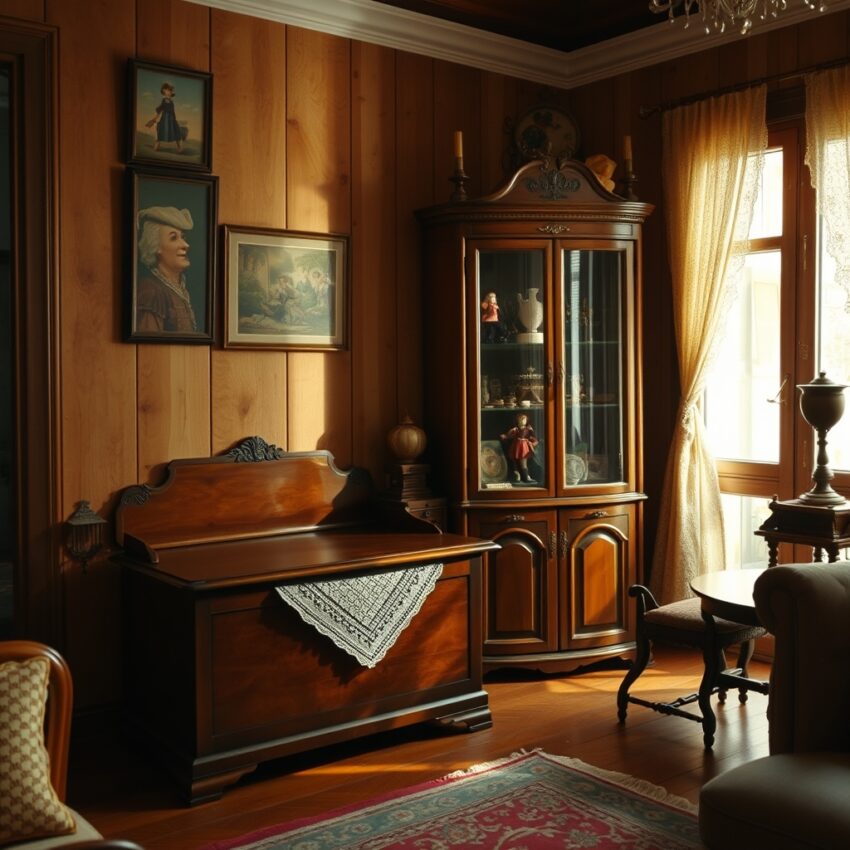
Bir zamanlar salonların en görünür köşeleri yalnız misafire gösterilmek için değil, ailenin kendini nasıl hatırlamak istediğini sessizce anlatmak için düzenlenirdi. Camlı vitrinlerin içinde dantel örtüler, bayramlık fincan takımları, birkaç dikkatle saklanmış biblo ve çoğu zaman çocuklukla aile terbiyesi arasında duran bir ahşap oyuncak sandığı ya da onun içinden çıkmış küçük hatıra eşyaları bulunurdu. Gün ışığı vitrinin camına vurduğunda, cilalı ahşabın üstünde biriken o yumuşak parıltı eve bir sergi ciddiyeti verirdi. Nostalji meraklılarının gözünde bu sahnenin hemen parlaması boşuna değildir. Çünkü burada yalnız eski bir eşya değil, geçmişin ev içi estetiği, saklama alışkanlığı ve nesnelerle kurulan duygusal terbiyesi görünür hale gelir.
Obje Hikayeleri açısından ahşap oyuncak sandığı, çocukluğun geçici dağınıklığını aile evinin kalıcı düzeni içine yerleştiren özel bir nesnedir. Oyuncaklar gündelik kullanımda ortalığa saçılır; fakat akşam olduğunda ya da misafir geleceğinde tekrar sandığa toplanır, kapağı kapatılır ve çocuk dünyası yeniden düzenli bir bütün haline getirilirdi. Salon vitrininin en görünür köşesi ise evin hem en kamusal hem de en kontrollü yüzüydü. İşte bu iki unsur yan yana geldiğinde, geçmiş kuşakların çocukluk ile temsil arasındaki dengeyi nasıl kurduğunu anlarız. Oyuncak sandığı, yalnız oyun saatlerini değil, bir evin eşya terbiyesini de saklar. Ahşabın dayanıklı yapısı, metal menteşenin sesi, içinden çıkan bez bebekler, teneke arabalar ya da renkli misket torbaları; hepsi çocuğun dünyasını aile hafızasının daha büyük çerçevesine bağlar.
Nostalji meraklılarının bu nesnelere bakınca hemen etkilenmesinin bir nedeni de onları yalnız işlevsel objeler olarak görmemeleridir. Ahşap sandık, el sürülmüş yılların izini taşır; kenarındaki küçük aşınmalar, kapakta kalmış bir etiket, iç kısmına sinmiş sabun ya da naftalin kokusu geçmişin elle tutulur kanıtına dönüşür. Salon vitrini de benzer biçimde, ev halkının neyi korumaya değer bulduğunu açığa çıkarır. En görünür köşede duran nesne rastgele seçilmezdi; çoğu zaman ailenin gurur duyduğu, hediye aldığı ya da çocuklarına saklamak istediği eşya oraya konurdu. Bu yüzden parıltı sadece camın üstündeki ışık değildir. Parlayan, nesnenin taşıdığı kuşaklar arası anlamdır. İnsan böyle bir vitrine baktığında, kendi çocukluğundan bağımsız olsa bile, bir evin nasıl sevildiğini ve düzenlendiğini hisseder.
Eski şehir yaşamında salon vitrini ile oyuncak sandığı arasında görünmeyen bir ilişki daha vardı: ikisi de hafızayı evcilleştirirdi. Oyuncak sandığı, dağınık günleri toparlar; vitrin ise seçilmiş hatıraları görünür tutardı. Bayram temizliğinde yerleri değiştirilen objeler, sandığın içine yenileri eklenen oyuncaklar, kırılmasın diye özenle kaldırılan parçalar, nesnelerin yalnız kullanılıp bırakılmadığını; bakım gördüğünü, anlatıldığını ve aile içinde yeniden anlam kazandığını gösterirdi. Bugün hızlı tüketim kültüründe çoğu eşya kolayca değiştiriliyor. Oysa ahşap sandık ve vitrin köşesi, bir zamanlar eşyanın uzun ömürlü bir refakatçi gibi düşünüldüğünü hatırlatır. Belki de bu nedenle nostalji meraklılarının gözünde hemen parlıyorlar: çünkü bu objeler, insanın kendi geçmişini düzenleme arzusuna dokunuyor.
Şimdi bir antikacı dükkânında ya da eski bir aile evinde böyle bir sandıkla karşılaştığımızda, bizi etkileyen şey yalnız biçimi ya da malzemesi değildir. Etkileyen, o sandığın bir zamanlar kapağı açıldığında duyulan sevinci; vitrin camının ardından görülen düzenli dünyayı; ev içi hayatın sessiz kurallarını ve sıcaklığını çağırmasıdır. Ahşap oyuncak sandığı ile salon vitrininin görünür köşesi bugün hâlâ parlak görünür, çünkü ikisi de kaybolan bir ev ritmini temsil eder. Çocukluğun oyunla, büyüklüğün düzenle, ailenin ise hatırlamayla kurduğu bağ bu nesnelerde somutlaşır. Onlara bakarken yalnız eski eşyaları değil, geçmişin incelikli ev içi dünyasını da görürüz. Nostaljinin gerçek parıltısı da tam burada doğar: camın, cilanın ya da ahşabın üstünde değil; nesnelerin içine yerleşmiş yaşanmışlık duygusunda.
🇬🇧 English | The Wooden Toy Chest and the Most Visible Corner of the Living Room Display Cabinet: Why Does It Shine Instantly in the Eyes of Nostalgia Enthusiasts?
There was a time when the most visible corners of living rooms were arranged not only to impress guests, but to quietly express how a family wished to remember itself. Inside glass-fronted display cabinets stood lace covers, holiday teacup sets, a few carefully preserved figurines, and very often a wooden toy chest, or small objects that had once come from it, poised between childhood and domestic order. When daylight struck the glass, the soft glow gathering on the polished wood gave the room the seriousness of a private exhibition. It is no accident that such a scene shines immediately in the eyes of nostalgia enthusiasts. What becomes visible there is not only an old object, but the interior aesthetic of the past, the habit of preserving, and the emotional discipline once formed around household things.
From the perspective of object stories, the wooden toy chest is a special item because it places the temporary disorder of childhood inside the lasting order of the family home. Toys scatter through daily use, yet when evening comes or guests are expected, they are gathered back into the chest, the lid is closed, and the world of play is turned once again into an organized whole. The most visible corner of the living room cabinet, by contrast, was both the most public and the most controlled face of the home. When these two elements stand side by side, we understand how earlier generations balanced childhood with representation. The toy chest stores not only the hours of play, but also a household’s education in caring for objects. The durable body of the wood, the sound of its metal hinge, and the cloth dolls, tin cars, or colorful marbles inside all connect the world of the child to the wider frame of family memory.
One reason nostalgia enthusiasts respond so quickly to these items is that they do not see them as merely functional. A wooden chest carries the marks of years of touch: a slight wear along the edge, a sticker left on the lid, the scent of soap or mothballs absorbed into the interior become tangible evidence of the past. The living room cabinet works in a similar way, revealing what the household considered worthy of preservation. The object placed in the most visible corner was never random; it was often something the family felt proud of, had received as a gift, or wished to save for children yet to come. That is why the radiance is not simply light on glass. What shines is the intergenerational meaning held by the object. Looking at such a display, one senses, even without sharing the exact same childhood, how a home was loved and arranged.
In old urban life there was another unseen relation between the toy chest and the cabinet corner: both domesticated memory. The toy chest gathered scattered days back into order, while the cabinet kept selected memories visible. The objects moved during holiday cleaning, the new toys added to the chest, the pieces put away carefully so they would not break all show that things were not used and discarded without thought. They were maintained, narrated, and given new meanings within family life. Today, in a culture of rapid consumption, many possessions are replaced with ease. The wooden chest and the display cabinet remind us that objects were once imagined as long-term companions. Perhaps that is why they shine so quickly in the eyes of those who love nostalgia: they touch the human desire to arrange one’s own past.
When we encounter such a chest today in an antique shop or in an old family house, what affects us is not only its form or material. What moves us is the way it summons the joy once felt when the lid was opened, the ordered world seen through the cabinet glass, and the silent rules and warmth of domestic life. The wooden toy chest and the visible corner of the living room display cabinet still seem luminous today because both represent a vanished household rhythm. The bond between childhood and play, adulthood and order, family and remembrance becomes concrete inside these objects. Looking at them, we see not only old things, but the carefully composed interior world of the past. The true brightness of nostalgia is born exactly there: not on the glass, varnish, or wood itself, but in the sense of lived time that settled inside them.
🇧🇷 Português (Brasil) | O Baú de Brinquedos de Madeira e o Canto Mais Visível da Vitrine da Sala: Por Que Brilha Imediatamente aos Olhos dos Apaixonados pela Nostalgia?
Houve um tempo em que os cantos mais visíveis da sala eram organizados não apenas para impressionar visitas, mas para expressar em silêncio como uma família desejava lembrar de si mesma. Dentro das vitrines com vidro havia rendas, conjuntos de xícaras de festa, alguns bibelôs guardados com cuidado e, muitas vezes, um baú de brinquedos de madeira ou pequenos objetos que haviam saído dele, colocados entre a infância e a ordem doméstica. Quando a luz do dia tocava o vidro, o brilho suave acumulado sobre a madeira polida dava ao ambiente a solenidade de uma pequena exposição privada. Não é por acaso que essa cena brilha de imediato aos olhos dos apaixonados pela nostalgia. O que se torna visível ali não é apenas um objeto antigo, mas a estética doméstica do passado, o hábito de guardar e a educação afetiva construída em torno das coisas da casa.
Do ponto de vista das histórias de objetos, o baú de brinquedos de madeira é especial porque acomoda a desordem passageira da infância dentro da ordem duradoura da casa de família. Os brinquedos se espalham ao longo do dia, mas quando a noite chega ou quando há visitas, voltam para dentro do baú, a tampa se fecha e o mundo da brincadeira se transforma outra vez em um conjunto organizado. Já o canto mais visível da vitrine da sala era ao mesmo tempo a face mais pública e mais controlada da casa. Quando esses dois elementos aparecem lado a lado, entendemos como as gerações passadas equilibravam infância e representação. O baú não guarda apenas horas de brincadeira, mas também a educação da casa em relação aos objetos. A madeira resistente, o som da dobradiça metálica e as bonecas de pano, os carrinhos de lata ou as bolas de gude coloridas ligam o universo da criança ao quadro maior da memória familiar.
Uma das razões pelas quais os amantes da nostalgia reagem tão rápido a esses itens é o fato de não os verem como simples objetos funcionais. O baú de madeira traz marcas dos anos de uso: um desgaste discreto na borda, um adesivo esquecido na tampa, o cheiro de sabão ou de naftalina absorvido por dentro se tornam provas tácteis do passado. A vitrine da sala funciona de modo parecido, revelando aquilo que a família considerava digno de ser preservado. O objeto colocado no canto mais visível nunca era aleatório; em geral era algo de que a casa se orgulhava, que havia sido recebido como presente ou que se queria guardar para os filhos. Por isso o brilho não está apenas na luz sobre o vidro. O que brilha é o significado que atravessa gerações. Ao olhar uma vitrine assim, mesmo sem compartilhar exatamente a mesma infância, é possível sentir como uma casa era amada e organizada.
Na antiga vida urbana havia ainda uma relação invisível entre o baú de brinquedos e o canto da vitrine: ambos domesticavam a memória. O baú recolhia dias espalhados de volta para a ordem; a vitrine mantinha visíveis as lembranças escolhidas. Os objetos mudados de lugar na limpeza de festa, os brinquedos novos acrescentados ao baú, as peças guardadas com cuidado para não quebrar mostram que as coisas não eram apenas usadas e deixadas de lado. Recebiam cuidado, eram narradas e ganhavam novos sentidos dentro da vida familiar. Hoje, numa cultura de consumo veloz, muitos pertences são substituídos com facilidade. O baú de madeira e a vitrine lembram que os objetos já foram imaginados como companheiros de longa duração. Talvez seja por isso que brilhem tão depressa aos olhos dos nostálgicos: porque tocam o desejo humano de organizar o próprio passado.
Quando encontramos um baú assim hoje, em uma loja de antiguidades ou numa velha casa de família, o que nos atinge não é apenas a forma ou o material. O que emociona é a maneira como ele convoca a alegria sentida quando a tampa se abria, o mundo ordenado visto através do vidro da vitrine e as regras silenciosas e calorosas da vida doméstica. O baú de brinquedos de madeira e o canto visível da vitrine da sala continuam luminosos porque representam um ritmo de casa que se perdeu. O vínculo entre infância e brincadeira, idade adulta e ordem, família e lembrança se torna concreto nesses objetos. Ao olhar para eles, vemos não apenas coisas antigas, mas o mundo interior cuidadosamente composto do passado. O verdadeiro brilho da nostalgia nasce justamente aí: não no vidro, no verniz ou na madeira em si, mas na sensação de vida vivida que ficou guardada dentro deles.