🇹🇷 Türkçe | ev baklavası ve okul dönüşü tabağa ilk uzanan kaşık: ev mutfağının karakterini nasıl anlatıyor
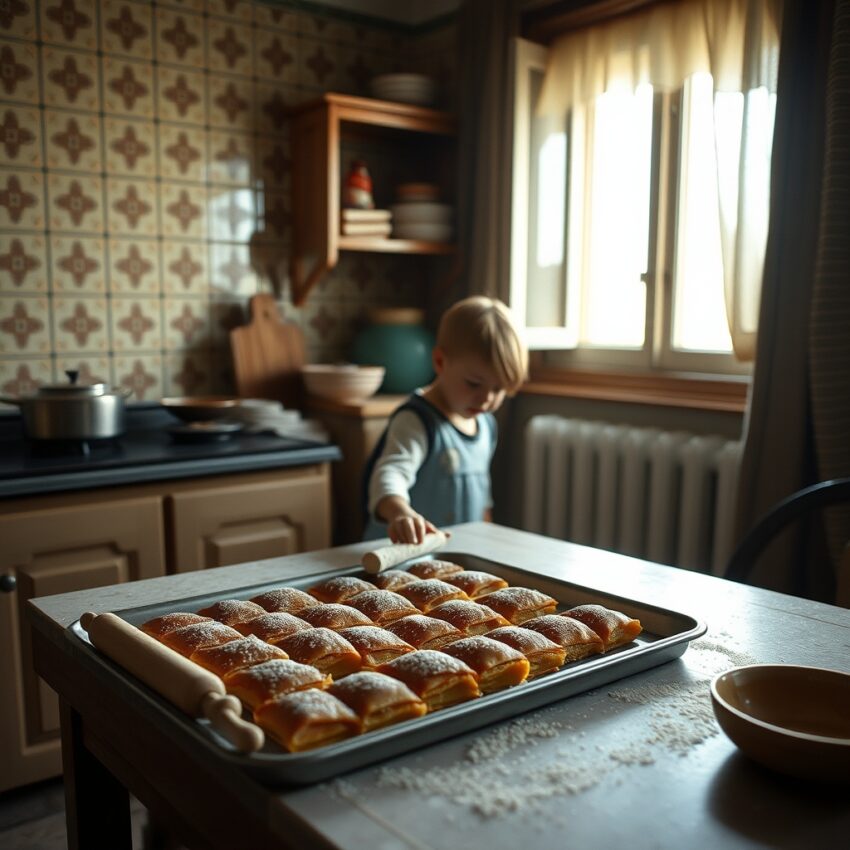
Bir zamanlar okul dönüşü eve giren çocuğu karşılayan şey yalnız kapının açılması değildi; mutfaktan yükselen tereyağı, şerbet ve ince hamur kokusunun verdiği o güven duygusuydu. Koridorda çanta yere bırakılır, ayakkabı aceleyle çıkarılır, daha “ellerini yıka” cümlesi tamamlanmadan gözler mutfak masasındaki tepsiye kayardı. Eğer o gün ev baklavası açılmışsa, evin havası bile biraz değişirdi. Tezgâha serilmiş nişasta izleri, oklavanın sessizce kenara bırakılmış hali, fırından yeni çıkmış katların hafif çıtırtısı ve şerbetin yüzeye bıraktığı parlaklık; bütün bunlar ev mutfağının karakterini tek kelime etmeden anlatırdı. Okul dönüşü tabağa ilk uzanan kaşık da aslında sadece tatlıya değil, evin cömertliğine, düzenine ve sıcaklığına uzanırdı.
Damak Hafızası içinde ev baklavasının özel bir yeri vardır; çünkü bu tatlı yalnız lezzet değil, hazırlık ve paylaşım kültürüdür. Hazır alınan bir tatlıdan farklı olarak ev baklavası zaman, emek ve dikkat ister. Hamurun inceltilmesi, bezelerin tek tek açılması, aralara yağın kararında gezdirilmesi ve şerbetin ne çok sıcak ne çok soğuk olacak biçimde ayarlanması, mutfakta oluşmuş bir bilgeliğin işaretidir. Bu bilgi çoğu zaman ölçü defterinden değil, göz kararıyla, el alışkanlığıyla ve kuşaktan kuşağa geçen sessiz öğretimle sürer. Ev baklavası bu yüzden yalnız sofraya gelen bir tatlı değildir; ailenin mutfak karakterini, yani iş yapma biçimini, özeni ve paylaşma niyetini gösteren bir aynadır.
Okul dönüşü tabağa ilk uzanan kaşık sahnesi, bu karakteri gündelik hayatın içinden görünür kılar. Çocuk için baklava çoğu zaman bayram kadar resmî olmayan ama aynı derecede sevindirici bir sürprizdir. Mutfakta bir dilimin küçük çatalla mı yoksa kaşıkla mı yenileceği bile evin alışkanlıklarına göre değişir. Kimi evde çayın demlenmesi beklenir, kimi evde “üstü sıcak, dikkat et” denir, kimi evde de en çıtır köşenin kime düşeceği üzerine tatlı bir rekabet yaşanır. Bu ayrıntılar, ev mutfağının tekdüze değil, karakter sahibi bir alan olduğunu gösterir. Bir tepsi baklava, o evin sabırla çalışan ellerini, misafir anlayışını, çocuklara ayrılan küçük sevinç payını ve mutfakta kurulan görünmez düzeni birlikte taşır.
Ev baklavasının hafızada güçlü kalmasının bir nedeni de duyusal zenginliğidir. İnce katların kırılış sesi, ceviz ya da fıstığın ağızda bıraktığı tokluk, şerbetin yapışkan ama dengeli dokusu ve mutfakta saatlerce süren hazırlığın sonunda ortaya çıkan görüntü; hepsi bir arada hatırlanır. Fakat asıl kalıcı olan, bu tatlının etrafında oluşan ev hissidir. Tepsinin üstüne örtülen ince bez, mutfak penceresinden giren ikindi ışığı, masaya bırakılan küçük tabaklar ve “komşuya da gönderelim” cümlesi, baklavayı aile içi karakterin parçasına dönüştürür. Ev mutfağı dediğimiz şey tam da budur: yalnız yemek pişirilen yer değil, paylaşımın, ölçünün ve hafif bir sevginin gündelik dile çevrildiği alan.
Bugün pek çok tatlı kolayca satın alınabiliyor, tarifler dakikalar içinde ekrandan izlenebiliyor. Yine de ev baklavası ve okul dönüşü tabağa ilk uzanan kaşık sahnesi hâlâ ayrı bir sıcaklık taşır. Çünkü burada hatırlanan sadece bir tat değildir. Hatırlanan, bir evin kendini mutfakta nasıl anlattığıdır. İnce hamur açmak için gereken sabır, en güzel dilimi çocuğun tabağına koymak için gereken şefkat ve kalan baklavayı ertesi güne dikkatle saklamak için gereken düzen; hepsi aynı karakterin parçalarıdır. Ev baklavası bu yüzden yalnız bir tarif değil, bir ev terbiyesidir. Ve bazen tek bir kaşık, bütün o terbiyeyi sessizce anlatmaya yeter.
🇬🇧 English | Homemade Baklava and the First Spoon Reaching for the Plate After School: How Does It Describe the Character of the Home Kitchen?
There was a time when what welcomed a child returning from school was not only the opening of the door, but the feeling of safety rising from the kitchen with the scent of butter, syrup, and thin pastry. A schoolbag would be dropped in the corridor, shoes removed in haste, and before the words “wash your hands” were even finished, the eyes would drift toward the tray on the kitchen table. If homemade baklava had been prepared that day, even the air of the house seemed altered. The traces of starch on the counter, the rolling pin resting quietly to the side, the faint crackle of the fresh layers from the oven, and the shine left by syrup on the surface all described the character of the home kitchen without saying a word. The first spoon reaching toward the plate after school was not reaching only toward dessert, but toward the generosity, order, and warmth of the household itself.
Within the memory of taste, homemade baklava holds a special place because it is not only flavor, but also a culture of preparation and sharing. Unlike a dessert bought ready-made, baklava prepared at home requires time, labor, and care. Rolling the dough thin, opening each piece one by one, distributing the butter in the right measure between the layers, and balancing the syrup so that it is neither too hot nor too cold all testify to a wisdom formed in the kitchen. This knowledge is rarely learned from a written recipe alone; it survives through the eye, the hand, and the silent teaching passed from one generation to the next. For that reason, homemade baklava is not merely a dessert brought to the table. It is a mirror of the kitchen’s character, showing how a family works, how it pays attention, and how it chooses to share.
The scene of the first spoon reaching the plate after school makes that character visible within the everyday. For a child, baklava is often not as formal as a holiday treat, yet just as joyful a surprise. Even whether a slice is eaten with a small fork or a spoon can vary according to household custom. In some homes tea must be ready first; in others someone warns, “The top is still hot”; in others a sweet competition begins over who will get the crispiest corner. Such details show that the home kitchen is not a uniform place, but one with temperament and voice. A tray of baklava carries together the patient hands of that house, its understanding of hospitality, the small share of delight reserved for children, and the invisible order built in the kitchen.
One reason homemade baklava remains powerful in memory is its sensory richness. The sound of the thin layers breaking, the satisfying fullness of walnut or pistachio, the sticky yet balanced touch of syrup, and the image that appears after hours of preparation are remembered together. Yet what lasts most is the feeling of home that gathers around the dessert. The thin cloth laid over the tray, the afternoon light entering through the kitchen window, the small plates set on the table, and the sentence “let’s send some to the neighbor” turn baklava into part of the household character. That is what the home kitchen truly is: not only a place where food is cooked, but a place where sharing, measure, and a quiet tenderness are translated into daily life.
Today many desserts can be bought easily, and recipes can be watched on a screen within minutes. Even so, the scene of homemade baklava and the first spoon reaching the plate after school still carries a distinct warmth. What is remembered here is not only a taste. What is remembered is the way a home described itself through its kitchen. The patience required to roll the dough thin, the affection needed to place the finest piece on a child’s plate, and the order involved in preserving the remaining slices carefully for the next day all belong to the same character. Homemade baklava is therefore not only a recipe, but a form of household upbringing. And sometimes a single spoonful is enough to tell that whole story in silence.
🇧🇷 Português (Brasil) | A Baklava Caseira e a Primeira Colher que se Estende ao Prato na Volta da Escola: Como Isso Revela o Caráter da Cozinha da Casa?
Houve um tempo em que o que recebia a criança na volta da escola não era apenas a porta se abrindo, mas a sensação de segurança que vinha da cozinha com cheiro de manteiga, calda e massa fina. A mochila era largada no corredor, os sapatos tirados com pressa e, antes mesmo de a frase “lava as mãos” terminar, os olhos já iam para a assadeira sobre a mesa. Se naquele dia havia baklava caseira, até o ar da casa parecia diferente. Os vestígios de amido sobre a bancada, o rolo de massa deixado em silêncio de lado, o leve estalar das camadas recém-saídas do forno e o brilho deixado pela calda na superfície contavam, sem dizer nada, o caráter daquela cozinha doméstica. A primeira colher que se estendia ao prato na volta da escola não buscava apenas um doce, mas a generosidade, a ordem e o calor da própria casa.
Na memória dos sabores, a baklava caseira ocupa um lugar especial porque não é apenas gosto, mas também cultura de preparo e partilha. Diferentemente de um doce comprado pronto, a baklava feita em casa pede tempo, trabalho e atenção. Abrir a massa até ficar muito fina, preparar cada porção separadamente, espalhar a manteiga na medida certa entre as camadas e acertar a calda para que não esteja nem quente demais nem fria demais são sinais de uma sabedoria nascida na cozinha. Esse conhecimento quase nunca vem só de uma receita escrita; ele continua através do olho, da mão e do ensinamento silencioso que passa de geração em geração. Por isso a baklava caseira não é apenas um doce servido à mesa. Ela é um espelho do caráter da cozinha, mostrando como a família trabalha, cuida e escolhe compartilhar.
A cena da primeira colher tocando o prato depois da escola torna esse caráter visível dentro da rotina. Para a criança, a baklava muitas vezes não tem a formalidade de um doce de festa, mas traz a mesma alegria inesperada. Até o detalhe de comer um pedaço com garfinho ou colher pode variar conforme os costumes da casa. Em algumas cozinhas é preciso esperar o chá ficar pronto; em outras alguém avisa “a parte de cima ainda está quente”; em outras começa uma disputa doce por quem ficará com o canto mais crocante. Esses detalhes mostram que a cozinha da casa não é um lugar neutro, mas um espaço com temperamento e voz próprios. Uma assadeira de baklava leva junto as mãos pacientes daquela casa, sua ideia de hospitalidade, a pequena porção de alegria reservada às crianças e a ordem invisível construída no ambiente.
Uma das razões pelas quais a baklava caseira permanece tão forte na memória está na sua riqueza sensorial. O som das camadas finas quebrando, a presença firme de nozes ou pistache, o toque pegajoso, mas equilibrado, da calda e a imagem que surge depois de horas de preparo são lembrados em conjunto. Mas o que mais dura é o sentimento de casa que se forma ao redor do doce. O pano fino colocado sobre a assadeira, a luz da tarde entrando pela janela da cozinha, os pratinhos dispostos sobre a mesa e a frase “vamos mandar um pouco para a vizinha” transformam a baklava em parte do caráter familiar. É isso que a cozinha doméstica é de verdade: não apenas um lugar onde se cozinha, mas um lugar onde partilha, medida e uma ternura discreta se convertem em linguagem cotidiana.
Hoje muitos doces podem ser comprados facilmente, e receitas aparecem na tela em poucos minutos. Ainda assim, a cena da baklava caseira e da primeira colher que alcança o prato na volta da escola continua carregando um calor muito próprio. O que se recorda aí não é apenas um sabor. O que volta é a maneira como uma casa se explicava por meio da cozinha. A paciência necessária para abrir a massa fina, o carinho de colocar o melhor pedaço no prato da criança e a organização de guardar o restante com cuidado para o dia seguinte pertencem ao mesmo caráter. Por isso a baklava caseira não é apenas uma receita, mas uma educação doméstica. E às vezes uma única colher já basta para contar toda essa história em silêncio.