🇹🇷 Türkçe | mahalle maçlarının tartışmalı golleri kış gecelerinde: çocuk hafızasında neden hiç silinmedi
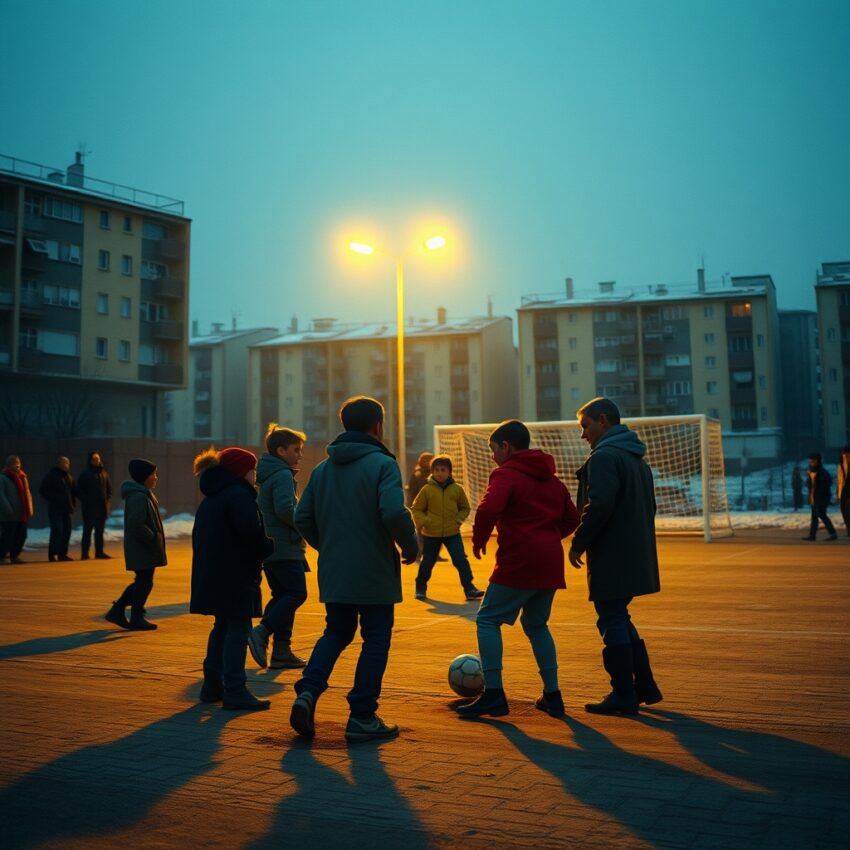
Bir zamanlar kış geceleri erkenden iner, sokak lambalarının sarı ışığı apartman aralarına ve boş arsalara ince bir sis gibi yayılırdı. Gün boyu oynanan mahalle maçının tozu toprağı henüz çocukların ayakkabısının kenarındayken, tartışmalı bir golün hikâyesi akşamın asıl oyunu haline gelirdi. Kimi topun çizgiyi geçtiğini söyler, kimi duvara çarpıp geri döndüğünü, kimi de kalecinin eliyle birlikte direğe değdiğini iddia ederdi. O gol artık sadece bir pozisyon olmaktan çıkar; soba başında, apartman girişinde, bakkal önünde ve ertesi gün okul yolunda tekrar tekrar anlatılan ortak bir hafıza sahnesine dönüşürdü. Çocuk hafızasında hiç silinmemesinin nedeni de tam burada gizlidir: o an, oyunun kendisinden daha büyük bir paylaşım ve aidiyet duygusu üretirdi.
Mahalle Kültürü içinde bu tartışmalı goller, çocukların yalnız futbol oynamadığını; aynı zamanda söz söylemeyi, ikna etmeyi, itiraz etmeyi ve ortak bir hikâye kurmayı öğrendiğini gösterir. Mahalle maçlarında çoğu zaman gerçek kale çizgisi yoktu, hakem yoktu, forma yoktu. Taşlardan kale yapılır, duvar köşe sayılır, bazen kaldırım çizgisi sınır kabul edilirdi. Kurallar oyundan önce tam olarak belirlenmez, çoğu zaman oyun sırasında pazarlıkla şekillenirdi. Bu yüzden bir golün geçerli olup olmadığı meselesi, sadece skorla ilgili değildi; adalet duygusuyla, arkadaşlık ilişkileriyle ve mahallenin sözlü hukukuyla ilgiliydi. Çocuklar kendi aralarında bir dünya kuruyor ve o dünyanın hakkaniyetini yine kendi cümleleriyle savunuyordu.
Kış gecelerinin bu anıları özel kılmasının bir nedeni de mekânın ve mevsimin kattığı duygudur. Hava kararmış, anneler pencerelerden seslenmiş, eller üşümüş ama maçın etkisi henüz dağılmamıştır. Eve dönülse bile oyun zihinlerde sürer. Kimi çocuğun montu hâlâ ter kokar, kimi dizinde düşmenin izi vardır, ama aklı o son pozisyondadır. Yemek masasında abiye anlatılır, komşu çocuğuyla merdiven boşluğunda yeniden tartışılır, ertesi sabah okul bahçesinde sanki radyo programı yapar gibi tekrar canlandırılır. Tartışmalı gol, böylece tek bir an olmaktan çıkıp mahallenin devam eden anlatısına dönüşür. Her anlatımda biraz değişir, ama tam da bu yüzden daha kalıcı olur.
Bu gollerin hafızadan silinmemesi, çocuklukta adalet ve drama duygusunun ne kadar canlı yaşandığını da gösterir. Büyük stadyumlarda yaşanan tartışmalar uzaktan izlenen şeylerdi; ama mahalle maçındaki gol, insanın kendi nefesiyle, kendi koşusuyla, kendi düşüşüyle içindeydi. O yüzden daha gerçekti. Bazen bir takım haftalarca “o gol aslında değildi” diye söylenir, bazen rövanş havası bir sonraki maça taşınırdı. Araya kırgınlık da girerdi, kahkaha da. Fakat bütün bunlar çocuklara birlikte yaşamanın, rekabet etmenin ve yeniden barışmanın yollarını öğretirdi. Tartışmalı gol, sonucu belirsiz bir oyun anından çok, sosyal hayatın küçük provasıydı.
Bugün dijital oyunların, kayıtlı görüntülerin ve net kuralların dünyasında o eski mahalle maçları daha da kıymetli görünüyor. Çünkü çocuk hafızasında kalan sadece futbol değil; kendi sözleriyle kurdukları adalet duygusu, birlikte ürettikleri efsane ve kış gecelerinin ortak heyecanıdır. Bir golün çizgiyi geçip geçmediğini artık kimse kesin olarak kanıtlayamaz. Ama zaten onu unutulmaz yapan da budur. Mahalle maçlarının tartışmalı golleri, çocukluğun eksik ama canlı dünyasını taşır. Belirsizlikten doğan hikâye, arkadaşlık kadar güçlü bir hatıra bırakır. Ve bazı geceler, bir maçın skoru unutulsa bile o tek golün tartışması bütün mahalleyi hâlâ aydınlatmaya devam eder.
🇬🇧 English | The Contested Goals of Neighborhood Matches on Winter Nights: Why Were They Never Erased from Childhood Memory?
There was a time when winter evenings fell early, and the yellow light of street lamps spread like a fine mist through apartment alleys and empty lots. While the dust of the day’s neighborhood match still clung to the edges of children’s shoes, the story of one disputed goal became the real game of the evening. One child said the ball had crossed the line, another insisted it had bounced back from the wall, and another swore it had touched the post together with the goalkeeper’s hand. That goal stopped being a mere position in play and turned into a shared memory scene, retold beside the stove, at building entrances, in front of the grocer, and on the school road the next day. The reason it was never erased from childhood memory lies precisely there: that moment produced a feeling of sharing and belonging larger than the game itself.
Within neighborhood culture, these disputed goals reveal that children were not only playing football; they were also learning how to argue, persuade, object, and build a common narrative. In neighborhood matches there was often no real goal line, no referee, and no proper uniform. Stones became goalposts, a wall corner counted as the line, and sometimes the edge of the pavement served as a boundary. Rules were not always fully set before the match; they were often shaped through negotiation during play. For that reason, the question of whether a goal counted was never only about the score. It concerned a sense of justice, relations of friendship, and the spoken law of the neighborhood. Children were building a world of their own and defending the fairness of that world with their own voices.
What makes these memories of winter nights special is also the feeling added by season and setting. Darkness had already fallen, mothers had called from windows, hands had turned cold, yet the effect of the game had not dissolved. Even after returning home, the match continued in the mind. One child’s coat still carried the smell of sweat, another had the mark of a fall on the knee, but each remained fixed on that final moment. It was retold at dinner to an older brother, debated again with a neighbor in the stairwell, and reenacted in the schoolyard the next morning almost like a live radio broadcast. In this way, the disputed goal ceased to be a single instant and became part of the ongoing narrative of the neighborhood. It changed slightly with every retelling, and for that very reason it lasted.
The reason such goals never vanished from memory also lies in how vividly childhood experienced justice and drama. The controversies of large stadiums belonged to the distant world of spectators, but the goal in the neighborhood match existed inside one’s own breath, run, and fall. That made it more real. Sometimes one team would complain for weeks that the goal had never really counted; sometimes the desire for a rematch carried into the next game. Hurt feelings entered, laughter entered too. Yet all of this taught children how to live together, compete, and reconcile. The disputed goal was more than an uncertain moment of play. It was a small rehearsal for social life.
Today, in a world of digital games, recorded footage, and clear rules, those old neighborhood matches seem even more precious. What remains in childhood memory is not only football, but a sense of justice formed through their own words, a legend they created together, and the communal thrill of winter nights. No one can now prove for certain whether the ball crossed the line or not. But that uncertainty is exactly what made it unforgettable. The contested goals of neighborhood matches carry the incomplete yet vivid world of childhood. A story born from ambiguity leaves behind a memory as powerful as friendship itself. And some nights, even when the final score is forgotten, the argument over that one goal continues to light the whole neighborhood.
🇧🇷 Português (Brasil) | Os Gols Polêmicos das Peladas do Bairro nas Noites de Inverno: Por Que Nunca se Apagaram da Memória da Infância?
Houve um tempo em que as noites de inverno chegavam cedo, e a luz amarela dos postes se espalhava entre os prédios e os terrenos vazios como uma névoa fina. Enquanto a poeira da pelada do dia ainda permanecia nas bordas dos sapatos das crianças, a história de um gol polêmico se transformava no verdadeiro jogo da noite. Um dizia que a bola tinha entrado, outro jurava que batera no muro e voltara, outro insistia que ela tocara a trave junto com a mão do goleiro. Esse gol deixava de ser apenas um lance e se tornava uma cena de memória coletiva, repetida perto do fogão, na entrada do prédio, em frente à venda e no caminho da escola no dia seguinte. A razão de nunca ter se apagado da memória infantil está exatamente aí: aquele instante produzia um sentimento de partilha e pertencimento maior do que a própria partida.
Dentro da cultura de bairro, esses gols polêmicos mostram que as crianças não estavam apenas jogando futebol; estavam aprendendo a argumentar, convencer, contestar e construir uma narrativa comum. Nas peladas do bairro quase nunca havia linha real de gol, juiz ou uniforme. Pedras viravam traves, a quina do muro servia de referência e, às vezes, a beirada da calçada era a linha. As regras nem sempre eram totalmente definidas antes do jogo; muitas vezes surgiam no meio da partida, em negociação. Por isso, decidir se o gol valia ou não nunca era apenas questão de placar. Era questão de justiça, de amizade e da lei falada da vizinhança. As crianças criavam um mundo próprio e defendiam a justiça desse mundo com a própria voz.
O que torna especiais essas lembranças das noites de inverno é também o sentimento trazido pela estação e pelo cenário. A escuridão já tinha descido, as mães chamavam pelas janelas, as mãos estavam frias, mas o efeito do jogo ainda não tinha passado. Mesmo de volta para casa, a partida continuava dentro da cabeça. O casaco de um menino ainda cheirava a suor, outro levava no joelho a marca de um tombo, mas todos continuavam presos àquele lance final. Ele era recontado à mesa do jantar para o irmão mais velho, discutido de novo no vão da escada com o vizinho e encenado na manhã seguinte no pátio da escola como se fosse uma transmissão ao vivo pelo rádio. Assim, o gol polêmico deixava de ser um instante isolado e virava parte da narrativa contínua do bairro. Mudava um pouco a cada nova versão e, justamente por isso, durava mais.
O motivo de esses gols não saírem da memória também está na intensidade com que a infância vive a justiça e o drama. As polêmicas dos grandes estádios pertenciam ao mundo distante de quem assistia. Já o gol da pelada existia dentro do próprio fôlego, da própria corrida e da própria queda. Por isso era mais real. Às vezes um time reclamava durante semanas que aquele gol nunca deveria ter valido; às vezes a vontade de revanche era levada para a partida seguinte. Entravam mágoas, mas também risadas. E tudo isso ensinava as crianças a conviver, competir e fazer as pazes. O gol discutido era mais do que um momento incerto do jogo. Era um pequeno ensaio da vida social.
Hoje, num mundo de jogos digitais, imagens gravadas e regras nítidas, aquelas antigas partidas de bairro parecem ainda mais preciosas. O que ficou na memória da infância não foi só o futebol, mas a ideia de justiça criada com as próprias palavras, a lenda construída em conjunto e a emoção compartilhada das noites de inverno. Ninguém consegue provar agora, com certeza, se a bola entrou ou não. Mas é justamente isso que a torna inesquecível. Os gols polêmicos das peladas do bairro carregam o mundo incompleto, mas vivo, da infância. Uma história nascida da incerteza deixa uma lembrança tão forte quanto a amizade. E há noites em que, mesmo quando o placar final já se perdeu, a discussão sobre aquele único gol continua iluminando o bairro inteiro.