🇹🇷 Türkçe | yufka açılan avlu sabahı günleri: bugünün sitelerinde neden aynı sıcaklık bulunmuyor
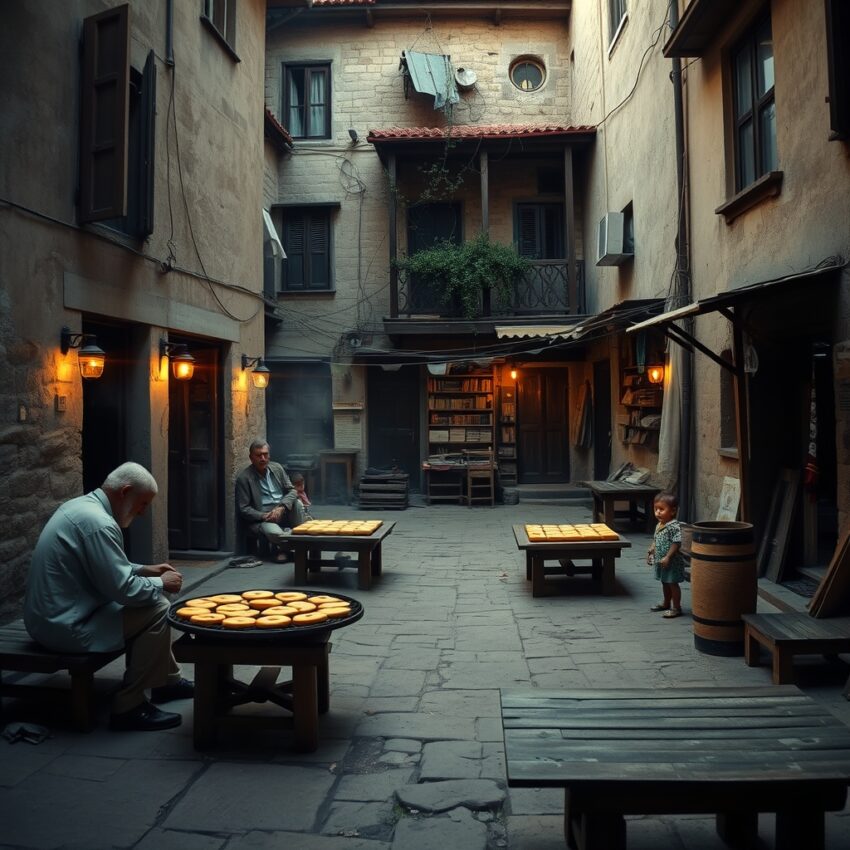
Bir zamanlar bazı mahallelerde sabah, mutfakta değil avluda başlardı. Daha güneş duvarın üstünden tam yükselmeden kapılar aralanır, tahta sofralar dışarı çıkarılır, bezler serilir, oklavalar yan yana dizilirdi. Yufka açılan sabahlarda mahalle sadece uyanmaz, birlikte çalışmanın ritmine girerdi. Bir evden un gelir, öbür evden saç ayağı, bir başkasından ayran ya da taze demlenmiş çay çıkar, avlunun ortasında görünmez ama güçlü bir düzen kurulurdu. Hamurun yuvarlanırken çıkardığı ses, sacın üstünde kabaran yufkanın kokusu, çocukların kenarda oyalanışı ve kadınların birbirine yetişen cümleleri, o sabahı sıradan bir hazırlıktan çıkarırdı. Isı yalnız ateşten gelmezdi; birlikte olmanın verdiği rahatlıktan da doğardı.
Mahalle Kültürü açısından bu avlu sabahları, komşuluğun en somut biçimlerinden birini gösterirdi. Eski şehir hayatında komşuluk yalnız selam vermek ya da kapı önünde iki söz etmek değildi; emek paylaşmak, zamanı ortaklaştırmak ve ev işini sosyal bir alana dönüştürmekti. Yufka açmak bunun en güzel örneklerinden biriydi çünkü tek kişinin yapabileceği bir iş olsa da birlikte yapıldığında anlamı büyürdü. Biri hamuru beze yapar, biri açar, biri pişirir, biri üstünü örter, biri de çocuklara sıcak parçalar uzatırdı. Böylece iş bölümü sadece pratiklik sağlamaz, insanlar arasında güven duygusunu da beslerdi. Avlu, mutfaktan taşan emeğin komşulukla birleştiği yerdir.
Bu sıcaklığın bugünün sitelerinde eksik hissedilmesinin nedeni biraz mekânın, biraz da ritmin değişmesidir. Sitelerde güvenlikli kapılar, asansörler, kapalı daire düzeni ve hızla akan bireysel hayat, eski avlu kültürünün kurduğu kendiliğinden yakınlığı zorlaştırıyor. İnsanlar hâlâ iyi komşu olabilir ama ortak iş etrafında toplanma imkânı daha sınırlı. Yufka açılan sabahlarda ise emek görünürdü; un ele yapışır, saçın başında ter birikir, biri öbürünün hareketini beklerdi. O ortak tempo, bir arada yaşamanın sadece mekânsal değil duygusal olduğunu hissettirirdi. Bugünün sitelerinde sıcaklığın eksik bulunması biraz da bu görünür emeğin ve tekrar eden küçük ritüellerin azalmasından kaynaklanıyor.
Eski avluların hafızada güçlü kalmasının bir başka nedeni, çocukların da bu düzenin doğal parçası olmasıdır. Onlar kenarda oynarken büyüklerin konuşmalarını duyar, hangi komşunun ne getirdiğini bilir, sıcak yufkanın ilk parçasını bekler, bazen de su taşımak ya da örtü toplamak gibi küçük görevler alırdı. Böylece komşuluk sadece yetişkinler arasında kurulan bir ilişki olarak kalmaz, kuşaktan kuşağa geçen bir öğrenme hâline gelirdi. Avludaki sohbetlerde mevsim konuşulur, düğün haberi paylaşılır, hasta ziyareti planlanır, eski tarifler hatırlanırdı. Yufka sabahı, karın doyurmanın ötesinde mahallenin kendini yeniden tanıdığı bir andı.
Belki de bugün aynı sıcaklığın bulunmadığı söylenirken asıl özlenen şey, fiziksel avludan çok o ortak ritimdir. Çünkü sıcaklık bazen taş duvarda ya da geniş bahçede değil, birlikte yapılan işin içinde oluşur. Yufka açılan avlu sabahlarında insanlar birbirinin yalnız yüzünü değil, emeğini de tanırdı. Kimin eli hızlıdır, kim hamuru iyi dinlendirir, kim çayı tam zamanında getirir, kim çocukları oyalarken işi aksatmaz; bütün bunlar mahalle kültürünün görünmez saygı haritasını çizerdi. Bugünün sitelerinde eksik hissedilen şey de budur: aynı binada yaşayıp birbirinin gündelik kıymetini daha az görebilmek. Eski avluların sıcaklığı bu yüzden hâlâ unutulmuyor; çünkü orada ekmek kadar ilişki de birlikte açılırdı.
🇬🇧 English | The Days of Courtyard Mornings When Yufka Was Rolled Out: Why Is the Same Warmth Not Found in Today’s Housing Complexes?
There was a time when, in certain neighborhoods, morning began not in the kitchen but in the courtyard. Before the sun had fully risen above the wall, doors would open, low wooden tables would be carried outside, cloths would be spread, and rolling pins laid side by side. On mornings when yufka was rolled out, the neighborhood did not merely wake up; it entered the rhythm of working together. Flour came from one house, the griddle stand from another, ayran or freshly brewed tea from a third, and in the middle of the courtyard an invisible yet strong order formed. The sound of dough being rolled, the smell of flatbread swelling on the hot iron, children lingering at the edges, and the overlapping sentences of women turned the morning into something more than preparation. The warmth did not come only from the fire. It also rose from the ease of being together.
Seen through the lens of neighborhood culture, these courtyard mornings showed one of the clearest forms of neighborliness. In old urban life, being neighbors did not mean only exchanging greetings or trading a few words at the door. It meant sharing labor, making time collective, and turning domestic work into a social space. Rolling out yufka was one of the finest examples of this, because even though it could be done by one person, its meaning grew when done together. One woman divided the dough, another rolled it, another baked it, another wrapped the finished bread, and another handed warm pieces to the children. In that way, the division of labor did more than make the work easier. It nourished trust between people. The courtyard was where labor spilling out of the kitchen joined itself to neighborhood life.
Part of the reason this warmth feels absent in today’s housing complexes lies in the change of both space and rhythm. Gated entrances, elevators, closed apartment layouts, and fast individual routines make it harder for the old courtyard culture to create its spontaneous closeness. People may still be good neighbors, yet the chance to gather around shared work is more limited. On mornings of yufka-making, labor was visible. Flour clung to hands, sweat gathered beside the iron griddle, and one person waited for the movement of another. That shared tempo made it possible to feel that living together was not only spatial, but emotional. The warmth that seems missing in modern complexes has much to do with the fading of visible labor and of the small repeated rituals that once tied people to one another.
Another reason old courtyards remain strong in memory is that children formed a natural part of that order. While playing at the edge, they overheard the elders’ conversations, knew which neighbor had brought what, waited for the first hot piece of bread, and sometimes took on small duties such as carrying water or gathering cloths. In this way, neighborliness did not remain a bond existing only among adults; it became something learned across generations. In courtyard conversations people spoke of the season, shared wedding news, planned visits to the sick, and remembered old recipes. A yufka morning was more than feeding the household. It was one of the moments when the neighborhood recognized itself again.
Perhaps when people say the same warmth cannot be found today, what they truly miss is less the physical courtyard than the shared rhythm it held. Warmth is sometimes created not by stone walls or broad gardens, but inside the work done together. On courtyard mornings of yufka-making, people came to know not only one another’s faces, but also one another’s labor. Who moved quickly, who rested the dough well, who brought the tea at the right moment, who kept the children occupied without slowing the work, all this drew the invisible map of respect within neighborhood culture. What feels missing in today’s complexes is precisely that: living in the same building while seeing less of one another’s everyday worth. The warmth of old courtyards remains unforgettable for this reason, because there, relationships were rolled out together as surely as bread.
🇧🇷 Português (Brasil) | Os Dias das Manhãs de Pátio em que a Yufka Era Aberta: Por Que o Mesmo Calor Não se Encontra nos Condomínios de Hoje?
Houve um tempo em que, em certos bairros, a manhã começava não na cozinha, mas no pátio. Antes que o sol passasse por completo sobre o muro, as portas se abriam, as mesas baixas eram levadas para fora, os panos eram estendidos e os rolos colocados lado a lado. Nas manhãs em que a yufka era aberta, o bairro não apenas despertava; ele entrava no ritmo do trabalho em conjunto. De uma casa vinha a farinha, de outra o suporte do sac, de outra ainda o ayran ou o chá recém-passado, e no meio do pátio se formava uma ordem invisível, porém forte. O som da massa sendo aberta, o cheiro do pão inflando sobre a chapa quente, as crianças demorando pelos cantos e as frases das mulheres se cruzando faziam daquela manhã algo maior do que um simples preparo. O calor não vinha só do fogo. Também nascia da tranquilidade de estar junto.
Dentro da cultura de vizinhança, essas manhãs de pátio mostravam uma das formas mais concretas de convívio. Na antiga vida urbana, ser vizinho não significava apenas trocar cumprimentos ou conversar um pouco na porta. Significava partilhar trabalho, tornar o tempo comum e levar as tarefas da casa para um espaço social. Abrir yufka era um dos melhores exemplos disso, porque, embora pudesse ser feito por uma pessoa, ganhava outro sentido quando acontecia em grupo. Uma pessoa dividia a massa, outra abria, outra assava, outra cobria os pães prontos, e outra distribuía pedaços quentes às crianças. Assim, a divisão de tarefas não servia apenas para facilitar o trabalho. Ela alimentava a confiança entre as pessoas. O pátio era o lugar em que o esforço que saía da cozinha se unia à vida do bairro.
A razão de esse calor parecer ausente nos condomínios de hoje está, em parte, na mudança do espaço e, em parte, na mudança do ritmo. Portões controlados, elevadores, apartamentos fechados e rotinas individuais aceleradas dificultam a proximidade espontânea criada pela antiga cultura do pátio. As pessoas ainda podem ser boas vizinhas, mas a possibilidade de se reunir em torno de um trabalho comum é menor. Nas manhãs de abrir yufka, o esforço era visível. A farinha grudava nas mãos, o suor se juntava perto da chapa, e uma pessoa esperava o gesto da outra. Esse compasso partilhado fazia sentir que viver junto era algo não apenas espacial, mas afetivo. O calor que parece faltar hoje tem muito a ver com a diminuição desse trabalho visível e desses pequenos rituais repetidos que antes ligavam as pessoas umas às outras.
Outra razão para os antigos pátios permanecerem tão fortes na memória é que as crianças também faziam parte natural dessa ordem. Enquanto brincavam nos cantos, ouviam as conversas dos mais velhos, sabiam qual vizinha tinha trazido o quê, esperavam o primeiro pedaço quente de pão e às vezes assumiam pequenas tarefas, como levar água ou recolher os panos. Assim, a vizinhança não ficava restrita aos adultos; tornava-se algo aprendido de geração em geração. Nas conversas do pátio falava-se da estação, compartilhavam-se notícias de casamento, planejavam-se visitas a doentes e lembravam-se receitas antigas. A manhã da yufka era mais do que alimentar a casa. Era um dos momentos em que o bairro voltava a se reconhecer.
Talvez, quando se diz que esse mesmo calor não existe mais, o que se esteja sentindo falta não seja exatamente do pátio físico, mas do ritmo compartilhado que ele criava. O calor às vezes nasce não do muro de pedra ou do quintal amplo, mas do trabalho feito em comum. Nas manhãs de pátio em que se abria yufka, as pessoas conheciam não apenas o rosto umas das outras, mas também o valor do esforço cotidiano de cada uma. Quem era rápida, quem deixava a massa descansar no ponto certo, quem trazia o chá na hora exata, quem distraía as crianças sem atrapalhar o trabalho; tudo isso desenhava o mapa invisível do respeito na cultura do bairro. O que falta nos condomínios de hoje é justamente isso: morar no mesmo prédio e enxergar menos o valor diário de quem vive ao lado. O calor dos antigos pátios continua inesquecível por esse motivo, porque ali as relações eram abertas em conjunto, como o próprio pão.