🇹🇷 Türkçe | mineli tabak ve taşınmalar boyunca eve eşlik eden hatırası: nostalji meraklılarının gözünde neden hemen parlıyor
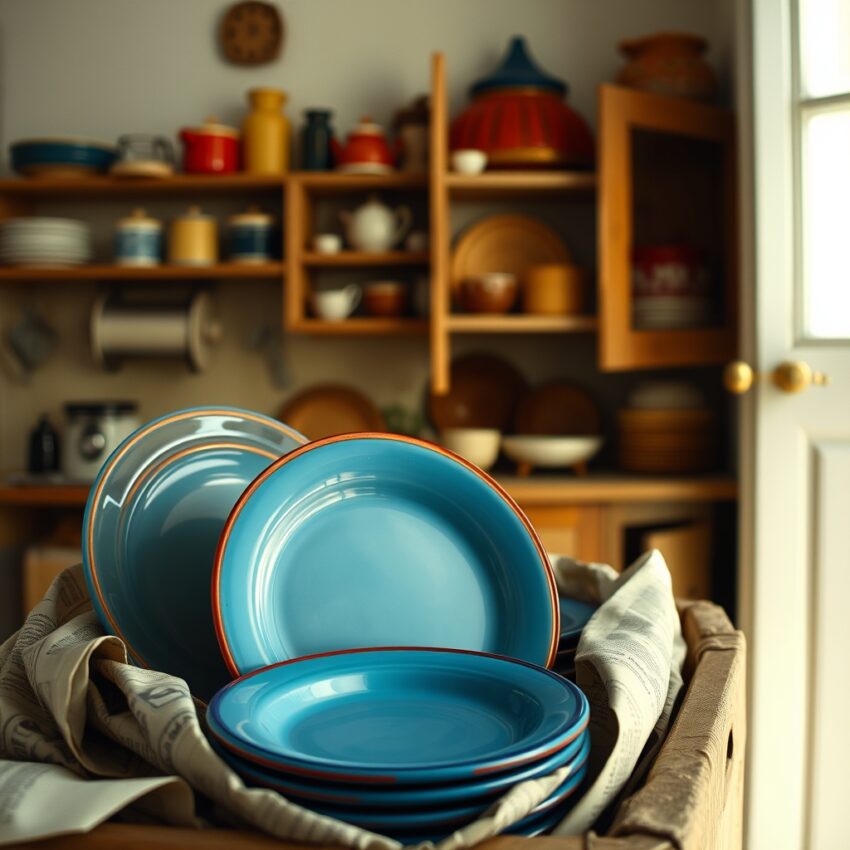
Bir zamanlar mutfaklarda ya da açık rafların üstünde duran mineli tabaklar, evin en gösterişli eşyaları arasında sayılmazdı. Kenarında ince bir çizik, yüzeyinde hafif bir matlık, bazen de yılların bıraktığı küçük bir renk solması olurdu. Ama tam da bu kusurlar, onları eve ait kılan şeydi. Bir tabak, yalnız sofrada kullanılan bir nesne değil; sabah kahvaltısının, aceleyle yenmiş öğle yemeğinin, misafir için kesilmiş meyvenin ve çocuk eline tutuşturulmuş ekmeğin sessiz tanığıydı. Taşınma günlerinde gazeteye sarılan tabakların arasında mineli olanlar ayrı bir dikkatle tutulurdu. Çünkü onlar kırılmasından korkulan pahalı parçalar değil, kaybolursa evi biraz eksiltecek kadar tanıdık eşyalardı.
Obje Hikayeleri açısından mineli tabak, tasarımıyla olduğu kadar kullanım biçimiyle de belleğe yerleşen bir nesnedir. Emayenin pratikliği, dayanıklılığı ve gündelik hayata karışan yalın estetiği, onu uzun yıllar boyunca birçok evin vazgeçilmez parçası yapmıştı. Beyaz zemin üstüne mavi ya da kırmızı bir çerçeve, sade çiçek desenleri ya da çizgili kenarlar, evin genel düzeni içinde sessiz ama güçlü bir karakter kurardı. Nostalji meraklılarının gözünde bu tabakların hemen parlamasının nedeni biraz da budur. Çünkü onlar müzede duracak kadar uzak değil, elde tutulacak kadar yakın eşyalardır. Eski bir eşyanın yalnız biçimini değil, nasıl kullanıldığını da hatırlatan nadir nesnelerden biri oldukları için bakar bakmaz bir mutfak sesi, bir sandalye gıcırtısı ya da yıkanmış tabakların kokusu geri gelir.
Taşınmalar boyunca eve eşlik eden hatıra ise bu parıltının en derin tarafını oluşturur. Bir aile başka mahalleye, başka şehre ya da daha küçük bir eve geçerken birçok eşya değişebilir; perdeler yenilenir, dolaplar elden çıkar, bazı sandalyeler geride kalır. Ama mineli tabak çoğu zaman kolilerin içinde yeniden yer bulur. Çünkü taşınan şey sadece mutfak takımı değildir; gündelik hayatın sürekliliğidir. Yeni eve ilk yerleşildiğinde o tabakta peynir ekmek yenir, çocuklara hızlıca bir şey hazırlanır, mutfak daha tam kurulmadan hayatın başladığı hissi gelir. Böylece tabak, eşyadan çok alışkanlığın kabına dönüşür. Hatırası da tek bir ana değil, yıllar boyunca tekrar eden küçük sahnelere bağlı olduğu için daha dirençli kalır.
Bu nesnenin bugün nostalji meraklılarının gözünde hemen parlaması biraz da yapay olmayan sadeliğinden kaynaklanır. Mineli tabak gösterişsizdir ama kişiliksiz değildir. Elde hafif bir serinlik bırakır, metal kenarıyla sağlamlık hissi verir, yüzeyindeki küçük yıpranma bile yaşanmışlığı görünür kılar. Günümüzün kusursuz görünümlü ama hızlı tüketilen mutfak ürünleri yanında, mineli tabak insanı doğrudan kullanımın eski ahlakına götürür: eşyaya özen göstermek, onu uzun yıllar tutmak, çizildikçe yabancılaşmak yerine daha çok benimsemek. Bu yüzden bir antikacı rafında, eski ev fotoğrafında ya da taşınma kolisinden çıkan unutulmuş bir pakette görüldüğünde, ilk bakışta sıcak bir ışık gibi belirir.
Aslında parlayan şey yalnız tabak değildir; onun taşıdığı ev sürekliliğidir. Bir nesnenin birden fazla adrese, birden fazla mutfağa, birden fazla sofraya tanıklık etmiş olması, ona aile içi bir derinlik kazandırır. Mineli tabak bu yüzden nostaljik bir obje olmanın ötesine geçer. O, taşınmalar arasında kaybolmayan düzenin, aynı kalan küçük alışkanlıkların ve ev duygusunun maddi karşılıklarından biridir. Nostalji meraklıları onu gördüğünde sadece eski bir tasarım beğenmez; evin bir yerden başka yere taşınırken bile nasıl kendini koruduğunu hisseder. Onu hemen parlatan da tam olarak budur.
🇬🇧 English | The Enamel Plate and the Memory That Accompanied the Home Through Moves: Why Does It Immediately Shine in the Eyes of Nostalgia Enthusiasts?
There was a time when enamel plates standing in kitchens or on open shelves were not counted among the most showy objects in the house. They might carry a fine scratch along the edge, a soft dullness on the surface, or a small fading of color left by the years. Yet those very imperfections were what made them belong to the home. A plate was never only an object used at the table. It was the quiet witness of breakfast, a hurried lunch, fruit sliced for a guest, and bread placed in a child’s hand. On moving days, when plates were wrapped in newspaper, the enamel ones were handled with a particular kind of care. They were not the costly pieces people feared would break, but the familiar ones whose loss would make the house feel slightly incomplete.
Seen through the lens of object stories, the enamel plate settles in memory as much through the way it was used as through its design. The practicality of enamel, its durability, and its plain aesthetic mixed with daily life made it an indispensable part of many homes for years. A white surface bordered in blue or red, a few modest flowers, or a lined rim created a quiet but strong character within the order of the house. Part of the reason these plates shine so quickly in the eyes of nostalgia enthusiasts lies here. They are not objects distant enough to belong only in a museum; they are close enough to be held in the hand. Because they are among the rare old things that recall not only form, but habit, the sight of them immediately brings back the sound of a kitchen, the creak of a chair, or the smell of freshly washed dishes.
The memory of accompanying the home through moves forms the deepest layer of that shine. When a family moves to another neighborhood, another city, or a smaller apartment, many objects can change. Curtains are replaced, cupboards are left behind, and some chairs disappear along the way. Yet the enamel plate often finds its place again inside the boxes. What travels is not simply kitchenware, but the continuity of ordinary life. In the new house, before everything is fully arranged, cheese and bread are eaten from that plate, something quick is prepared for the children, and life feels as though it has started again. In that way, the plate becomes less a possession than a vessel of habit. Its memory remains strong because it is tied not to a single grand moment, but to small scenes repeated over many years.
Part of the reason it shines so quickly today in the eyes of nostalgia enthusiasts comes from its unaffected simplicity. The enamel plate is unpretentious, yet never characterless. It leaves a slight coolness in the hand, gives a sense of firmness through its metal rim, and makes lived time visible even through small traces of wear. Next to today’s perfect-looking but quickly consumed kitchen products, the enamel plate leads the mind directly to an older ethic of use: caring for things, keeping them for years, and growing more attached rather than more distant as they gathered marks. That is why, when it appears on an antique shelf, in an old home photograph, or in a forgotten package opened after a move, it rises at once like a warm light.
In truth, what shines is not only the plate itself, but the continuity of home carried within it. The fact that an object has witnessed more than one address, more than one kitchen, and more than one table gives it a depth within family life. For that reason, the enamel plate becomes more than a nostalgic object. It is one of the material forms of order that does not disappear between moves, of habits that remain the same, and of the feeling of home itself. When nostalgia enthusiasts see it, they do not simply admire an old design. They sense how a home could preserve itself even while being carried from one place to another. That is precisely what makes it shine so quickly.
🇧🇷 Português (Brasil) | O Prato Esmaltado e a Lembrança que Acompanhou a Casa ao Longo das Mudanças: Por Que Ele Brilha Imediatamente aos Olhos dos Apaixonados por Nostalgia?
Houve um tempo em que os pratos esmaltados sobre as prateleiras abertas ou nas cozinhas não eram considerados os objetos mais vistosos da casa. Podiam ter um risco fino na borda, um leve opaco na superfície ou até uma pequena perda de cor deixada pelos anos. Mas eram justamente essas imperfeições que os tornavam caseiros. Um prato nunca era apenas um utensílio da mesa. Era a testemunha silenciosa do café da manhã, do almoço apressado, da fruta cortada para a visita e do pão colocado na mão de uma criança. Nos dias de mudança, quando os pratos eram embrulhados em jornal, os esmaltados eram segurados com um tipo especial de cuidado. Não eram as peças caras de que se tem medo de perder, mas aquelas tão familiares que, se desaparecessem, fariam a casa ficar um pouco menor.
Dentro das histórias dos objetos, o prato esmaltado se fixa na memória tanto pelo desenho quanto pelo modo de uso. A praticidade do esmalte, sua resistência e sua estética simples misturada à vida cotidiana fizeram dele parte indispensável de muitas casas durante anos. Um fundo branco com borda azul ou vermelha, desenhos florais discretos ou um aro listrado criavam um caráter silencioso, porém forte, dentro da ordem doméstica. Parte da razão de esses pratos brilharem tão rápido aos olhos dos apaixonados por nostalgia está aí. Eles não são objetos distantes a ponto de pertencer apenas a um museu; estão perto o bastante para caber na mão. Como estão entre as raras peças antigas que fazem lembrar não apenas a forma, mas o hábito, basta vê-los para que retornem o som da cozinha, o ranger da cadeira ou o cheiro de louça recém-lavada.
A lembrança de acompanhar a casa ao longo das mudanças forma a camada mais profunda desse brilho. Quando uma família se muda para outro bairro, outra cidade ou um apartamento menor, muitos objetos podem mudar. Cortinas são trocadas, armários ficam para trás e algumas cadeiras se perdem no caminho. Mas o prato esmaltado quase sempre encontra lugar de novo dentro das caixas. O que viaja não é apenas um item de cozinha, e sim a continuidade da vida comum. Na casa nova, antes de tudo estar arrumado, come-se pão com queijo nesse prato, prepara-se algo rápido para as crianças e nasce a sensação de que a vida já recomeçou. Assim, o prato deixa de ser simples objeto e se transforma em recipiente do costume. Sua memória resiste porque está ligada não a um único grande acontecimento, mas a pequenas cenas repetidas ao longo de muitos anos.
O fato de brilhar tão depressa hoje aos olhos de quem gosta de nostalgia também vem de sua simplicidade sem artifício. O prato esmaltado é discreto, mas nunca sem personalidade. Deixa uma leve frieza na mão, transmite firmeza pela borda metálica e torna o tempo vivido visível até nas pequenas marcas de uso. Ao lado dos produtos de cozinha atuais, perfeitos na aparência e consumidos com rapidez, o prato esmaltado conduz diretamente a uma antiga ética de uso: cuidar dos objetos, mantê-los por muitos anos e apegar-se mais a eles conforme ganham marcas. Por isso, quando aparece numa prateleira de antiquário, numa fotografia antiga da casa ou num pacote esquecido aberto depois de uma mudança, ele surge de imediato como uma luz morna.
Na verdade, o que brilha não é só o prato, mas a continuidade da casa guardada dentro dele. O fato de um objeto ter testemunhado mais de um endereço, mais de uma cozinha e mais de uma mesa lhe dá uma profundidade familiar especial. Por isso, o prato esmaltado ultrapassa a condição de simples peça nostálgica. Ele é uma das formas materiais da ordem que não se perde entre mudanças, dos hábitos que permanecem e do próprio sentimento de lar. Quando os apaixonados por nostalgia o veem, não admiram apenas um desenho antigo. Eles sentem como a casa conseguia preservar a si mesma mesmo sendo levada de um lugar a outro. É exatamente isso que o faz brilhar tão rápido.