🇹🇷 Türkçe | Dönemin ruhunu ele veren o eski saatlerde şehir lokantalarının memur öğlenlerine yön verdiği devir: geçmişe bakınca neden daha parlak görünüyor ıhlamur kokusuna dönen bahçeler
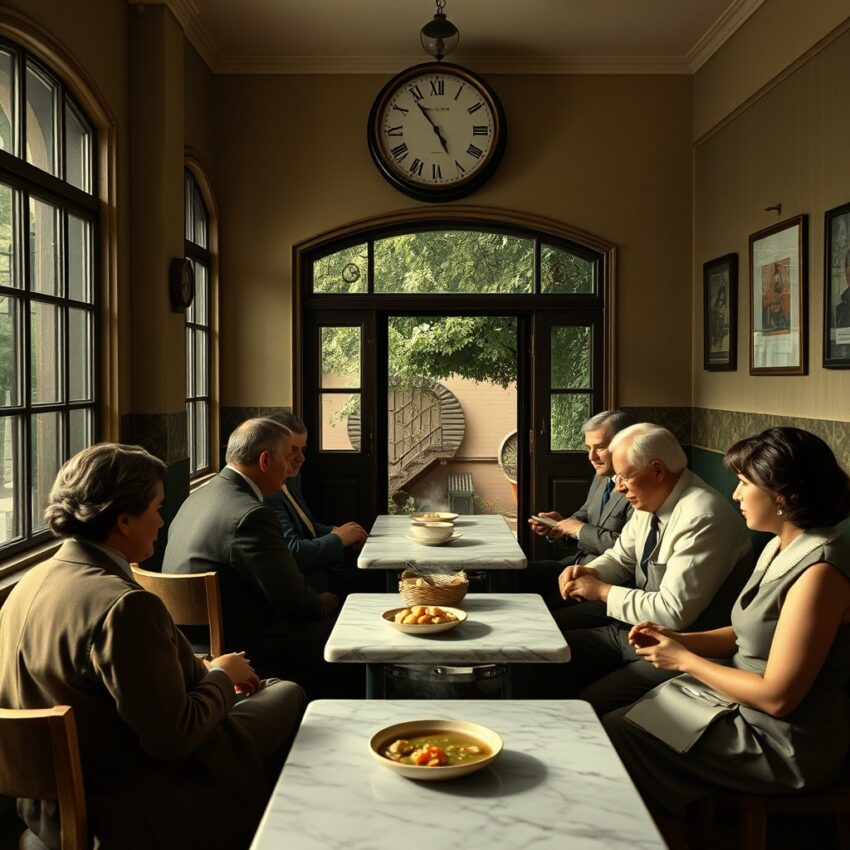
Bir zamanlar öğle vakti yalnızca günün ortası değildi; şehrin sesinin kısa bir süre yumuşadığı, caddelerin aceleyi biraz kenara bıraktığı ve memur adımlarının aynı ritimde şehir lokantalarına yöneldiği özel bir eşikti. Duvarlarda asılı büyük yuvarlak saatler, bazen biraz geri kalsa da herkesin içinde aynı duyguyu kurardı: masa kurulmuş, çorba kaynamış, ekmek sepeti çoktan tezgaha gelmiş olmalıydı. Resmi dairelerin ağır koridorlarından çıkan insanlar, ceketlerini tam iliklemeden lokantanın kapısına varır; içeride tabak sesleri, kepçe buharı ve kısa selamlaşmalar birbirine karışırdı. Dışarıda bahçelere doğru yayılan ıhlamur kokusu ise bu telaşlı öğleni beklenmedik bir zarafetle çevreler, şehri sert değil yumuşak hatlarla hatırlatırdı.
Zamanın İzinde açısından şehir lokantaları, yalnız karın doyurulan yerler değildi; modernleşen şehir hayatının gündelik düzenini görünür kılan küçük kamusal sahnelerdi. Özellikle memur öğlenleri, şehirde çalışan sınıfların ortak temposunu kurardı. Dakikayı hatırlatan o eski saatler, bir bakıma çalışma disiplininin de simgesiydi. Fakat bu disiplin, bugünkü hızlı tüketim mantığından farklı olarak insanı bütünüyle sertleştirmezdi. Çünkü lokantanın içinde her gün tekrar eden küçük bir yakınlık vardı. Garson hangi masaya kimin oturacağını bilir, aşçı hangi saatte mercimeğin biteceğini sezebilir, kasadaki adam veresiye defterine kimi nasıl kaydedeceğini ezberden hatırlardı. Öğle tatili, resmiyetle gündelik hayat arasında kurulan bu ince köprü sayesinde daha insani bir renge bürünürdü.
O devir bugün neden daha parlak görünüyor diye düşününce, cevabın yalnız geçmişe duyulan duygusal eğilimde saklı olmadığı anlaşılıyor. Eski şehir lokantalarında zaman hem ölçülür hem yaşanırdı. Duvar saatinin akrep ve yelkovanı masalara bakarken, içeride acele eden herkes aynı anda bir çorba kaşığının yavaşlığını da paylaşırdı. Menüler çoğu zaman gösterişli değildi: tencere yemeği, pilav, hoşaf, yoğurt, belki bir tas komposto. Ama o öğünler, şehrin gündelik adaletini kuran sade törenler gibiydi. Müdürle katip aynı kapıdan girer, postacıyla muhasebeci benzer tabaklara uzanır, aynı ekmek sepeti masadan masaya dolaşırdı. Bu ortaklık, hafızanın bugün aradığı bir sıcaklık olarak geride kaldı.
Ihlamur kokusuna dönen bahçeler imgesi de tam bu yüzden bu kadar güçlü. Çünkü eski şehir merkezlerinde lokantaların çevresi bütünüyle betonlaşmış değildi; resmi binaların aralarında küçük bahçeler, gölge veren ağaçlar, yaza yaklaşırken kokusu sokağa düşen dallar bulunurdu. Öğle arasında biri sigarasını dışarıda içer, biri gölgeye çıkıp mendiliyle alnını siler, bir başkası çayını ayakta bitirirken karşı kaldırımdan geçen tanıdığa el sallardı. Bu manzara, yalnız yemeği değil, yemeğin çevresindeki mekanı da hatırlatır. Geçmişe bakınca parlak görünen şey, biraz da insanın kendini şehrin bütünü içinde daha görünür ve daha yerleşik hissettiği bu öğle saatleridir.
Bugün pek çok öğle arası ekrana bakarak, ayakta atıştırarak ya da hızla tüketilerek geçiyor. Bu yüzden eski şehir lokantalarının memur öğlenlerine yön verdiği devir hafızada daha derli toplu, daha sıcak ve daha aydınlık kalıyor. Eski saatlerin gösterdiği vakit yalnız işi bölmüyor, şehre ortak bir nefes aldırıyordu. İhlamur kokusuna karışan tabak buharı, masalarda dolaşan kısa sohbetler ve dışarıdaki bahçelerin yumuşak görüntüsü, o devri bugün olduğundan daha parlak değil; belki daha dokunulabilir kılıyor. Nostaljinin gücü de burada yatıyor: insan geçmişte mükemmel bir düzen değil, yaşanmış ve hissedilmiş bir ritim arıyor. Şehir lokantalarının öğle vakti tam da bu ritmin en unutulmaz duraklarından biri olarak hafızada yaşamayı sürdürüyor.
🇬🇧 English | The Era When Those Old Clocks That Revealed the Spirit of the Time Guided Civil Servants’ Lunchtimes in City Eateries: Why Do the Gardens Turning into the Scent of Linden Look Brighter in Memory
There was a time when noon was not merely the middle of the day. It was a special threshold when the sound of the city softened for a short while, the streets set aside some of their urgency, and the steps of civil servants turned in the same rhythm toward city eateries. Large round clocks hanging on the walls, even when they lagged a little behind, created the same feeling in everyone: the tables must be set, the soup must be boiling, the bread basket must already be on the counter. People leaving the heavy corridors of public offices reached the restaurant doors before fully fastening their jackets; inside, the sound of plates, the steam of ladles, and brief greetings blended together. Outside, the scent of linden spreading toward the gardens surrounded this hurried lunch hour with an unexpected grace, making the city memorable not in hard lines, but in softer ones.
Seen through the lens of time, city eateries were not only places where people filled their stomachs. They were small public scenes that made the daily order of a modernizing city visible. Lunchtimes for civil servants in particular created a shared tempo for the working classes of the city. Those old clocks reminding everyone of the minute were, in a sense, symbols of work discipline as well. Yet this discipline did not harden people completely in the way today’s logic of speed often does. Inside the restaurant there was a small closeness repeated every day. The waiter knew who would sit at which table, the cook sensed at what hour the lentil soup would run out, and the man at the register remembered from memory how to note each person in the credit ledger. Because of this delicate bridge between official life and ordinary life, the lunch break took on a more human color.
When one wonders why that era appears brighter today, the answer is not hidden only in emotional longing for the past. In old city eateries, time was both measured and lived. While the hour and minute hands of the wall clock watched over the tables, everyone in a hurry also shared the slowness of a spoon moving through soup. Menus were rarely elaborate: a pot dish, rice, compote, yogurt, perhaps a bowl of stewed fruit. Yet those meals were like modest rituals establishing the everyday fairness of the city. A manager and a clerk entered through the same door, a postman and an accountant reached for similar plates, and the same basket of bread traveled from table to table. That shared quality remained behind as one of the forms of warmth memory now searches for.
The image of gardens turning into the scent of linden is powerful for exactly that reason. In old city centers, the surroundings of eateries had not yet been fully surrendered to concrete. Between public buildings there were small gardens, shade-giving trees, and branches whose scent fell into the street as summer approached. One person smoked outside during lunch, another stepped into the shade and wiped his forehead with a handkerchief, while someone else finished tea standing up and waved at an acquaintance passing on the opposite pavement. This scene recalls not only the meal itself, but also the place around the meal. What looks bright in memory is, in part, those noon hours when a person felt more visible and more settled within the whole fabric of the city.
Today many lunch breaks pass while looking at a screen, snacking on one’s feet, or consuming food in haste. That is why the era when city eateries shaped the lunchtimes of civil servants remains in memory as more orderly, warmer, and brighter. The time shown by those old clocks did not merely interrupt work; it allowed the city to breathe in common. The steam rising from plates mixed with the scent of linden, the brief conversations moving from table to table, and the gentle appearance of the gardens outside make that era seem not necessarily better than today, but perhaps more tangible. That is where the power of nostalgia lies: one seeks in the past not a perfect order, but a rhythm that was truly lived and felt. The noon hour of city eateries continues to live in memory as one of the most unforgettable stations of that rhythm.
🇧🇷 Português (Brasil) | A Época em que Aqueles Velhos Relógios que Revelavam o Espírito do Período Guiavam os Almoços dos Funcionários nos Restaurantes Urbanos: Por que os Jardins que se Tornam Cheiro de Tília Parecem Mais Luminosos na Memória
Houve um tempo em que o meio-dia não era apenas o centro do dia. Era um limiar especial em que o som da cidade amolecia por um instante, as ruas deixavam de lado um pouco da pressa, e os passos dos funcionários públicos seguiam no mesmo ritmo em direção aos restaurantes urbanos. Grandes relógios redondos pendurados na parede, mesmo quando atrasavam um pouco, criavam em todos a mesma sensação: a mesa já devia estar posta, a sopa já devia ferver, o cesto de pão já devia estar no balcão. Quem saía dos corredores pesados das repartições chegava à porta do restaurante sem nem terminar de fechar o paletó; lá dentro, o barulho dos pratos, o vapor das conchas e os cumprimentos rápidos se misturavam. Lá fora, o perfume de tília espalhando-se em direção aos jardins envolvia esse almoço apressado com uma graça inesperada, fazendo a cidade ser lembrada em linhas mais suaves do que duras.
Pelo olhar do tempo, os restaurantes urbanos não eram apenas lugares para matar a fome. Eram pequenas cenas públicas que tornavam visível a ordem cotidiana de uma cidade em modernização. Os almoços dos funcionários, em especial, criavam um compasso comum para as classes trabalhadoras da cidade. Aqueles velhos relógios lembrando a passagem dos minutos eram, de certo modo, símbolos de disciplina de trabalho. Mas essa disciplina não endurecia inteiramente as pessoas como a lógica veloz de hoje costuma fazer. Dentro do restaurante havia uma proximidade pequena e repetida todos os dias. O garçom sabia em que mesa cada cliente se sentaria, o cozinheiro pressentia a hora em que a sopa de lentilha terminaria, e o homem do caixa lembrava de cabeça como anotar cada nome no caderno do fiado. Graças a essa ponte delicada entre a vida oficial e a vida comum, a pausa do almoço ganhava uma cor mais humana.
Quando se pensa por que aquela época parece mais luminosa hoje, percebe-se que a resposta não está apenas na inclinação afetiva pelo passado. Nos antigos restaurantes urbanos, o tempo era ao mesmo tempo medido e vivido. Enquanto os ponteiros do relógio observavam as mesas, todos os que estavam com pressa dividiam também a lentidão de uma colher atravessando a sopa. O cardápio raramente era vistoso: um cozido, arroz, compota, iogurte, talvez uma tigela de fruta em calda. Ainda assim, essas refeições eram como rituais modestos que construíam uma espécie de justiça cotidiana da cidade. O chefe e o escriturário entravam pela mesma porta, o carteiro e o contador alcançavam pratos parecidos, e o mesmo cesto de pão passava de mesa em mesa. Essa partilha ficou para trás como uma das formas de calor que a memória hoje procura.
A imagem dos jardins transformados em cheiro de tília é forte exatamente por isso. Nos antigos centros urbanos, o entorno dos restaurantes ainda não tinha sido totalmente entregue ao concreto. Entre os prédios públicos havia pequenos jardins, árvores que davam sombra e galhos cujo perfume descia para a rua quando o verão se aproximava. Um saía para fumar durante o almoço, outro ia até a sombra e enxugava a testa com o lenço, enquanto um terceiro terminava o chá em pé e acenava para um conhecido do outro lado da calçada. Essa cena faz lembrar não apenas a refeição, mas também o espaço em torno dela. O que parece luminoso na memória são também essas horas de meio-dia em que a pessoa se sentia mais visível e mais assentada dentro do tecido inteiro da cidade.
Hoje muitas pausas de almoço passam diante de uma tela, em lanches comidos de pé ou em refeições consumidas depressa. Por isso a época em que os restaurantes urbanos orientavam os almoços dos funcionários continua na memória como algo mais organizado, mais quente e mais claro. A hora mostrada por aqueles velhos relógios não interrompia apenas o trabalho; ela fazia a cidade respirar em comum. O vapor dos pratos misturado ao perfume de tília, as conversas breves circulando entre as mesas e a aparência suave dos jardins do lado de fora fazem esse período parecer não necessariamente melhor do que o presente, mas talvez mais palpável. É aí que mora a força da nostalgia: no passado não se procura uma ordem perfeita, mas um ritmo realmente vivido e sentido. O meio-dia dos antigos restaurantes urbanos continua vivo como uma das paradas mais inesquecíveis desse ritmo.