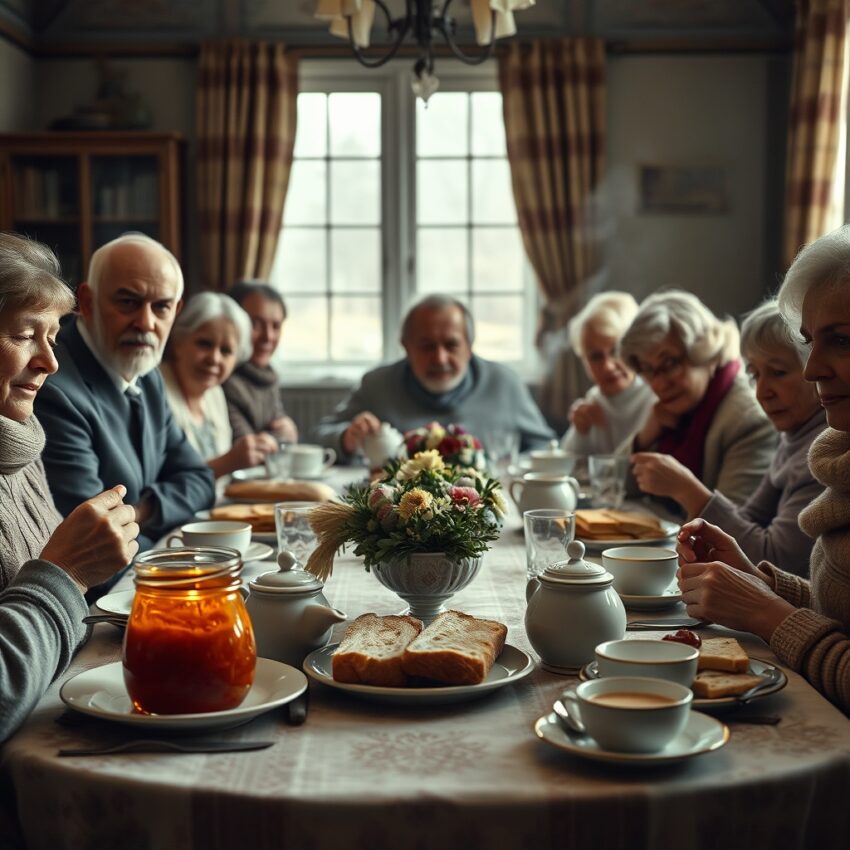
🇹🇷 Türkçe | kalabalık aile sofralarının unutulmayan tadı ile hatırlanan kuşburnu marmeladı: neden bugün bile ilk lokmada çocukluğu hatırlatıyor
Bir zamanlar kahvaltı sofrasında açılan her kavanozun ayrı bir hikâyesi vardı; ama kuşburnu marmeladı çoğu evde başka bir yere konurdu. Rengi reçelden daha koyu, tadı hem ekşi hem tatlı, kıvamı biraz yoğun olan bu marmelat, geniş aile sofralarında ince bir tören ciddiyetiyle dolaşırdı. Ekmek dilimleri hazırlanır, tereyağı sürülür, bir kaşığın ucuyla kuşburnu marmeladı dikkatle yayılırdı. Masada birkaç kuşak bir aradaysa, biri “az koy, çok keskin olur” der, diğeri tam tersine bol sürmeyi önerirdi. Daha ilk lokmada çocukluğu hatırlatan şey biraz da bu ortak masa sesleriydi; çünkü tat, tek başına değil, kalabalık aile sofrasının içinde yer edinmişti.
Damak Hafızası açısından kuşburnu marmeladının gücü yalnız meyvenin kendisinden gelmez. Sonbaharda toplanan kuşburnuların ayıklanması, kaynatılması, süzgeçten geçirilmesi ve kışa hazırlık duygusuyla kavanozlara doldurulması, bu tadı baştan itibaren emekle çevrelerdi. O yüzden marmelat sofraya geldiğinde yalnız bir kahvaltılık değil, mutfakta geçen uzun saatlerin de hatırasını taşırdı. Kalabalık aile sofralarında bu emek görünmez ama hissedilir olurdu. Kavanozu masaya koyan elin büyük olasılıkla anneye, babaanneye ya da teyzeye ait olması, yeme deneyimini daha ilk anda duygusal bir çerçeveye yerleştirirdi. Çocukluk, çoğu zaman tam da böyle görünmez emeklerin güvenli düzeni içinde hatırlanır.
Kuşburnu marmeladının ilk lokmada geçmişi çağırmasının bir başka nedeni, tadının tek boyutlu olmamasıdır. Hafif mayhoşluk, gecikmeli gelen tatlılık ve damakta bir süre kalan yoğun meyve hissi, onu çocuk zihninde kolay unutulmaz kılar. O tat ekmeğin sıcaklığı, çayın buharı ve sofradaki konuşmalarla birleşince daha da derinleşir. Kalabalık aile masalarında herkes aynı şeyi yiyor gibi görünse de, her lokma küçük bir kişisel hatıra üretirdi. Birinin kaşığı kavanoza fazla daldırması, bir başkasının ekmeğin kenarını sıyırarak son parçayı toplaması, çocukların bıyık gibi ağızlarına bulaştırması, o tadı yalnız damakta değil, ev içi görüntülerde de sakladı. Bu yüzden ilk lokma, bugünün mutfağında bile geçmişin tam ortasına açılan bir kapı gibi çalışır.
Bu marmeladın çocukluğu hatırlatmasında mevsimsel hafızanın da payı var. Kuşburnu çoğu zaman kışa hazırlığın, dolapların düzenlenmesinin, kahvaltı sofralarının uzamasının ve ev içinde geçirilen sabahların meyvesiydi. Dışarıda hava serinken içeride kurulan kalabalık masa, insanın hafızasında güvenli bir merkez oluşturur. Kuşburnu marmeladı da bu merkezin tat olarak kalan yüzü olur. Aile büyüklerinin “biz bunu eskiden kendimiz yapardık” cümlesi, çocuk için yalnız bilgi değil; sofra üstünde süren bir aidiyet duygusudur. Tadı hatırlamak, aslında o aidiyeti hatırlamaktır. İlk lokmada çocukluğun geri gelişi biraz da bu yüzden böylesine ani ve güçlüdür.
Bugün market raflarında sayısız ürün arasında kuşburnu marmeladı hâlâ ayrı bir duygu uyandırıyorsa, bunun sebebi yalnız geleneksel bir lezzet olması değil. O tat, kalabalık aile sofralarının düzenini, mutfakta görünmeden biriken emeği ve çocukluğun güvenli tekrarlarını da birlikte çağırıyor. İnsan bazen ilk lokmada meyveyi değil, masanın etrafındaki sesleri, ekmek kırıntılarını, çay kaşığının tabağa değmesini ve sofradaki büyüklere ait yüz ifadelerini hatırlıyor. Kuşburnu marmeladı bu yüzden unutulmayan bir tat olarak yaşıyor: damakta kısa sürse de, arkasından uzun bir aile manzarasını birlikte getiriyor. Çocukluğu hatırlatan da tam olarak bu bütünlüklü çağrıdır.
🇬🇧 English | Rosehip Marmalade Remembered with the Unforgotten Taste of Crowded Family Tables: Why Does It Still Recall Childhood Even in the First Bite Today
There was a time when every jar opened at breakfast carried its own story, yet rosehip marmalade held a different place in many homes. Darker than jam, both tart and sweet, and slightly dense in texture, it moved across large family tables with the seriousness of a small ritual. Slices of bread were prepared, butter was spread, and the rosehip marmalade was laid carefully with the tip of a spoon. If several generations were gathered at the table, one person would say, “Use less, it is quite sharp,” while another would insist that more should be spread. What brought childhood back in the very first bite was partly this chorus of shared table voices, because the taste did not live alone; it had settled into the life of the crowded family table.
Seen through the lens of taste memory, the strength of rosehip marmalade does not come only from the fruit itself. The rosehips gathered in autumn had to be cleaned, boiled, strained, and placed into jars with the feeling of preparing for winter. For that reason, once the marmalade reached the table, it carried not just a breakfast flavor, but also the memory of long hours spent in the kitchen. At crowded family tables, that labor remained mostly invisible, yet it could be felt. The hand placing the jar on the table most likely belonged to a mother, grandmother, or aunt, and that alone set the experience inside an emotional frame. Childhood is often remembered precisely through the safe order created by such hidden forms of care.
Another reason rosehip marmalade calls the past back at the first bite is that its taste is never one-dimensional. The slight tartness, the sweetness that follows a moment later, and the concentrated fruit feeling that remains on the palate make it difficult for a child’s mind to forget. When that taste meets warm bread, tea steam, and the conversations flowing across the table, it deepens even further. At crowded family breakfasts, everyone seemed to be eating the same thing, yet each bite created a small personal memory. One person dipping the spoon too deeply into the jar, another scraping the last bit from the crust of bread, children getting it around their mouths like a mustache, all preserved the taste not only on the tongue, but also in domestic images. That is why the first bite still works like a door opening directly into the middle of the past.
Seasonal memory also plays a role in why this marmalade recalls childhood so strongly. Rosehip belonged to winter preparation, to cupboards being arranged, to longer breakfasts, and to mornings spent indoors. While the weather outside was cool, the crowded table inside formed a secure center in memory. Rosehip marmalade became the taste left behind by that center. When elders said, “We used to make this ourselves,” the sentence offered a child not only information, but a sense of belonging that continued across the table. To remember the taste was, in truth, to remember that belonging. That is why the return of childhood in the first bite feels so sudden and so powerful.
If rosehip marmalade still awakens a distinct feeling today among the endless products on store shelves, the reason is not only that it is traditional. The taste also calls back the order of crowded family tables, the labor quietly accumulated in the kitchen, and the safe repetitions of childhood. Sometimes in the first bite one remembers not the fruit, but the sounds around the table, bread crumbs, the teaspoon touching the saucer, and the expressions on the faces of elders. Rosehip marmalade lives on as an unforgettable taste for exactly that reason: it may last only briefly on the palate, but it brings behind it a long family scene. What recalls childhood is that complete invocation.
🇧🇷 Português (Brasil) | A Marmelada de Rosa-Mosqueta Lembrada com o Sabor Inesquecível das Mesas de Família Cheias: Por que Ainda Hoje Faz a Infância Voltar Já na Primeira Mordida
Houve um tempo em que cada pote aberto no café da manhã carregava sua própria história, mas a marmelada de rosa-mosqueta ocupava um lugar especial em muitas casas. Mais escura que uma geleia comum, ao mesmo tempo doce e ácida, com consistência densa, ela circulava pelas mesas grandes de família com a seriedade de um pequeno ritual. As fatias de pão eram preparadas, a manteiga era passada, e a marmelada era espalhada com cuidado na ponta da colher. Se havia várias gerações à mesa, alguém dizia “coloque menos, ela é forte”, enquanto outro defendia exatamente o contrário. O que fazia a infância voltar já na primeira mordida era também esse coro de vozes da mesa, porque o sabor não vivia sozinho; ele tinha se instalado na própria vida da mesa de família cheia.
Pela ótica da memória do paladar, a força da marmelada de rosa-mosqueta não vem apenas da fruta. Os frutos colhidos no outono precisavam ser limpos, cozidos, passados na peneira e guardados em potes com a sensação de preparar a casa para o inverno. Por isso, quando a marmelada chegava à mesa, levava consigo não só um gosto de café da manhã, mas também a lembrança das longas horas passadas na cozinha. Nas mesas de família cheias, esse trabalho permanecia quase invisível, embora fosse claramente sentido. A mão que colocava o pote sobre a mesa provavelmente era a da mãe, da avó ou de uma tia, e isso já colocava a experiência dentro de um quadro afetivo. Muitas vezes a infância é lembrada justamente pela ordem segura criada por esses cuidados discretos.
Outra razão para a marmelada trazer o passado de volta logo na primeira mordida é o fato de seu sabor não ser simples. Há uma acidez leve, uma doçura que chega um pouco depois e uma sensação intensa de fruta que permanece na boca. Isso a torna difícil de esquecer para a memória infantil. Quando esse sabor encontra pão quente, vapor de chá e as conversas correndo pela mesa, ele se torna ainda mais profundo. Nas mesas familiares, todos pareciam comer a mesma coisa, mas cada mordida gerava uma pequena lembrança pessoal. Um mergulhando a colher demais no pote, outro raspando o último resto na borda do pão, crianças sujando a boca como se fosse um bigode, tudo isso guardou o sabor não apenas no paladar, mas também nas imagens da vida doméstica. Por isso, a primeira mordida ainda funciona como uma porta que se abre diretamente para o passado.
A memória das estações também tem parte nessa lembrança tão forte. A rosa-mosqueta pertencia ao preparo para o inverno, à arrumação dos armários, aos cafés da manhã mais longos e às manhãs passadas dentro de casa. Enquanto o ar lá fora era mais frio, a mesa cheia no interior da casa criava um centro seguro na memória. A marmelada se tornava a face gustativa desse centro. Quando os mais velhos diziam “antigamente nós mesmos fazíamos isso”, essa frase não oferecia apenas informação à criança, mas um sentimento de pertencimento que continuava vivo sobre a mesa. Lembrar o sabor era, no fundo, lembrar esse pertencimento. É por isso que a infância volta de maneira tão repentina na primeira mordida.
Se a marmelada de rosa-mosqueta ainda desperta uma emoção especial hoje, em meio a tantos produtos nas prateleiras, a razão não está apenas no fato de ser tradicional. Esse sabor também convoca a ordem das mesas de família cheias, o trabalho silencioso acumulado na cozinha e as repetições seguras da infância. Às vezes, na primeira mordida, a pessoa não se lembra apenas da fruta, mas dos sons em volta da mesa, das migalhas de pão, da colher batendo no pires e das expressões dos mais velhos. A marmelada continua viva como um sabor inesquecível justamente por isso: embora dure pouco na boca, ela traz consigo uma cena familiar longa e inteira. O que faz a infância voltar é essa evocação completa.