🇹🇷 Türkçe | apartman önünde çekirdek sesleri ile geçen saatler komşuluğu neden bu kadar sağlam kıldı
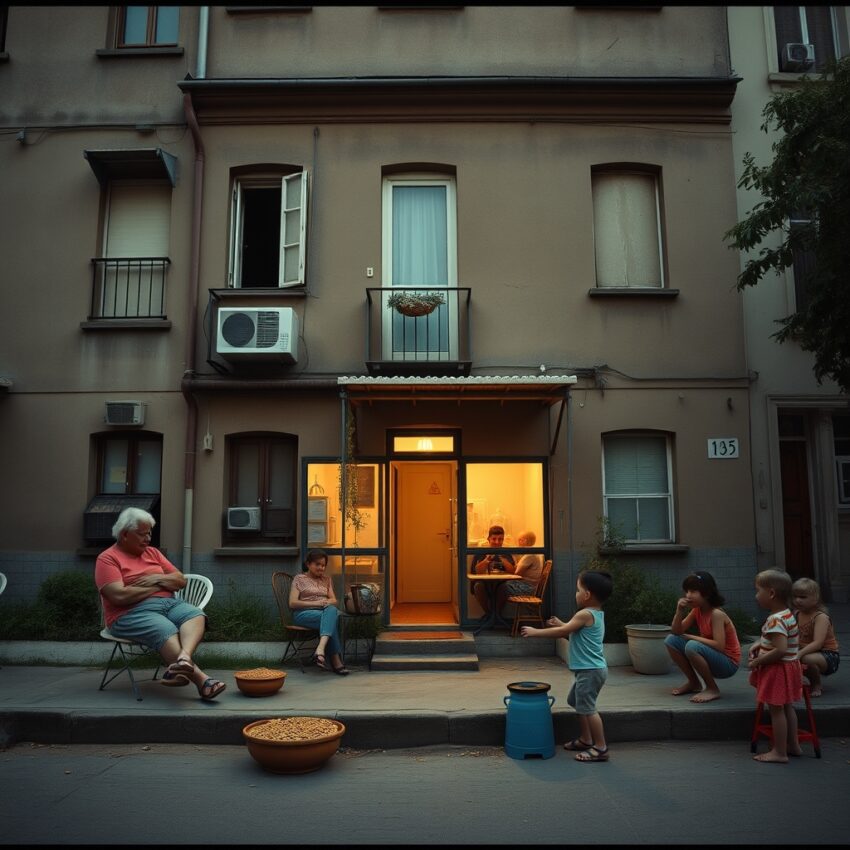
Bir zamanlar yaz akşamı serinliği biraz düşünce apartman önleri kendiliğinden bir oturma yerine dönüşürdü. Kapı eşiğine konan tabureler, apartman girişinin yanına çekilen sandalyeler, çocukların yarım bıraktığı oyun ve büyüklerin elindeki çekirdek kâseleri aynı sahnede birleşirdi. Çekirdeğin kabuğu dişle kırılırken çıkan küçük ses, konuşmalar arasında ritmik bir boşluk gibi dolaşır; biri mahallede olan biteni anlatırken öteki başıyla onay verir, bir başkası gülerek söze karışırdı. O saatler gösterişli değildi ama güven veren bir düzen taşıyordu. Çünkü herkes birbirinin varlığını aynı kaldırımda, aynı akşam ışığında, aynı yavaşlık içinde hissediyordu.
Mahalle Kültürü açısından apartman önünde çekirdek sesleriyle geçen saatler, komşuluğun en görünür okullarından biriydi. İnsanlar birbirini ziyarete gitmeden de tanır, aynı kapı önünde oturdukça kimin ne zaman işten döndüğünü, kimin çocuğunun sınavı olduğunu, kimin annesinin rahatsızlandığını bilir hâle gelirdi. Bu bilgi meraktan çok yakınlık biçimiydi. Apartman önü, ev ile sokak arasında kurulmuş yarı kamusal bir eşikti; burada söylenen sözler hem resmî olmayan bir rahatlık taşır hem de komşuluk terbiyesinin sınırları içinde kalırdı. Çekirdek yemek ise bu yavaş sohbetin doğal temposunu oluştururdu. El meşgulken dil daha rahat açılır, sessizlikler rahatsız edici olmaz, birlikte oturmanın kendisi başlı başına yeterli sayılırdı.
Bu alışkanlığın komşuluğu sağlam kılmasının bir nedeni, süreklilik duygusuydu. Apartman önünde geçirilen saatler tek seferlik büyük olaylara bağlı değildi; neredeyse her akşam biraz aynı, biraz farklı biçimde tekrarlanırdı. Bir gün elektrikler kesilir, sohbet daha erkenden başlar; başka bir gün karpuz dilimleri gelir, çocuklar kaldırım kenarında seksek çizer, yaşlılar sandalyesini biraz daha gölgeye çekerdi. Çekirdek sesleri bütün bu küçük değişimlerin zemininde kalan tanıdık bir fon gibiydi. İnsan ilişkilerini güçlü kılan şey de çoğu zaman böyle gündelik tekrarlar olur. Büyük iyiliklerden önce, insanın yüzüne aşina olmak; sıkıntısını söylemeden fark etmek; birkaç akşam üst üste görünmeyince merak etmek gelir. Apartman önü bu bakımdan komşuluğun nabzını tutan yerdi.
Gündelik ayrıntılar bu sahnenin sıcaklığını daha da belirginleştirirdi. Bir tepside çay gelirse bardaklar pay edilir, çekirdek kabukları için gazete kâğıdı serilir, çocuklardan biri bakkala gönderilirse herkes ne alınacağını ortaklaşa söylerdi. Pencereden seslenen biri aşağıdakilere hal hatır sorar, balkondan sepet sarkıtan komşu kısa bir isteğini iletir, apartman kapısından içeri giren her yeni kişi küçük bir selam halkasının içinden geçerdi. Bütün bunlar yazılı olmayan ama herkesi içine alan bir komşuluk düzeni kurardı. Apartman önünde oturmak, yalnız vakit geçirmek değildi; birbirinin hayatına ölçülü biçimde tanık olmak, gerektiğinde kolayca el uzatabilecek bir yakınlık mesafesi kurmaktı.
Bugün komşuluğun neden geçmişte daha sağlam hissedildiğini anlamak için bu küçük akşam sahnelerine bakmak yeterli. Çekirdek sesleri ile geçen saatler, insanları aynı gündelik ritim içinde birbirine alıştırıyordu. Birlikte susmayı, sıradan konuları önemsemeyi, çocukların oyununu hep birlikte kollamayı ve ev ile sokak arasındaki geçişi sertleştirmemeyi öğretiyordu. Bu yüzden apartman önü, eski mahalle kültüründe yalnız bir giriş alanı değil, ilişkilerin mayalandığı bir eşikti. Şimdi hafızada kalan ses yalnız çekirdek kabuğunun çıtırtısı değil; o sesin etrafında kurulan güven, tekrar ve tanışıklık duygusudur. Komşuluğu sağlam kılan da tam olarak buydu.
🇬🇧 English | Why Did the Hours Spent with the Sound of Sunflower Seeds in Front of the Apartment Building Make Neighborliness So Strong
There was a time when, once the heat of a summer evening softened a little, the space in front of apartment buildings naturally turned into a place to sit. Stools set at the doorway, chairs pulled beside the entrance, children pausing their games, and bowls of sunflower seeds in the hands of adults all came together in the same scene. The small sound made as each shell was cracked by teeth moved between conversations like a rhythmic gap; while one person spoke about something in the neighborhood, another nodded in agreement and someone else joined in with a laugh. Those hours were not dramatic, yet they carried a reassuring order. Everyone felt one another’s presence on the same pavement, in the same evening light, within the same unhurried pace.
Seen through the lens of neighborhood culture, the hours spent with the sound of sunflower seeds in front of the apartment building were one of the most visible schools of neighborliness. People came to know one another without making formal visits. By sitting at the same doorway, they learned who returned from work when, whose child had exams, or whose mother had fallen ill. That knowledge was not gossip so much as a form of closeness. The front of the building was a semi-public threshold between house and street; words spoken there carried the ease of informality while still remaining within the discipline of neighborly respect. Eating sunflower seeds created the natural tempo of this slow conversation. When the hands were occupied, the tongue loosened more gently, silences ceased to feel awkward, and simply sitting together became enough in itself.
One reason this habit made neighborliness so strong was the feeling of continuity it produced. The hours spent outside the building did not depend on rare or grand occasions; they repeated almost every evening, always a little similar and a little different. One day the electricity might go out and conversation would begin earlier, another day slices of watermelon would appear, children would draw hopscotch lines by the curb, and older people would pull their chairs a little farther into the shade. The sound of sunflower seeds remained like a familiar background beneath all these small variations. And what strengthens human relations is often exactly this kind of daily repetition. Before great acts of help come the habits of recognizing a face, noticing someone’s trouble before it is spoken, or growing curious when a person is absent for several evenings. In that sense, the apartment front held the pulse of neighborliness.
Everyday details made the warmth of the scene even clearer. If a tray of tea arrived, glasses were shared, newspaper sheets were spread for the discarded shells, and if a child was sent to the corner shop everyone added something to the request. Someone leaning from a window asked after those below, a neighbor lowering a basket from the balcony made a quick request, and each new person entering through the doorway passed through a small circle of greetings. All of this formed an unwritten order of neighborliness that included everyone. Sitting outside the building was not merely spending time. It meant bearing witness, in measured ways, to one another’s lives and creating a distance close enough for a helping hand to be extended without ceremony whenever needed.
To understand why neighborliness once felt stronger, it is enough to look at such small evening scenes. The hours marked by the sound of sunflower seeds accustomed people to one another within the same daily rhythm. They taught the art of being silent together, of taking ordinary topics seriously, of collectively watching over children at play, and of not hardening the passage between home and street. For that reason, the front of the apartment building was not merely an entrance zone in old neighborhood culture, but a threshold where relationships slowly fermented. What remains in memory now is not only the crackle of the shells, but the feeling of trust, repetition, and familiarity formed around that sound. That is exactly what made neighborliness strong.
🇧🇷 Português (Brasil) | Por que as Horas Passadas com o Som das Sementes de Girassol Diante do Prédio Tornavam a Vizinhança Tão Forte
Houve um tempo em que, quando o calor da noite de verão diminuía um pouco, a frente dos prédios se transformava naturalmente num lugar de sentar. Banquinhos na porta, cadeiras puxadas para perto da entrada, crianças interrompendo a brincadeira e tigelas de sementes de girassol nas mãos dos adultos compunham a mesma cena. O pequeno som de cada casca quebrada entre os dentes circulava entre as conversas como uma pausa rítmica; enquanto um contava algo do bairro, outro concordava com a cabeça e um terceiro entrava na conversa com um sorriso. Essas horas não tinham nada de grandioso, mas carregavam uma ordem reconfortante. Todos sentiam a presença uns dos outros na mesma calçada, sob a mesma luz da noite, dentro do mesmo ritmo desacelerado.
Pela ótica da cultura de bairro, as horas passadas diante do prédio com o som das sementes eram uma das escolas mais visíveis da boa vizinhança. As pessoas se conheciam sem precisar marcar visitas formais. Sentando sempre na mesma entrada, sabiam quem voltava do trabalho em que horário, de quem era a prova do filho, ou qual mãe estava doente naquela semana. Esse conhecimento não era curiosidade vazia, mas uma forma de proximidade. A frente do prédio era um limiar semipúblico entre a casa e a rua; ali as palavras tinham a leveza da informalidade, mas continuavam dentro do cuidado próprio da convivência. Comer sementes criava o compasso natural dessa conversa lenta. Com as mãos ocupadas, a fala se soltava melhor, os silêncios deixavam de incomodar e o simples fato de estar junto já bastava.
Uma das razões de esse hábito fortalecer tanto a vizinhança era a sensação de continuidade. As horas passadas em frente ao prédio não dependiam de ocasiões raras ou grandes; repetiam-se quase toda noite, sempre um pouco iguais e um pouco diferentes. Num dia faltava luz e a conversa começava mais cedo; em outro apareciam fatias de melancia, as crianças riscavam amarelinha perto do meio-fio, e os mais velhos puxavam a cadeira para mais perto da sombra. O som das sementes ficava como um fundo conhecido por baixo dessas pequenas mudanças. E o que fortalece os vínculos humanos costuma ser justamente esse tipo de repetição cotidiana. Antes dos grandes gestos de ajuda vêm os hábitos de reconhecer um rosto, perceber uma preocupação antes que ela seja dita e estranhar a ausência de alguém por algumas noites seguidas. Nesse sentido, a frente do prédio marcava o pulso da vizinhança.
Os detalhes diários deixavam essa cena ainda mais calorosa. Quando chegava uma bandeja com chá, os copos eram divididos, folhas de jornal eram abertas para as cascas, e se uma criança fosse mandada ao armazém, todos acrescentavam alguma coisa ao pedido. Alguém falando da janela perguntava como estavam os de baixo, um vizinho com cesta descida da varanda fazia um pedido rápido, e cada pessoa nova que entrava pelo portão passava por um pequeno círculo de cumprimentos. Tudo isso criava uma ordem não escrita de convivência que incluía a todos. Sentar-se na frente do prédio não era apenas passar o tempo; era acompanhar, de maneira medida, a vida dos outros e manter uma distância suficientemente próxima para que a ajuda pudesse surgir sem cerimônia.
Para entender por que a vizinhança parecia mais forte antigamente, basta olhar para essas pequenas cenas do entardecer. As horas marcadas pelo som das sementes acostumavam as pessoas umas às outras dentro do mesmo ritmo diário. Ensinavam a ficar em silêncio juntas, a levar os assuntos comuns a sério, a vigiar coletivamente as brincadeiras das crianças e a não endurecer a passagem entre casa e rua. Por isso, a frente do prédio não era apenas uma área de entrada na antiga cultura de bairro, mas um limiar onde as relações criavam raiz. O que ficou na memória não é só o estalo das cascas, mas a confiança, a repetição e a familiaridade construídas ao redor desse som. Era exatamente isso que tornava a vizinhança tão firme.